


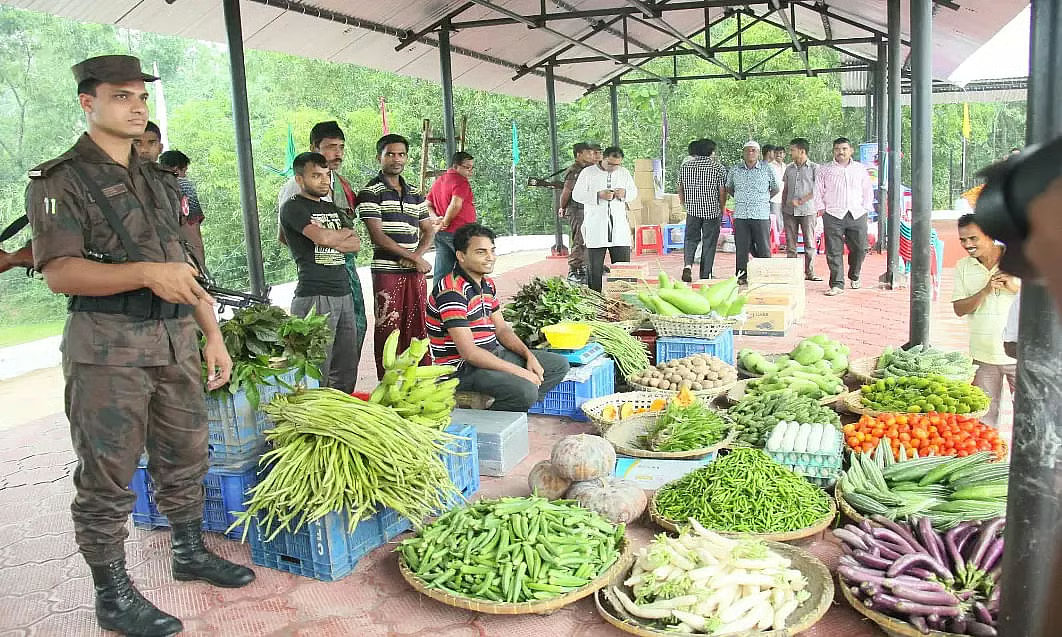
Tripura border haat concerns are gaining attention as questions continue over the functioning of the state’s India-Bangladesh border markets. Tripura has two established border haats at Srinagar-Chhagalnaiya and Kamalasagar-Tarapur. However, recent government records and local reports present differing pictures of their operational status.
The issue has become more significant as Tripura seeks to expand its role in cross-border commerce. Moreover, business groups and officials have repeatedly highlighted the importance of predictable border infrastructure for local communities and regional trade.
BSF Tightens India Bangladesh Border Security Amid Fencing Drive
Tripura Border Haat Concerns Highlight Operational Gaps
Tripura’s border haats were created to encourage small-scale trade between communities on both sides of the international boundary. The system allows approved local products to move through designated markets under specific rules. Therefore, the haats serve a different purpose from large integrated check posts and commercial land ports.
The Srinagar-Chhagalnaiya haat in South Tripura opened in January 2015. The Kamalasagar-Tarapur haat in Sepahijala district followed in June 2015. Both markets were designed to support local traders while strengthening people-to-people contact between India and Bangladesh.
However, the recent record of operations has become uneven. Tripura’s Economic Review for 2024-25 states that the Srinagar haat reopened on May 9, 2023, but later closed again. The same document says the Kamalasagar haat remains closed and recorded no sales proceeds there during the financial years from 2020-21 to 2024-25.
At the same time, a June 2026 page of the Assistant High Commission of India in Chittagong describes Srinagar and Kamalasagar as completed border haats. Tripura’s 2026 State MSME Policy also describes the two facilities as operational. These differences show why Tripura border haat concerns now focus not simply on whether the infrastructure exists, but on whether regular trade is actually taking place.
Tripura Border Haat Concerns Rise After Kamalasagar Visit
The status of the Kamalasagar-Kasba haat received fresh attention during the visit of Bangladesh High Commissioner to India Mohammad Reaz Hamidullah in July 2026. He visited the border area during his Tripura tour linked to the Destination Tripura Business Conclave.
The delegation reviewed the local border trade infrastructure and inspected the haat area from the Indian side. Discussions reportedly covered the closure of the market, participation by traders from both countries and the types of goods historically exchanged there. Officials also indicated that the issue could be raised with the foreign ministries of India and Bangladesh.
The visit was important because it placed a local trade facility within the wider conversation on India-Bangladesh economic relations. Instead of treating the haat only as a local market, the discussions linked its revival with broader efforts to improve cross-border commercial opportunities.
Furthermore, the development comes as Tripura promotes its geographical position as a gateway between northeastern India and Bangladesh. The state has highlighted its proximity to Chattogram Port and the potential of improved cross-border infrastructure to support exporters, traders and small businesses.
The Kamalasagar experience also illustrates the difference between physical infrastructure and functional connectivity. A completed market building alone cannot guarantee regular commercial activity. Both sides need compatible administrative arrangements, trader participation, agreed operating procedures and suitable cross-border coordination.
Tripura Border Haat Concerns Reflect Wider Trade Challenges
The difficulties facing the haats form part of a broader set of challenges affecting Tripura’s cross-border trade. The state has several important connectivity projects, including integrated check posts and the Maitri Setu corridor at Sabroom.
Border haats, however, operate on a smaller scale. Their primary purpose is to help border communities participate in regulated local commerce. Consequently, their effectiveness depends heavily on consistent operating schedules and the ability of local traders to rely on the markets.
Historical data demonstrates that these markets once generated meaningful local trade. A Land Ports Authority of India publication recorded combined sales of about ₹57.18 crore at Tripura’s two haats over the years covered by its assessment. Sales reached their highest combined level of about ₹17.67 crore in 2016-17 before declining in subsequent years.
The COVID-19 pandemic severely disrupted border-hat activity. Yet the more recent problem involves the question of sustained reopening. While some official sources describe the facilities as operational or completed, Tripura’s own economic review records continued closure and interruptions. Therefore, the central challenge is increasingly about continuity rather than construction.
The issue also connects with wider concerns about trade facilitation. Research on Northeast India has noted that border haats can strengthen local connectivity but face limitations in infrastructure and scale. A 2026 RIS policy brief suggested that expanding beyond traditional haat models could help the region gain greater economic benefits from cross-border connectivity.
Tripura Border Haat Concerns Put Focus on Revival
Reviving the haats could provide local traders with a more predictable platform for legitimate cross-border commerce. It could also help communities on both sides benefit from the economic and social objectives behind the border-haat programme.
For Tripura, the potential benefits extend beyond individual vendors. Regular markets can support agricultural producers, small retailers, cottage industries and other local economic activities. Moreover, functioning haats can strengthen direct interaction between border communities without requiring traders to depend entirely on larger commercial gateways.
The two countries already have a framework for border haats. The India-Bangladesh arrangement was created to promote local trade and improve economic opportunities for communities living near the international border. The government has also approved additional haats in the past, including proposed facilities in Tripura.
However, expansion will have limited value if existing facilities cannot maintain regular operations. Therefore, Tripura border haat concerns are likely to remain tied to questions about reopening schedules, bilateral coordination, trader participation and administrative clarity.
A coordinated review could help reconcile the differing descriptions of the current status. Clear public information on operating days, trader access, permitted goods and reopening plans would also provide greater certainty for communities that depend on these markets.
Conclusion
Tripura border haat concerns underline a wider challenge in converting cross-border infrastructure into dependable economic activity. The state has established facilities at Srinagar and Kamalasagar, but recent records indicate that their actual operating status has been inconsistent.
The July 2026 visit by Bangladesh’s High Commissioner has renewed attention on the issue. If India and Bangladesh can address administrative and operational barriers, the haats could once again provide a practical channel for local commerce and stronger border-community links.
FAQs
What are the main Tripura border haat concerns?
The main Tripura border haat concerns involve prolonged closures, interruptions, differing official descriptions of operational status and the need for stronger India-Bangladesh coordination.
How many border haats does Tripura have?
Tripura has two established India-Bangladesh border haats: Srinagar-Chhagalnaiya in South Tripura and Kamalasagar-Tarapur in Sepahijala district.
Why are Tripura border haats important?
They were created to support regulated local trade and strengthen economic and social links between communities living near the India-Bangladesh border.
What happened at Kamalasagar in 2026?
Bangladesh High Commissioner Mohammad Reaz Hamidullah visited the Kamalasagar-Kasba border area in July 2026 and discussed the closed haat, trader participation and possibilities for improving cross-border trade.
Can Tripura border haats support wider trade?
Yes, but their role remains focused on local-scale commerce. Larger international trade requires separate infrastructure and arrangements involving customs, cargo handling, immigration and other border procedures.