


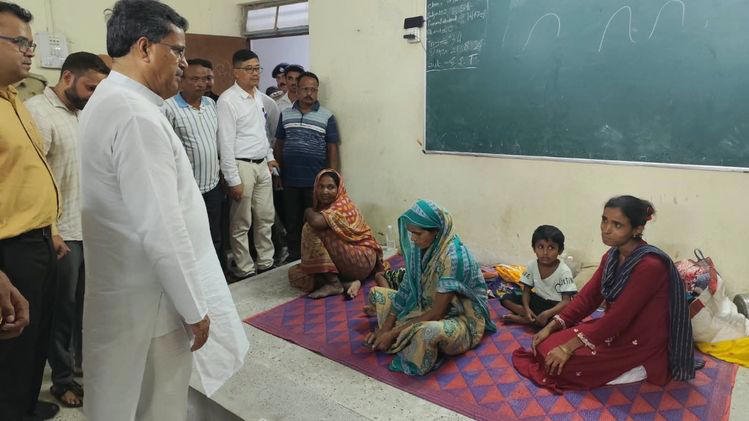
Tripura Chief Minister Manik Saha visited flood-affected areas and relief camps as the state continued to deal with the impact of heavy rainfall and rising water levels. During his visit, the Chief Minister interacted with affected families and reviewed the relief and rehabilitation measures being carried out by the administration.
Saha said the state government was working to provide immediate assistance to people affected by the floods. At the same time, he said the government was also looking for a permanent solution to Tripura’s recurring flood problem.
The Chief Minister visited several affected locations and took stock of the situation on the ground. He also visited relief camps, where displaced families have taken shelter after floodwaters entered residential areas.
The visit came as government agencies and district authorities continued relief operations. The administration has been providing food, drinking water, medical assistance and other essential support to people staying in relief camps.
Read More: Manipur CM Reviews Security Situation, Counter-Insurgency Operations with Assam Rifles
Tripura CM Reviews Flood Situation on the Ground
Chief Minister Manik Saha personally reviewed the flood situation during his visit to the affected areas. He interacted with local residents and listened to their concerns about the damage caused by the floods.
Several families have faced difficulties after water entered their homes and disrupted daily life. Many residents moved to safer locations and government-run relief camps as authorities worked to respond to the situation.
Saha said the government was closely monitoring developments and taking necessary steps to help those affected. He assured residents that the administration would continue its relief efforts until the situation improved.
The Chief Minister also directed officials to remain alert and ensure that affected people received timely assistance. He stressed the importance of coordination among government departments, local authorities and emergency response teams.
The state administration has been assessing the condition of affected areas and identifying places that require immediate attention. Officials are also monitoring water levels and weather conditions to prepare for further challenges.
Chief Minister Visits Relief Camps
During his visit, Manik Saha also went to relief camps and met families who had been displaced by the floods. He checked the facilities available at the camps and reviewed the arrangements made for the affected people.
Relief camps play an important role during flood emergencies. They provide temporary shelter to people who cannot remain in their homes because of waterlogging or flood damage.
The administration has been arranging essential supplies for people staying in these camps. Authorities have focused on food, safe drinking water, sanitation and medical support.
The Chief Minister interacted with residents and assured them that the government was taking the situation seriously. He also reviewed whether the relief camps had adequate facilities to meet the needs of children, elderly people and other vulnerable groups.
Officials accompanying the Chief Minister received directions to address problems reported by camp residents and ensure that assistance reached people without unnecessary delay.
The government has also been working with local agencies to assess the damage caused by the floods and provide support to affected families.
Government Focuses on Immediate Relief and Rehabilitation
The Tripura government has continued relief and rehabilitation work in areas affected by the floods. Government departments and district administrations have been working together to provide support to residents.
The immediate priority remains the safety and well-being of people living in affected areas. Authorities have been carrying out rescue and relief work while monitoring vulnerable locations.
The government has also been reviewing damage to homes, roads and other public infrastructure. Flooding can disrupt transport, electricity and access to essential services, making quick restoration work important.
Officials have been asked to identify areas where floodwaters have caused significant damage. The administration will assess the losses and take further steps as required.
The Chief Minister said the government was committed to helping affected families recover from the disaster. Relief measures would continue according to the needs of the affected population.
Apart from immediate assistance, the government will also focus on rehabilitation and restoring normal life in the affected areas.
Tripura Government Working on Permanent Flood Solution
A major focus of the Chief Minister’s visit was the government’s plan to find a long-term answer to Tripura’s flood problem.
Saha said the government was not limiting its response to immediate relief measures. It was also working towards a permanent solution to reduce the impact of recurring floods.
Flooding has remained a challenge in several parts of Tripura, especially during periods of heavy rainfall. Excess water can affect homes, roads, agricultural land and public infrastructure.
The government is examining measures that could improve drainage and water management. Long-term planning is necessary to reduce flood risks and protect communities during future periods of heavy rainfall.
A permanent solution may require coordinated work across different departments and agencies. It may also involve improvements in drainage systems, river management and other infrastructure.
The Chief Minister said the government would continue to examine the issue and take steps to address the root causes of flooding.
The focus on a long-term solution reflects the government’s attempt to move beyond emergency responses and develop stronger protection against future floods.
Coordination Between Government Departments
The Chief Minister stressed the importance of coordination during disaster situations. Flood response requires the involvement of several government departments and agencies.
District administrations play a key role in identifying affected areas and organising relief measures. Emergency teams also assist in rescue operations and help people move to safer places.
Health authorities monitor medical needs and help prevent the spread of water-borne diseases. Public works and other departments work to restore damaged roads and essential services.
The state government has been coordinating with these agencies to ensure a timely response. Officials have also been asked to remain prepared for changing weather conditions.
Effective coordination can help authorities respond faster and ensure that relief reaches the people who need it most.
The Chief Minister’s visit allowed the government to directly assess the situation and review the work being carried out by officials.
Support for Affected Families Remains a Priority
For families affected by flooding, the immediate concern remains safety and access to basic necessities. Many people face uncertainty after water damages homes and disrupts their livelihoods.
The government’s relief efforts aim to provide temporary support while authorities work to restore normal conditions.
The Chief Minister assured affected residents that the government would stand beside them during the crisis. He said officials were working to address their immediate concerns and provide necessary assistance.
As floodwaters recede, authorities will also need to focus on cleaning affected areas, restoring public services and helping families return home safely.
Damage assessment will remain important as the government plans rehabilitation measures for affected communities.
The state administration will continue to monitor the situation and respond according to local requirements.
Government Aims for Long-Term Flood Resilience
The Tripura Chief Minister’s visit to flood-hit areas and relief camps highlighted both the immediate and long-term challenges created by recurring floods.
The government is currently focusing on relief, rescue and rehabilitation. However, the Chief Minister’s statement on a permanent solution also points to the need for stronger long-term planning.
Improving flood management can help reduce damage to lives, homes and infrastructure in the future. Better drainage, water management and coordinated planning may play an important role in this process.
The government will continue to review the flood situation while supporting affected families. At the same time, it aims to develop measures that can address the problem more effectively over the long term.
Saha’s visit gave affected residents an opportunity to raise their concerns directly with the Chief Minister. His interaction with families at relief camps also reflected the government’s focus on monitoring conditions on the ground.
As Tripura works to recover from the latest flood situation, the immediate priority will remain relief and rehabilitation. However, the government’s effort to identify a permanent solution to recurring flooding could become equally important in the coming months.
The state now faces the challenge of helping affected families recover while also strengthening its long-term approach to flood management. The Chief Minister has made it clear that the government intends to work on both fronts and seek a lasting solution to Tripura’s flood problem.
Read More: Manipur Expands Sports Quota, Silver and Bronze Medallists Now Eligible for Government Jobs