


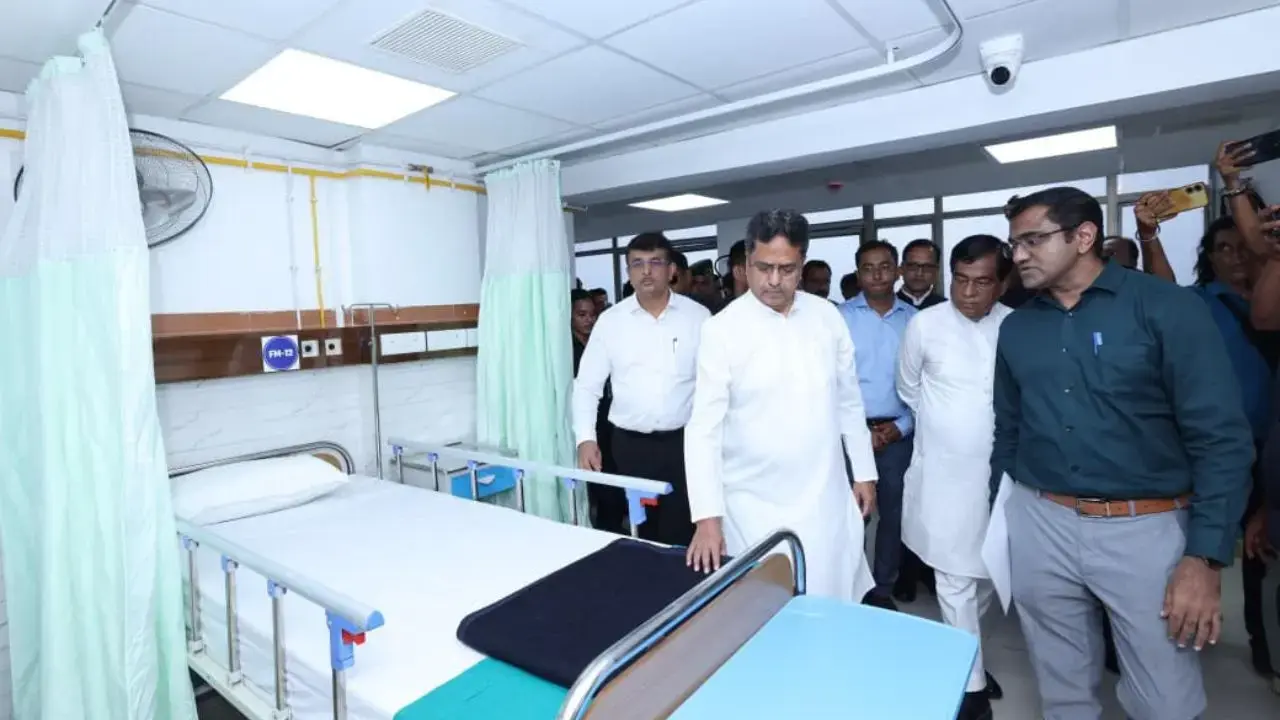
Tripura will take a major step towards digital healthcare on November 10, 2026, when all government hospitals are scheduled to begin fully paperless operations. The Health and Family Welfare Department plans to replace routine manual registers and paper-based records with digital processes under the Integrated Health Management Information System (IHMIS). The initiative will cover patient registration, medical prescriptions, diagnostic investigations and laboratory reports. Health Secretary Kiran Gitte announced the deadline during a national review meeting on Ayushman Bharat schemes. The move follows the state’s achievement of bringing all government hospitals onto the IHMIS platform.
TTAADC Postpones Executive Members’ Oath Ceremony
Tripura Sets November 10 Deadline for Paperless Hospitals
The state government has fixed November 10 as the starting date for paperless operations across its public hospitals.
Under the new arrangement, hospitals will shift routine patient services from physical documents to digital platforms. Consequently, patients will increasingly use electronic records throughout their hospital visits.
The planned transition will cover several important services. These include outpatient registration, consultations, prescriptions, diagnostic investigations and laboratory reports.
The Health Department also intends to discontinue routine manual registers and paper-based documentation from the deadline.
This change represents the next stage of Tripura’s ongoing hospital digitisation programme. Although all government hospitals have already joined IHMIS, officials now want healthcare workers to use the platform consistently.
The government expects the transition to improve hospital management and make patient services more efficient.
IHMIS Connects Government Hospitals Through One Platform
The Integrated Health Management Information System serves as a common digital platform for Tripura’s government hospitals.
The system aims to connect different stages of hospital services through electronic records. Therefore, healthcare professionals can manage patient information without depending entirely on traditional paper files.
Health Secretary Kiran Gitte recently confirmed that the state had achieved 100 per cent onboarding of government hospitals under IHMIS.
However, bringing hospitals onto the platform represents only one part of the programme. The department must also ensure that doctors, nurses, laboratory technicians and other healthcare workers use it regularly.
The government reviewed this requirement during a meeting at GBP Hospital in Agartala on October 31.
Officials discussed the need to strengthen digital adoption across hospital departments. They also stressed the importance of linking more patient health records with the digital system.
The November 10 deadline will therefore mark a significant shift from platform onboarding towards routine digital operations.
Patient Registration and Medical Records to Become Digital
The paperless system will change how patients access several hospital services.
Patients will be able to complete registration through digital platforms. Doctors will also use electronic systems to issue prescriptions and request diagnostic tests.
Furthermore, laboratory investigations and reports will move through digital channels.
The system is designed to support different stages of treatment. These include outpatient consultations, inpatient admissions, prescriptions, pharmacy services and diagnostic investigations.
Digital records can also help doctors review a patient’s earlier medical information. This may prove particularly useful when patients visit different government hospitals for treatment.
For example, patients referred from district hospitals to larger facilities may benefit from better access to their previous medical records.
However, the effectiveness of this arrangement will depend on accurate data entry and regular system use.
Hospitals will also need reliable internet connectivity, functioning equipment and trained staff to maintain uninterrupted services.
ABHA IDs to Support Connected Healthcare Records
Tripura’s paperless healthcare programme also connects with the Ayushman Bharat Digital Mission (ABDM).
One important element of ABDM is the Ayushman Bharat Health Account, commonly known as ABHA.
An ABHA number provides a digital identity that can help individuals link and access their health records through participating digital healthcare services.
Tripura has already achieved full coverage of ABHA ID generation across its government hospitals, according to officials.
The state now wants to strengthen the connection between patient records and digital health identities.
This integration could make medical information easier to access when patients move between healthcare facilities.
For instance, a patient referred from Gomati district to Agartala Government Medical College or GBP Hospital could benefit from digitally accessible earlier investigations and prescriptions.
However, patients should understand that ABHA registration and access to linked records depend on the relevant digital processes and patient consent.
The system aims to improve continuity of care rather than simply replace physical documents with electronic files.
Agartala Civil Hospital Provides a Paperless Model
Dr Shyama Prasad Mukherjee Civil Hospital in Agartala has emerged as an example of Tripura’s digital healthcare approach.
Health Secretary Kiran Gitte highlighted the hospital while explaining the state’s progress.
The facility has operated with digital patient services since its inception. Its system covers outpatient registration, token generation, admissions, prescriptions, medicine dispensing and laboratory testing.
Doctors can use digital devices to review patient histories and issue prescriptions or diagnostic requests.
Patients can also receive laboratory reports through digital channels, including their mobile phones.
The hospital’s experience offers a reference point for other government facilities preparing for the November 10 transition.
Nevertheless, expanding the same level of digital service across the state will require coordination among hospital administrators and healthcare professionals.
Different hospitals may also face varying infrastructure and staffing requirements.
Private Healthcare Facilities Next in Digital Expansion
Tripura’s digital healthcare plans extend beyond government hospitals.
The state government has set a target to bring private healthcare institutions under the digital framework within approximately two months.
This expansion could help create a more connected healthcare network across the state.
It would also support the broader objective of making patient records and services easier to access across participating facilities.
However, the November 10 deadline specifically concerns government hospitals. The proposed private-sector expansion remains a separate stage of the programme.
Officials will need to coordinate with private hospitals and healthcare providers to extend the system successfully.
The state must also maintain appropriate safeguards for patient information and digital records.
National Recognition for Tripura’s Digital Healthcare Push
Tripura presented its healthcare initiatives at a national review meeting held on November 5 and 6, 2026.
The meeting examined progress under Ayushman Bharat Pradhan Mantri Jan Arogya Yojana and the Ayushman Bharat Digital Mission.
Health Secretary Kiran Gitte and G. Sharath Naik, the state’s ABDM Mission Director, participated in the discussions.
Tripura showcased its hospital infrastructure, digital healthcare services and implementation plans.
The state’s presentation received appreciation from participating officials and representatives of the Union Health Ministry.
The recognition has highlighted Tripura’s efforts to modernise public healthcare through technology.
It also provides an opportunity for the state to share its digital healthcare experience with other regions.
Conclusion
Tripura is preparing to make all government hospitals paperless from November 10, 2026, under the Integrated Health Management Information System. The initiative will shift routine registration, prescriptions, diagnostic services and laboratory reports to digital platforms.
The state has already onboarded all government hospitals onto IHMIS and achieved full ABHA ID generation coverage across these facilities. Meanwhile, the government plans to bring private healthcare institutions into the digital framework within approximately two months.
The success of the transition will depend on regular system use, reliable infrastructure and effective staff training. If implemented smoothly, the programme could strengthen patient management and improve access to healthcare information across Tripura.
FAQs
1. When will government hospitals in Tripura become paperless?
All government hospitals are scheduled to begin fully paperless operations from November 10, 2026.
2. What is IHMIS?
IHMIS stands for Integrated Health Management Information System. It connects government hospitals through a common digital platform for managing patient services and medical records.
3. Which services will become digital under IHMIS?
The system will cover patient registration, consultations, prescriptions, admissions, diagnostic investigations and laboratory reports.
4. How does ABDM support Tripura’s digital healthcare programme?
The Ayushman Bharat Digital Mission supports connected digital healthcare records. ABHA IDs can help patients link and access their health information through participating services.
5. Have all government hospitals joined IHMIS?
Yes. Health Secretary Kiran Gitte said Tripura had achieved 100 per cent onboarding of government hospitals under the system.
6. Will private hospitals also join the digital healthcare network?
The state has set a target to bring private healthcare facilities under the digital framework within approximately two months.