


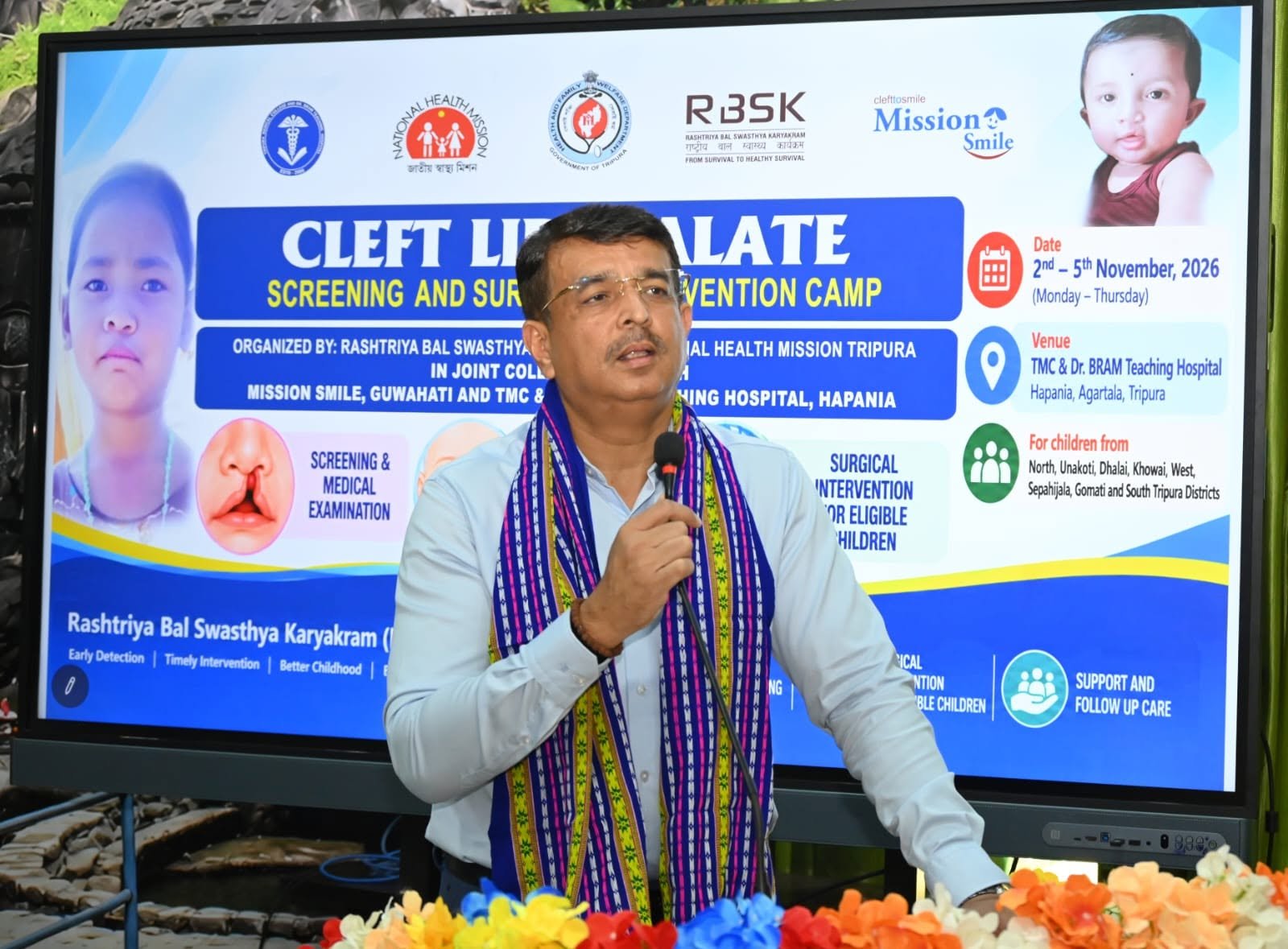
The Tripura government is working to strengthen public healthcare infrastructure and expand specialised medical services across the state, Health Secretary Kiran Gitte said on Saturday. The government has identified shortages of nurses and specialist doctors as major challenges while responding to the growing demand for advanced treatment facilities. Gitte shared the details during a review meeting with a central team from the Ministry of Health and Family Welfare.
The team assessed healthcare facilities and National Health Mission programmes in North Tripura and Gomati districts over eight days. Meanwhile, the government is also preparing to establish Tripura Health University to coordinate medical and allied healthcare education across the state.
Read More: North Tripura Youths Arrested with ₹2.24 Crore Gold
Key Facts About Tripura’s Healthcare Expansion
- State: Tripura
- Health Secretary: Kiran Gitte
- Central review: Ministry of Health and Family Welfare
- Districts assessed: North Tripura and Gomati
- Review duration: Eight days
- New nursing posts: Around 332 regular posts and approximately 100 contractual positions
- Estimated additional nurses required: Around 2,500
- Doctor strength at AGMC and GBP Hospital: Increased from approximately 300 to 630 sanctioned posts
- Proposed institution: Tripura Health University
- Institutions to be coordinated: Around 41 medical and allied healthcare institutions
Central Team Reviews Healthcare Facilities in Two Districts
Health Secretary Kiran Gitte said the government had launched several initiatives to improve healthcare services and address shortages of medical professionals.
This year, the state selected North Tripura and Gomati districts for the annual central review. Over the past eight days, the visiting team inspected healthcare facilities at different levels, including sub-centres, Primary Health Centres (PHCs) and Community Health Centres (CHCs).
The team also reviewed various programmes under the National Health Mission (NHM). In addition, Dr Piyush Singla participated as the Centre’s observer to assess the state’s performance.
According to Gitte, the central team provided feedback, identified gaps and suggested areas where the state could improve its healthcare delivery system.
Tripura Highlights Two Major Healthcare Programmes
During the review, Gitte highlighted two important state government initiatives aimed at improving public health.
The first is the Mukhyamantri Swastha Shaishav, Swastha Kaishor programme, which has been running for four years. The initiative focuses on healthcare for children and adolescents.
The second is the Mukhyamantri Niramay Arogya Abhiyan, launched this year to address lifestyle-related diseases among people above 30 years of age.
Gitte said the central team appreciated these programmes. Furthermore, the state plans to present them as examples of good healthcare practices during the review process.
Growing Demand for Advanced Medical Facilities
The Health Secretary said public expectations from government hospitals had increased considerably. People now seek advanced diagnostic and treatment facilities closer to their homes.
Earlier, MRI services were mainly available at the state level. However, residents increasingly expect district hospitals to provide MRI facilities.
Similarly, demand for CT scan services has expanded to sub-divisional hospitals. Community Health Centres are also facing growing expectations for operation theatres and other specialised facilities.
Gitte pointed out that expanding infrastructure also requires trained medical professionals.
“When we expand facilities at district or sub-divisional levels, we also need to provide specialist doctors,” he said.
He added that growing public awareness about healthcare was encouraging more people to seek medical attention at an early stage.
Government Hospitals Face Shortage of Nurses and Specialists
The shortage of healthcare professionals remains one of Tripura’s biggest challenges. Gitte said the limited presence of private healthcare providers had increased the responsibility of government hospitals.
Therefore, the state government is focusing on strengthening public healthcare services while also encouraging private-sector participation. This approach could expand treatment options for people who can afford additional medical services.
On the manpower front, the sanctioned strength of doctors at Agartala Government Medical College (AGMC) and GBP Hospital has increased from around 300 to 630.
However, the nursing workforce continues to face a significant shortage.
According to Gitte, hospitals ideally require two nurses for every bed. In Tripura, the current availability stands at approximately one nurse per bed.
To improve the situation, the government has created around 332 nursing posts and approximately 100 contractual positions. Together, these additions account for nearly 400 new positions.
However, the state has around 3,000 hospital beds. Based on the desired staffing level, Tripura would need approximately 2,500 additional nurses to meet the requirement.
The government is preparing plans to address these shortages over the coming years. These plans will also focus on increasing the availability of specialist doctors across healthcare facilities.
Tripura Health University Preparations Move Forward
Gitte also shared an update on the proposed Tripura Health University. He said the state government had already passed the university’s Act and issued an offer letter to the proposed Vice-Chancellor.
The selected candidate is a former professor at the Armed Forces Medical College in Pune. He is expected to join the university shortly.
Meanwhile, the government is developing temporary campus arrangements at vacant buildings of IGM Hospital. Officials are also earmarking space on one floor of the upcoming administrative building at AGMC.
The university will coordinate and supervise around 41 healthcare education institutions across Tripura.
These institutions include medical colleges, nursing colleges, pharmacy institutions, optometry colleges and laboratory technician training centres.
The proposed university aims to bring these institutions under a coordinated academic and administrative framework. As a result, it could strengthen healthcare education and professional training in the state.
Questions and Answers
1. What is Tripura’s main healthcare challenge?
The state faces shortages of nurses and specialist doctors, along with growing demand for advanced medical facilities.
2. How many additional nurses does Tripura require?
According to Health Secretary Kiran Gitte, the state needs approximately 2,500 additional nurses to meet the desired staffing requirements.
3. How many nursing posts has the government created?
The government has created around 332 nursing posts and approximately 100 contractual positions.
4. Which districts did the central team review?
The central team assessed healthcare facilities in North Tripura and Gomati districts.
5. What is the purpose of Tripura Health University?
The university will coordinate around 41 healthcare education institutions, including medical, nursing, pharmacy, optometry and laboratory technician colleges.
6. Who is the proposed Vice-Chancellor of Tripura Health University?
The government has issued an offer letter to a former professor of the Armed Forces Medical College, Pune. He is expected to join shortly.
Importance of Healthcare Development in Tripura
Healthcare infrastructure plays a crucial role in improving the quality of life across Tripura and the wider Northeast region. Stronger district and sub-divisional hospitals can reduce the need for patients to travel long distances for specialised treatment. Additionally, better nursing and medical staffing can improve hospital services, particularly in rural and remote areas.
The government’s focus on healthcare infrastructure, medical manpower and the proposed Health University could support the long-term development of Tripura’s public healthcare system.
Also Read: Manipur CM Reviews Pherzawl HQ and Highway Projects