


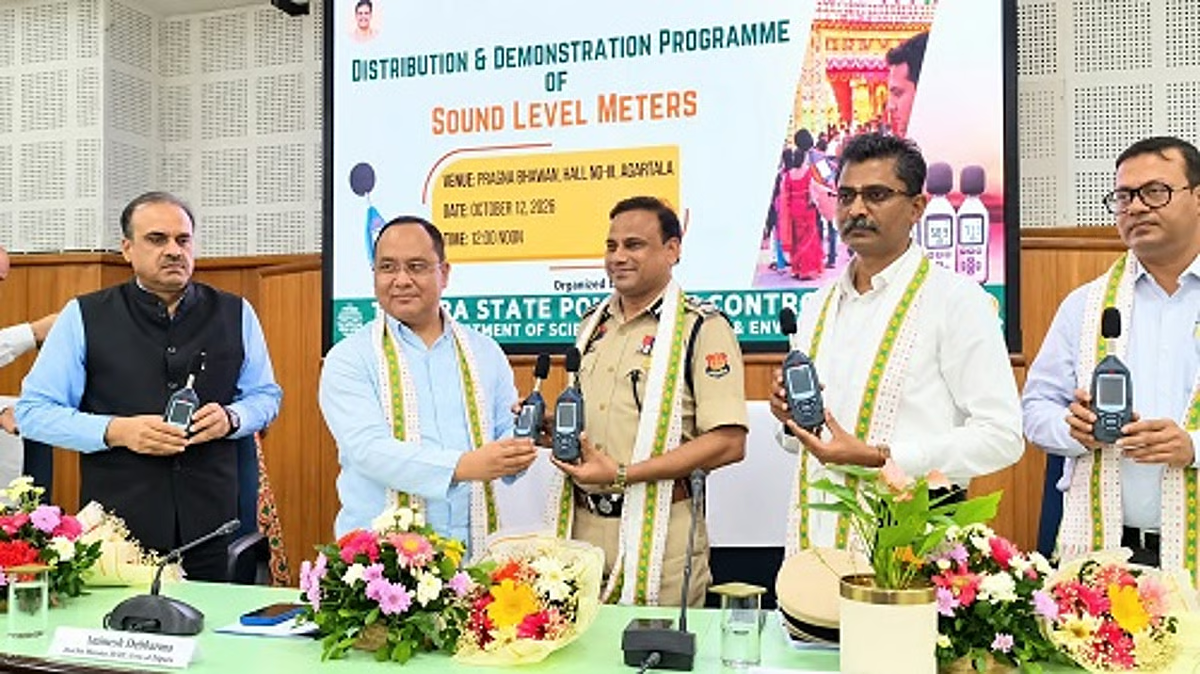
The Tripura legal awareness camp initiative is drawing attention to public safety and compliance with noise pollution regulations during religious and social celebrations. The Tripura State Legal Services Authority (TSLSA) announced a special campaign to educate Durga Puja organisers, sound-system operators and the public about the risks associated with excessive noise. The campaign, named Sarve Bhavantu Sukhinah, aims to promote lawful celebrations while protecting children, elderly people and individuals with health conditions. The initiative follows concerns about the impact of loud music and sound-system vibrations on vulnerable people.
West Tripura DM Sets November 30 Deadline for Pending Pre-Puja Ration Distribution
Tripura Legal Awareness Camp Promotes Noise Pollution Awareness
The Tripura State Legal Services Authority announced the special campaign under the direction of its Executive Chairman, Justice Dr T. Amarnath Goud. Member Secretary Veda Pratim Debbarma outlined the initiative and its focus on preventing noise pollution during Durga Puja celebrations. The authority plans to work with district and police administrations to spread awareness among organisers and people involved in sound-system operations.
The campaign carries the name Sarve Bhavantu Sukhinah, a Sanskrit expression meaning “May all be happy and well.” Its message links public celebrations with the responsibility to protect the health, safety and well-being of others.
The initiative seeks to explain that religious and cultural events must follow applicable laws governing sound levels and the use of loudspeakers. Although music and public announcements form part of many celebrations, excessive noise can disturb nearby residents and affect people who are particularly sensitive to loud sounds.
Moreover, the campaign aims to make legal requirements easier to understand. Many disputes arise when organisers, residents and sound-system operators have different expectations about permissible sound levels, operating hours and enforcement responsibilities. Clear guidance can help prevent misunderstandings before they escalate into complaints.
The authority intends to involve District Legal Services Authorities and Sub-Divisional Legal Services Committees across Tripura. These institutions regularly conduct legal literacy programmes to explain citizens’ rights, legal responsibilities and available remedies. TSLSA’s wider mandate includes promoting access to justice, providing eligible people with free legal services and encouraging dispute resolution.
Consequently, the campaign extends beyond a single awareness meeting. It represents an effort to communicate legal responsibilities at the community level, particularly during a period when public gatherings and sound systems can increase noise exposure.
Tripura Legal Awareness Camp Highlights Health Risks of Loud Sound
The campaign places particular emphasis on the potential effects of excessive noise on children, older people and individuals with existing health conditions. According to the report announcing the initiative, TSLSA raised concerns about the impact of unregulated sound systems during religious and social events.
Loud sound can disturb sleep, create stress and interfere with communication. Prolonged exposure to high sound levels can also damage hearing. Furthermore, repeated noise disturbances can affect residents who live near venues hosting large celebrations.
Children and elderly people may face particular difficulties when organisers use powerful sound systems close to homes or crowded public spaces. People with certain medical conditions may also require quieter surroundings. Therefore, organisers need to consider the wider community when planning music, announcements and other amplified activities.
The campaign follows reports about the death of a seven-year-old child, which the news report linked to heart failure allegedly associated with loud DJ sound and vibrations. That reported connection should not be treated as an independently established medical finding without supporting evidence. Nevertheless, the incident prompted the authority to highlight the need for greater awareness about excessive noise.
The broader public-health message is straightforward: celebrations should not expose residents to unnecessary noise or disregard applicable restrictions. Organisers can reduce risks by choosing suitable sound levels, positioning speakers responsibly and observing the conditions attached to event permissions.
Additionally, residents need accessible information about the rules governing amplified sound. Awareness programmes can explain where restrictions apply, how organisers should respond to complaints and which authorities handle enforcement.
The initiative also highlights the importance of prevention. When organisers understand their responsibilities before an event begins, they can make practical adjustments rather than respond only after residents raise concerns.
However, public awareness must complement enforcement. Where sound systems breach applicable rules, the responsible authorities must assess the circumstances and take appropriate action under the law. Legal education can help people understand those obligations, while consistent enforcement can encourage compliance.
Tripura Legal Awareness Camp Involves Organisers and Police
TSLSA plans to coordinate the campaign through district-level legal services institutions. According to the announcement, the District Legal Services Authorities and Sub-Divisional Legal Services Committees will organise awareness programmes under the direction of the state authority.
The programme announced for Agartala was scheduled to take place at the District and Sessions Court premises. The report said that judges, police representatives, district administration officials, Durga Puja organisers and sound-system workers would participate.
Their involvement matters because noise management requires coordination among several groups. Puja committees organise venues and programmes, while sound-system operators manage equipment and amplified audio. Police and district authorities oversee relevant permissions and enforce applicable restrictions.
During the planned discussions, participants were expected to examine the legal rules governing sound use, the responsibilities of organisers and vendors, and the powers and duties of police when violations occur. Authorities responsible for granting permissions or regulating Durga Puja arrangements were also expected to attend.
Such discussions can help clarify responsibilities before major events. For example, organisers need to understand the conditions attached to permissions, while vendors should know that equipment use must comply with applicable restrictions. Police and administrative officials, meanwhile, need to communicate requirements clearly and respond to complaints according to the law.
Furthermore, involving multiple stakeholders can reduce confusion over who must act when a sound-related complaint arises. Better communication may help organisers address concerns early and avoid unnecessary disputes with nearby residents.
The reported announcement described the Agartala programme as part of a wider state-level initiative. However, the available information does not confirm the attendance figures, the number of camps ultimately held or the outcomes of the planned sessions. Those details would require subsequent official updates.
The campaign’s effectiveness will therefore depend on implementation as well as planning. Continued outreach, clear instructions and appropriate follow-up can help turn the awareness message into everyday compliance.
Tripura Legal Awareness Camp Explains Legal Duties and Public Responsibility
The campaign also highlights the role of legal services institutions in helping citizens understand the law. TSLSA operates under the Legal Services Authorities Act, 1987, and works to improve access to justice, particularly for people who may face barriers to obtaining legal assistance. Its activities include legal awareness programmes, free legal aid for eligible people and support for alternative dispute resolution.
The authority’s wider outreach includes programmes on criminal laws, women’s rights, children’s protection and other social issues. Its annual report for 2024–25 records 257 awareness programmes on the three newly enacted criminal laws between August 2024 and January 2025. These programmes reached 20,784 people across Tripura, according to the report.
This background shows how legal awareness programmes can connect statutory requirements with everyday situations. The noise pollution campaign applies that approach to public celebrations, where organisers and residents may need practical guidance on their respective responsibilities.
Moreover, awareness initiatives can help citizens understand where to seek assistance when they encounter a potential violation. People can approach the relevant authorities with complaints, while eligible individuals may seek legal aid through the legal services system.
Organisers also have a responsibility to consider people who do not participate in the celebrations but live or work nearby. Reasonable sound levels, responsible equipment placement and compliance with permission conditions can help reduce disturbances without preventing lawful cultural activities.
The campaign’s broader message is that public celebrations and community welfare should go together. Religious events can retain their cultural importance while organisers respect legal restrictions and the needs of vulnerable residents.
Ultimately, the initiative seeks to encourage informed cooperation rather than relying solely on action after complaints arise. Its impact will depend on public participation, effective coordination and compliance with the applicable noise regulations.
Conclusion
The Tripura legal awareness camp initiative highlights the importance of preventing noise pollution during Durga Puja and other public celebrations. Through the Sarve Bhavantu Sukhinah campaign, TSLSA aims to explain the legal responsibilities of organisers, sound-system operators and the authorities responsible for regulating events. The initiative places particular emphasis on protecting children, elderly people and residents with health conditions.
The planned programme in Agartala brings together legal services institutions, police, district administration officials, Puja organisers and sound-system workers. Their participation can help clarify applicable rules, permission requirements and enforcement responsibilities. However, the available announcement does not confirm the final attendance or the outcomes of the planned event.
The wider objective is to encourage celebrations that respect both cultural traditions and public safety. Clear legal guidance, responsible sound-system use and consistent enforcement can help reduce avoidable noise disturbances. Continued awareness efforts will be important in ensuring that residents can participate in festivities without facing unnecessary risks or disruption.
FAQs
1. What is the purpose of the Tripura legal awareness camp?
The initiative aims to educate Durga Puja organisers, sound-system operators and the public about noise pollution regulations and the health risks of excessive sound.
2. Which organisation announced the campaign?
The Tripura State Legal Services Authority announced the initiative under the direction of its Executive Chairman, Justice Dr T. Amarnath Goud.
3. What is the campaign called?
The campaign is called Sarve Bhavantu Sukhinah, meaning “May all be happy and well.”
4. Who is expected to participate in the awareness programme?
The announced programme includes judges, police representatives, district administration officials, Puja organisers and sound-system workers.
5. Why is noise pollution awareness important during Durga Puja?
Excessive noise can disturb residents, affect sleep and create health risks. Awareness can help organisers follow applicable restrictions and protect vulnerable people.