


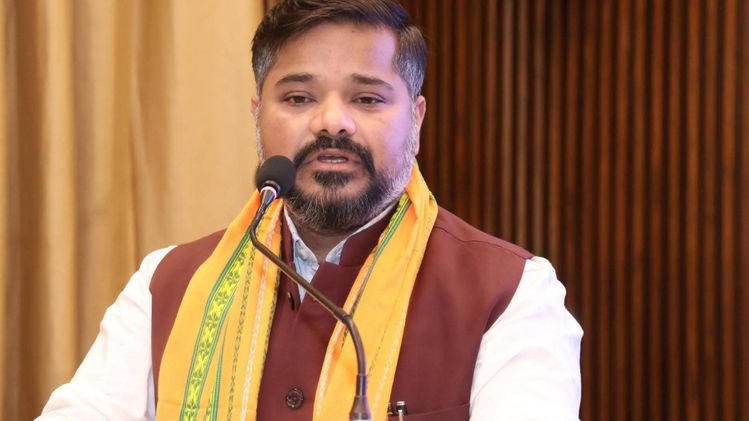
Tripura Food, Civil Supplies and Consumer Affairs Minister Sushanta Chowdhury underscored the need for accurate measurement and stronger legal metrology reforms to ensure fairness in trade and protect consumer rights. Speaking at a “Discussion Cycle on Laws of Legal Metrology” held at a private hotel in Agartala, the minister explained that precise measurement plays a crucial role in building transparency, strengthening trust, and fostering healthy commercial practices. His remarks placed renewed focus on Tripura legal metrology reforms and the need for stronger enforcement mechanisms across the state.
Read More: Tripura Brings New Power Tariff Rates Into Effect
Minister Highlights Importance of Accurate Measurement
During the event, Sushanta Chowdhury emphasised that accurate measurement forms the foundation of honest transactions. When both sellers and consumers follow correct measurement standards, trade becomes fair and disputes decline. He said that measurement errors—whether intentional or accidental—hurt public trust and create imbalance in the market.
The minister noted that several consumer complaints received by his department directly relate to improper weighing, inaccurate pricing, and faulty equipment. Therefore, strengthening legal metrology becomes essential. He added that commercial establishments must stay accountable, especially when dealing with goods such as food items, fuel, construction materials, and packaged commodities.
Chowdhury further stressed that consumers often suffer silently because they lack awareness of their rights. Because of this gap, he urged both officials and civil society groups to expand awareness campaigns so that citizens recognise when they are being misled.
Legal Compliance Must Become a Shared Responsibility
In his address, the minister explained that legal compliance cannot rest solely on enforcement agencies. Instead, it must become a shared responsibility between sellers, manufacturers, and consumers. He urged traders to adopt transparent practices and ensure that all equipment—such as weighing machines, fuel dispensers, and packaging units—remains properly calibrated.
Chowdhury reminded traders that the Legal Metrology Act protects both buyers and sellers by preventing fraudulent practices. When businesses follow the law, they build loyalty among customers and create an environment where ethical trade flourishes.
He also urged consumers to stay alert while purchasing goods. According to him, citizens must check measurement labels, expiry dates, and package details, as these steps prevent exploitation. Strengthening legal metrology, he said, hinges on public participation.
Need for Modernisation and Stronger Monitoring
Chowdhury pointed out that technological advancement has introduced new measurement devices, modern billing systems, and automated distribution models. Because of these changes, legal metrology laws must evolve to address new challenges. The minister called for modernising inspection tools, updating measuring equipment, and enhancing the skills of enforcement officials.
He mentioned that periodic checks across markets, petrol pumps, and commercial hubs will continue, but the state needs stronger monitoring systems to detect violations early. With digital tools, inspectors can detect discrepancies faster and submit reports more efficiently. Modernisation, he added, will help prevent manipulation and protect honest traders from unfair competition.
Furthermore, the minister suggested that departments should collaborate with technology providers to bring advanced equipment to Tripura. Such steps will enable the state to maintain national standards and meet rising commercial demands.
Public Awareness Key to Consumer Protection
Throughout the discussion, Chowdhury emphasised the importance of awareness in strengthening Tripura legal metrology reforms. Many consumers still do not understand their rights under the Legal Metrology Act. As a result, they accept incorrect measurements without questioning them. To address this gap, the government plans to work with schools, consumer clubs, and community organisations to promote awareness.
Awareness initiatives will include workshops, street campaigns, and digital outreach. These programmes will teach consumers how to verify weights, read packaging labels, and identify fraudulent products. The minister said that an informed society becomes its own protection system, reducing dependence on enforcement alone.
Officials present at the programme agreed that consumer education remains one of the most effective tools for preventing exploitation. They suggested additional helplines, online complaint systems, and mobile apps to help citizens report violations easily.
Strengthening Enforcement Through Training and Coordination
The minister also focused on the need for better training for enforcement personnel. Officers responsible for legal metrology checks require updated knowledge of new technology, device calibration, and modern testing standards. Chowdhury stated that training programmes for inspectors can improve the accuracy of field inspections and reduce margin for error.
He highlighted the importance of coordination between various departments, including the food supplies, commerce, police, and revenue departments. Strong coordination ensures that violators cannot escape accountability by exploiting loopholes.
Moreover, the minister stressed that penalties must remain strict enough to deter repeat offences. He clarified that the government will not tolerate manipulation in trade practices, especially when it affects consumers directly.
Conclusion
Tripura Food, Civil Supplies and Consumer Affairs Minister Sushanta Chowdhury’s address at the “Discussion Cycle on Laws of Legal Metrology” brought crucial attention to accurate measurement and legal compliance as pillars of consumer protection. His strong emphasis on technology-driven reforms, public awareness, and coordinated enforcement indicates a forward-looking approach to governance.
As Tripura works toward improving trade transparency, Tripura legal metrology reforms will remain central to building a fair market environment. With better equipment, stricter monitoring, and increased public participation, the state hopes to create a system where consumers feel protected and traders operate with integrity.
Read More: Tripura CM Hands Appointment Letters to Food Inspectors