


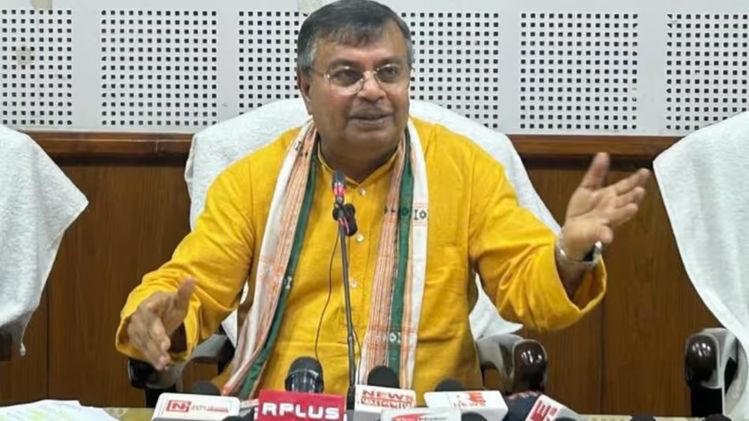
Tripura Power Minister Ratan Lal Nath has laid the foundation stone for a Rs 126 crore initiative aimed at strengthening the state’s electricity infrastructure. The Tripura power transmission project, once completed, promises to provide reliable 24×7 electricity to homes, businesses, and industries across the state. This marks a significant step toward improving connectivity and meeting the rising energy demands of the people.
Read More: Tripura CM Urges Clubs to Curb Noise and Subscriptions for Mayer Gaman
Tripura power transmission project to modernise infrastructure
Speaking at the foundation ceremony, the Power Minister highlighted that the Tripura power transmission project would be one of the largest investments in the state’s energy sector. The Rs 126 crore project focuses on building new transmission lines, upgrading substations, and improving grid stability.
The minister said the government is determined to provide round-the-clock electricity to every household. He emphasised that reliable power supply is not only crucial for improving living standards but also for boosting industrial growth and supporting digital connectivity.
By expanding transmission capacity, the project aims to reduce power outages, voltage fluctuations, and technical losses that have long troubled consumers in both rural and urban areas.
Ratan Lal Nath’s vision for 24×7 electricity in Tripura
The Tripura power transmission project reflects the minister’s broader vision of transforming the state into a power-efficient region. Ratan Lal Nath reiterated that uninterrupted electricity is essential for development, from healthcare facilities and educational institutions to agriculture and industries.
He pointed out that with Tripura’s growing population and increasing demand for electricity, the project is both timely and necessary. Reliable power supply would not only improve the quality of life but also attract investments, create jobs, and support new industries.
The minister also expressed confidence that the project would play a key role in Tripura’s goal of achieving energy self-sufficiency in the coming years.
Addressing rural-urban power gaps
One of the major challenges in Tripura has been ensuring equitable access to electricity across rural and urban regions. While cities often receive better supply, rural areas continue to face interruptions. The Tripura power transmission project is designed to address this imbalance.
New transmission lines and upgraded substations will connect remote villages to a stable grid. By improving infrastructure, the project will ensure that farmers, small businesses, and households in rural areas enjoy the same reliability as urban consumers.
This inclusive approach underscores the government’s commitment to ensuring that no community is left behind in Tripura’s development journey.
Investment of Rs 126 crore to boost state economy
The Rs 126 crore investment is expected to provide both direct and indirect benefits to the state’s economy. Construction activities under the Tripura power transmission project will create job opportunities for local workers, while long-term improvements in power supply will support industries and services.
Better electricity availability will also reduce reliance on expensive backup generators, lowering costs for businesses and households. Moreover, improved power stability will encourage small-scale industries, IT services, and agro-based enterprises to expand their operations in Tripura.
The minister noted that reliable energy is a backbone for economic growth, and this project will serve as a catalyst for industrialisation in the state.
Environmental and technical standards
Authorities have confirmed that the Tripura power transmission project will adhere to modern environmental and technical standards. The project will use advanced technology to minimise transmission losses and ensure efficiency.
Special care will be taken to avoid ecological damage, particularly in forested and rural areas. The Power Minister stressed that development and environmental protection must go hand in hand. Eco-friendly practices, including proper waste management and controlled land use, will form part of the project execution.
Support for government’s digital and industrial push
The project also aligns with Tripura’s push toward digital governance and industrial expansion. With schools, hospitals, and government offices increasingly dependent on digital systems, stable electricity supply is crucial. The Tripura power transmission project will ensure that digital services function without interruption, thereby improving governance and public services.
Industries, particularly those in manufacturing and agro-processing, will also benefit from 24×7 electricity. The availability of consistent power will reduce production delays, increase efficiency, and help local businesses compete on a national level.
Public response to the initiative
Citizens and industry representatives welcomed the foundation of the Rs 126 crore project. Residents expressed hope that the initiative would put an end to frequent outages, which often disrupted their daily lives. Farmers said reliable electricity would help them use irrigation pumps more effectively, while students welcomed the move for its positive impact on studies.
Business leaders, meanwhile, noted that consistent electricity would reduce operational costs and attract new investors to Tripura. The Tripura power transmission project has therefore been hailed as a landmark step toward the state’s economic growth.
Looking ahead
The government has set ambitious timelines for completing the project, with strict monitoring mechanisms in place. The Tripura power transmission project is expected to be operational in phases, ensuring gradual benefits for consumers.
Ratan Lal Nath assured citizens that the government remains committed to further investments in the energy sector. He added that this project is only the beginning, with more initiatives planned to expand renewable energy use and enhance overall efficiency.
The foundation of the Rs 126 crore Tripura power transmission project by Minister Ratan Lal Nath marks a turning point for the state’s energy sector. By promising 24×7 electricity, the government aims to empower citizens, strengthen industries, and support digital growth.
With its focus on inclusivity, efficiency, and sustainability, the project is set to bring lasting benefits to Tripura. As work progresses, the people of the state look forward to a future where uninterrupted power supply becomes a reality for all.
Read More: Mizoram Assam status quo after border tensions