


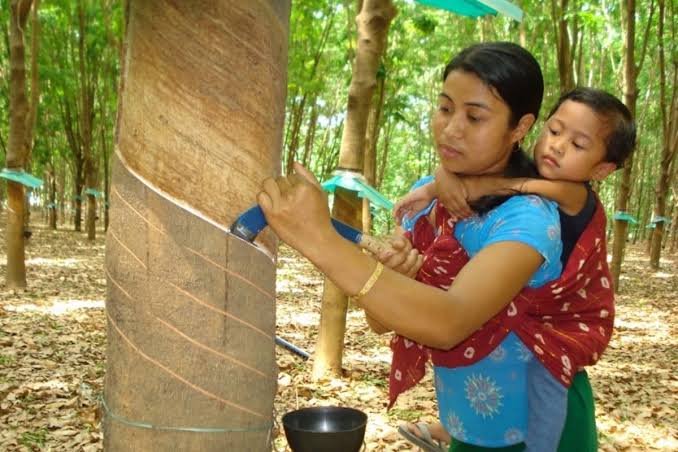
Tripura subsidised fertiliser review is gaining attention as the government examines fertiliser availability and allocation for plantation-based agriculture, including rubber and tea. The review comes against the wider need to maintain timely agricultural inputs for crops that contribute to rural incomes and the state’s plantation economy.
Rubber and tea require regular nutrient management, making reliable fertiliser access important for plantation productivity. Moreover, supply planning becomes especially relevant when demand varies across agricultural seasons. The government’s review is therefore focused on aligning available fertiliser stocks and distribution with the requirements of farmers and plantation growers.
The exercise also reflects the importance of strengthening input supply chains in Tripura. However, the review of allocation should not be interpreted as confirmation of any new subsidy rate unless the government separately announces such a change.
Agartala Puja Security Deployment Strengthened Ahead of Durga Puja
Tripura Subsidised Fertiliser Review Targets Plantation Requirements
Tripura has developed a significant rubber-growing sector, with thousands of small and medium growers depending on plantations for income. The crop has become an important component of the state’s agricultural economy, particularly in rural and tribal areas.
Tea also contributes to Tripura’s plantation sector. The state has numerous tea gardens and small growers, while Tripura Tea Development Corporation has played a role in promoting tea cultivation and processing.
Against this background, the Tripura subsidised fertiliser review focuses attention on the availability of agricultural inputs needed by plantation growers. Fertilisers can support plant nutrition and help maintain productivity when used according to crop requirements and agricultural recommendations.
The government’s role extends beyond simply arranging supplies. Effective distribution also requires coordination between departments, authorised dealers, growers’ organisations and other stakeholders. Consequently, stock monitoring and allocation become important parts of the agricultural supply chain.
Tripura Subsidised Fertiliser Review Covers Supply and Distribution
Fertiliser distribution in India operates through a regulated system involving manufacturers, importers, state governments and authorised distribution networks. Different fertiliser products also have different nutrient compositions and recommended applications.
For plantation crops, timely availability can be particularly important because growers plan field operations according to crop cycles and weather conditions. A delayed supply can create difficulties even when adequate fertiliser becomes available later.
Therefore, Tripura subsidised fertiliser review has a practical dimension for farmers. Officials need to assess existing stocks, expected requirements and distribution arrangements so that supplies reach the areas where demand is highest.
Moreover, allocation decisions must account for differences between crops. Rubber plantations and tea gardens do not necessarily require identical nutrient management. Agricultural authorities therefore need to consider crop-specific requirements rather than treating all plantation acreage as a single category.
The review can also help identify distribution gaps. If fertiliser reaches central warehouses but does not move efficiently to local dealers or farmer groups, availability at the field level can still remain uneven.
Tripura Subsidised Fertiliser Review Matters for Rubber Growers
Rubber has become one of Tripura’s major plantation crops. The state has developed a large rubber-growing area, supported by growers ranging from smallholders to larger plantations.
For many growers, rubber provides a long-term source of agricultural income. However, plantation management involves recurring costs, including labour, maintenance and agricultural inputs. Fertiliser availability can therefore influence the overall cost and management of plantations.
The Tripura subsidised fertiliser review could help authorities understand whether existing allocation patterns adequately reflect the needs of rubber-growing areas. Such an assessment becomes more useful when officials compare supply levels with plantation acreage and seasonal requirements.
Additionally, regular input availability can help growers plan agricultural operations more effectively. Predictable distribution reduces uncertainty and allows farmers to coordinate fertiliser application with other plantation activities.
At the same time, fertiliser use needs to follow recommendations from agricultural experts. More input does not automatically translate into higher productivity. Soil conditions, plant age, weather and cultivation practices also influence plantation performance.
Tripura Subsidised Fertiliser Review Supports Tea Plantation Needs
Tea plantations represent another important part of Tripura’s agricultural landscape. The state has a long history of tea cultivation, with both established gardens and smaller growers contributing to production.
Tea plants require careful nutrient management because plantations remain productive over long periods. Maintaining soil health and applying appropriate nutrients can therefore form part of routine plantation management.
Consequently, the Tripura subsidised fertiliser review has relevance for tea growers as well as rubber producers. A well-planned supply system can help reduce uncertainty during periods when plantation operators need agricultural inputs.
Furthermore, tea production supports employment in rural areas. Plantation activity involves workers in cultivation, plucking, processing and related operations. Therefore, maintaining productive gardens has implications beyond individual growers.
However, fertiliser is only one component of the tea sector’s overall challenges. Weather conditions, labour availability, processing capacity, market prices and access to buyers also influence the financial performance of tea gardens.
A stable fertiliser supply can nevertheless provide growers with greater certainty in one part of the production cycle. This makes supply planning an important element of broader plantation-sector support.
Tripura Subsidised Fertiliser Review Could Strengthen Agricultural Planning
A review of fertiliser allocation can also help the government improve its broader agricultural planning. Instead of responding only when shortages emerge, authorities can use plantation acreage, historical consumption and seasonal requirements to estimate future demand.
Such planning becomes increasingly important as Tripura’s plantation economy develops. Rubber and tea growers operate across different districts and production systems, creating varied logistical requirements.
Moreover, better coordination between agricultural departments and distribution agencies can improve visibility of stocks. Regular monitoring can help identify areas where supplies are moving slowly or where demand exceeds available allocations.
The government can also use farmer feedback to assess whether the distribution system works effectively at the local level. Information from growers can highlight issues involving dealer availability, transportation, timing and product suitability.
At the same time, any subsidy-supported distribution system needs transparent allocation rules. Clear information can help growers understand availability and reduce uncertainty over access to approved fertilisers.
Conclusion
Tripura subsidised fertiliser review highlights the government’s focus on maintaining reliable agricultural input supplies for important plantation crops such as rubber and tea. Timely access to appropriate fertilisers can help growers plan plantation management and support rural agricultural activity.
The review also offers an opportunity to strengthen demand forecasting, stock monitoring and last-mile distribution. However, fertiliser supply alone cannot determine plantation productivity, which also depends on weather, soil conditions, labour, prices and wider market factors.
A more predictable supply chain could nevertheless provide useful support to Tripura’s plantation economy, particularly for small and medium growers who depend on regular agricultural inputs.
FAQs
What is the Tripura subsidised fertiliser review?
The Tripura subsidised fertiliser review involves examining fertiliser availability, allocation and distribution requirements for agricultural sectors, including plantation crops such as rubber and tea.
Why is fertiliser important for rubber plantations?
Fertiliser provides nutrients that can support rubber plantation growth and productivity when applied according to appropriate agricultural recommendations.
How does fertiliser availability affect tea growers?
Reliable fertiliser supplies can help tea growers plan routine plantation management and maintain appropriate nutrient levels in the soil.
Does the review mean fertiliser prices have changed?
Not necessarily. A review of allocation and availability does not by itself establish a change in subsidy rates or retail prices. Any such change would require a separate official announcement.
What other factors affect Tripura’s plantation sector?
Weather, soil conditions, labour availability, plantation management, processing facilities and market prices can all influence the performance of rubber and tea plantations.