


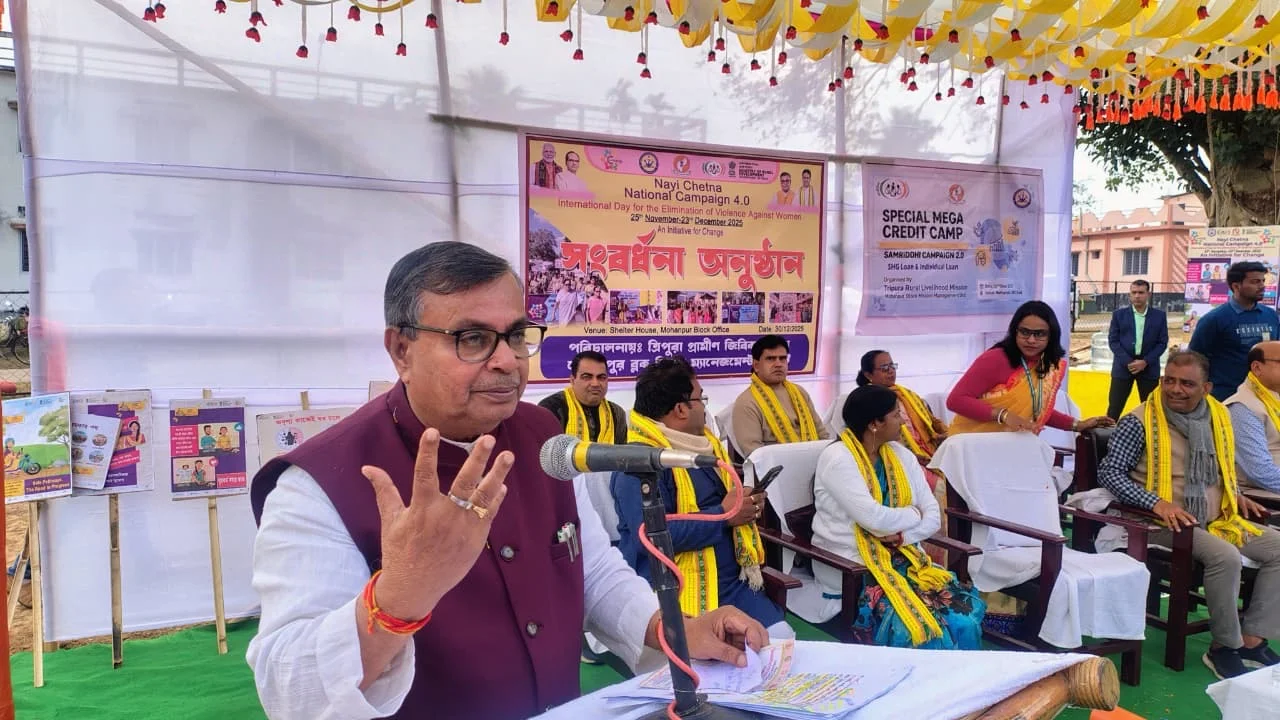
Tripura marked a major milestone in its power sector as the Tripura State Load Dispatch Centre (SLDC) became the first in Northeast India to secure the ISO/IEC 27001:2022 certification for cybersecurity. Power Minister Ratan Lal Nath announced the achievement during the 22nd Foundation Day celebration of the Tripura State Electricity Corporation Limited (TSECL) in Agartala.
The certification strengthens Tripura’s ability to protect its power systems from rising cyber threats. At the same time, it positions the state as a leader in power-sector cybersecurity across the region.
Minister Calls Certification a Cybersecurity Milestone
While addressing the gathering, Ratan Lal Nath described the achievement as a “milestone in cyber protection.” He stated that modern power operations rely heavily on digital systems. Therefore, robust cybersecurity has become essential to protect critical infrastructure.
Moreover, the certification aligns with the Central Electricity Authority’s mandate to safeguard the national power grid and its digital networks. Nath emphasized that Tripura has taken a proactive step by meeting this national standard ahead of many other states.
Rigorous Audit Led to Certification
The Ministry of Electronics and Information Technology, Government of India, granted the certification after a detailed system surveillance audit. The Standardisation Testing and Quality Certification (STQC) directorate conducted the audit and assessed multiple security layers.
During the process, auditors examined biometric access controls, user identity management systems, and intelligent threat detection tools. In addition, they reviewed physical security arrangements and advanced fire safety systems such as VESDA smoke detection. As a result, SLDC met all required cybersecurity benchmarks.
Read More: Tarun Vijay Visits Tripura Over Angel Chakma Murder Case
Power Sector Transformation Over the Years
While reflecting on Tripura’s power journey, Nath traced its roots back to 1937. At that time, diesel engines supplied electricity during the princely era. Later, the state formally established TSECL in 2004 to manage power distribution.
However, Tripura witnessed a major transformation after 2005. Since then, the government has consistently expanded and modernized power infrastructure across the state.
Consumer Growth and Infrastructure Expansion
“In 2005, Tripura had just 3.9 lakh electricity consumers. Today, the number has grown to nearly 15.7 lakh,” Nath said. This sharp increase reflects both population growth and improved access to electricity.
To support rising demand, the state expanded its network of 132 kV and 33 kV substations and transmission lines. Consequently, Tripura strengthened its power backbone and improved supply reliability in both urban and rural areas.
Digital Reforms Improve Transparency
Nath stressed that electricity acts as the engine of development. Therefore, the government introduced several digital reforms to improve transparency and efficiency. These reforms include online load-shedding management, smart metering, transparent billing systems, and digital payment options.
Additionally, TSECL now operates a 24×7 customer care call center. The utility also introduced rapid fault detection and repair services. Together, these steps have helped TSECL evolve into a modern, consumer-focused service provider.
Future Focus on Power Generation and Renewables
Looking ahead, the state aims to meet rising electricity demand through diversified energy sources. Nath said the government plans to expand gas-based, solar, and hydroelectric power generation.
Key projects include the 120 MW combined cycle power plant at Rokhia and the revival of the Gomati hydroelectric project. Furthermore, Tripura is planning an 800 MW pump storage project. Alongside these initiatives, the state continues to scale up solar energy capacity.
Smart Technologies and Urban Upgrades
In addition to generation projects, Tripura is adopting smart technologies for efficient power management. Authorities plan to introduce underground cabling across Agartala Municipal Corporation areas. This step will improve safety and reduce disruptions caused by storms.
Meanwhile, power teams have started adopting live-line maintenance techniques and drone-based fault detection. The government also plans to integrate solar power systems in hospitals and educational institutions to promote clean energy.
Senior Officials Attend Foundation Day Event
Several senior officials attended the Foundation Day celebration. The dignitaries included Power Department Secretary Abhishek Singh, Tripura Electricity Regulatory Commission Chairman Hemanta Verma, and TSECL Managing Director Biswajit Bose, among others.
Also Read: Jindal Seeks Satellite Station for Kurukshetra – Prime 24 Seven