


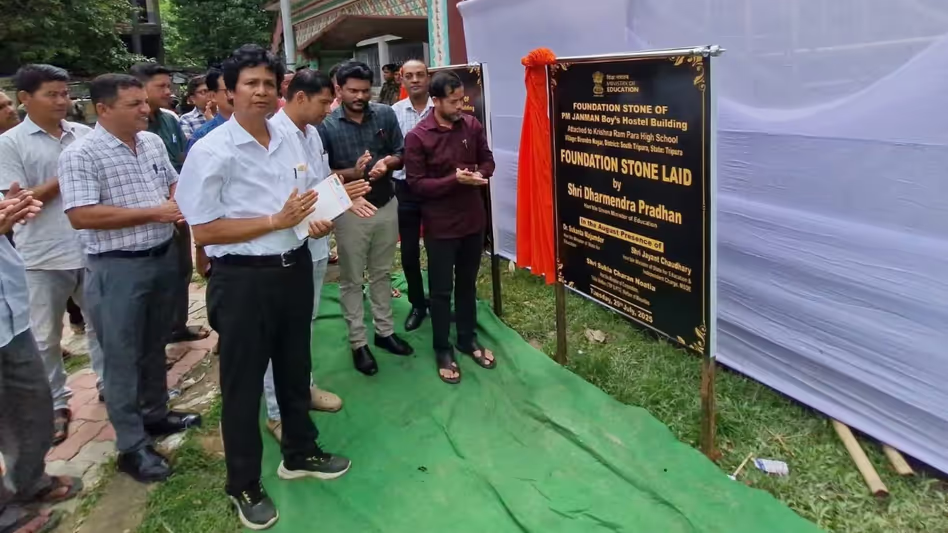
The Tripura ST boys hostel project marks another step towards strengthening educational infrastructure for Scheduled Tribe students. The Tribal Welfare Department has laid the foundation stone for a new hostel with a capacity of 50 students. The proposed facility aims to provide residential accommodation for tribal boys who face difficulties travelling long distances to attend school. Moreover, the project highlights the importance of accessible education and student support in tribal communities. The department’s work on residential facilities forms part of wider efforts to improve educational opportunities for students from remote and underserved areas.
Tripura Education Department Distributes Scooties to Meritorious Female Students
Tripura ST Boys Hostel Project Supports Tribal Education
The foundation-stone ceremony marks the beginning of a new residential infrastructure project for Scheduled Tribe students. The proposed hostel will accommodate up to 50 boys once construction finishes and the authorities make the facility operational.
For students who live far from educational institutions, daily travel can create significant difficulties. Long journeys may consume valuable study time and make regular attendance harder. Residential accommodation can help students stay closer to their schools and follow a more consistent academic routine.
Furthermore, a dedicated hostel can provide students with a shared environment for learning and personal development. Students may find it easier to organise their study schedules, participate in group learning and prepare for examinations when they have suitable accommodation.
The project also reflects the role of the Tribal Welfare Department in supporting educational access among Scheduled Tribe communities. Residential facilities can complement scholarships, financial assistance and other student welfare programmes.
However, the long-term impact will depend on the quality of construction and the services available after the hostel opens. Safe accommodation, adequate sanitation, drinking water, electricity and suitable study spaces will remain essential for students’ daily needs.
The project’s capacity of 50 students provides a defined number of residential places. Authorities will also need to establish suitable admission procedures and operating arrangements before students can use the facility.
Tripura ST Boys Hostel Project Can Help Students from Remote Areas
Access to education remains closely linked to the availability of suitable infrastructure. In remote and hilly areas, some students must travel considerable distances to reach schools. Transport limitations and difficult road conditions can add to these challenges.
A residential facility can reduce the burden of daily travel for students who qualify for admission. It can also help families who struggle to arrange accommodation near educational institutions.
Moreover, a hostel can provide a structured environment in which students balance classroom learning with independent study. A suitable residential setting may also encourage cooperation among students from different villages and communities.
The benefits extend beyond physical accommodation. A well-managed hostel can help students develop independence, time-management skills and responsibility. These qualities can support their academic progress and prepare them for further education.
Nevertheless, residential facilities must address students’ safety and welfare. Proper supervision, clear rules, access to healthcare and effective grievance procedures can help create a supportive living environment.
Authorities must also ensure that students receive adequate meals and have access to clean drinking water and hygienic facilities. These basic services contribute to students’ well-being and help them concentrate on their studies.
The new hostel will therefore need more than a completed building to achieve its intended purpose. Effective management and regular maintenance will play an important role in determining how much students benefit from the facility.
Tribal Welfare Department Expands Educational Infrastructure
The Tribal Welfare Department plays an important role in implementing programmes that support Scheduled Tribe communities in Tripura. Educational infrastructure, including boys’ and girls’ hostels, can help address accommodation barriers that affect students from remote areas.
Residential facilities are particularly relevant when students must leave their villages to pursue schooling. Without affordable and suitable accommodation, some families may find it difficult to support regular attendance at institutions located far from home.
The new 50-seater hostel adds to the broader need for student accommodation and educational support. However, the specific project location, approved budget and construction timeline have not been confirmed in the available information. These details are important for understanding the project’s scale and expected completion.
Tripura has also pursued other forms of educational infrastructure development, including school buildings, classrooms and science laboratories. Such investments can improve the learning environment when authorities combine them with trained teachers, appropriate learning materials and student support services.
In addition, coordination between the Tribal Welfare Department, educational institutions and local administrations can help identify students who need residential assistance. Clear admission criteria and transparent procedures can ensure that eligible students understand how to apply.
Regular monitoring can also help authorities assess the condition of hostel buildings and the quality of services they provide. Feedback from students, families and school authorities may help identify issues that require attention.
The effectiveness of a hostel depends on how well it serves its intended beneficiaries. Therefore, construction should go hand in hand with planning for staffing, maintenance, student welfare and day-to-day administration.
Tripura ST Boys Hostel Project Highlights the Need for Long-Term Support
The Tripura ST boys hostel project highlights the importance of combining infrastructure development with sustained educational support. A 50-seat facility can provide residential opportunities for students who meet the admission requirements, but its wider contribution will depend on how authorities manage it.
First, the department must ensure that the construction meets applicable safety and quality standards. The building should provide suitable sleeping arrangements, sanitation, ventilation and spaces where students can study comfortably.
Next, the authorities must plan for daily operations. Hostel management requires suitable staff, regular maintenance, food arrangements and clear procedures for responding to students’ concerns. These services help create a stable environment for learning.
Furthermore, the department and the relevant educational institutions can help students connect residential support with academic guidance. Regular study sessions, mentoring and communication with families may strengthen the benefits of hostel accommodation.
Transparent admission procedures will also matter. Students and parents need clear information about eligibility, documentation, application dates and the facilities available at the hostel. Authorities should release these details through appropriate official channels when they become available.
The project’s progress will become clearer once officials announce the construction schedule, funding details and expected opening date. Until then, the foundation-stone ceremony represents the start of the project rather than confirmation that students can already use the facility.
With suitable planning and effective management, the hostel could help eligible tribal boys access education with fewer accommodation-related difficulties. Its lasting value will depend on the department’s ability to provide a safe, reliable and student-focused residential service.
Conclusion
The Tripura ST boys hostel project represents an effort to improve residential support for Scheduled Tribe students. The Tribal Welfare Department has laid the foundation stone for a new facility designed to accommodate 50 boys. By providing residential places, the project aims to address some of the difficulties faced by students who live far from educational institutions.
The proposed hostel’s benefits will depend on construction quality, safety arrangements, sanitation, food services and effective management. Clear admission procedures and academic support will also help eligible students make the most of the facility. Authorities must ensure that the hostel meets students’ needs after construction finishes.
Further details about the project’s location, budget and completion schedule would provide a clearer picture of its scope. For now, the foundation-stone ceremony signals the beginning of another educational infrastructure initiative for tribal students in Tripura. Effective implementation could help eligible beneficiaries pursue their studies in a more supportive residential environment.
FAQs
1. What is the Tripura ST boys hostel project?
It is a hostel construction project initiated by the Tribal Welfare Department to provide residential accommodation for Scheduled Tribe boys pursuing their education.
2. How many students will the new hostel accommodate?
The proposed hostel will have a capacity of 50 students.
3. Which department is responsible for the hostel project?
The Tribal Welfare Department is responsible for the project.
4. How can the hostel help tribal students?
The facility may reduce the difficulties associated with long daily journeys and provide students with a place to live closer to their educational institutions.
5. When will the new hostel open?
The confirmed completion and opening dates are not available in the information provided. Students and families should look for official announcements from the relevant department.