


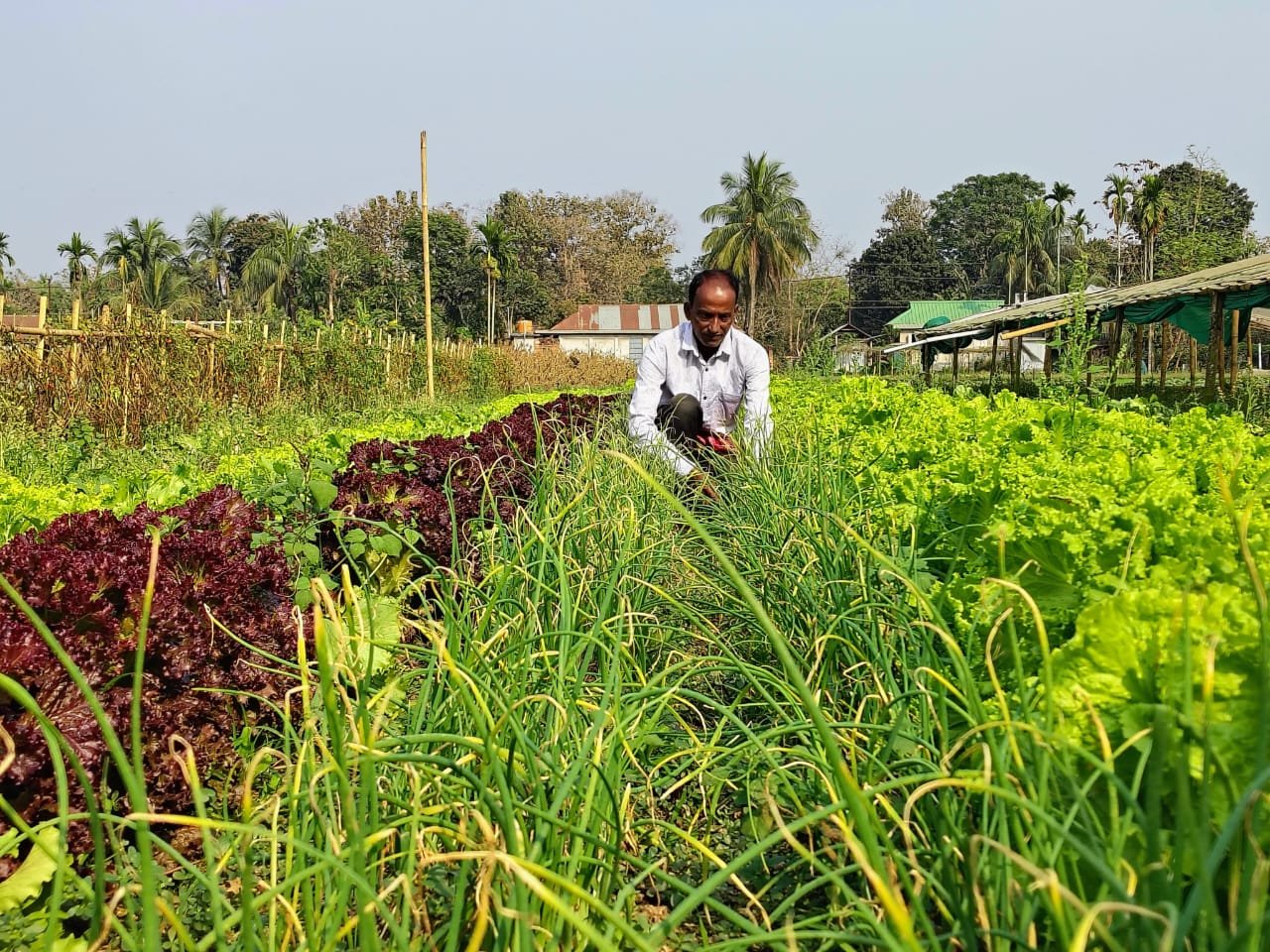
The Tripura natural farming mission 16800 hectares initiative has been officially announced by Agriculture Minister Ratan Lal Nath, outlining a state-level target to bring 16,800 hectares of farmland under active natural farming by the end of the year. The mission aims to promote chemical-free agriculture, improve soil health, and enhance sustainable rural livelihoods. Moreover, the initiative reflects a broader shift toward eco-friendly and climate-resilient farming practices in the state.
Sevoke Rangpo Railway Project Reviewed by Parliamentary Panel
Mizoram Tightens Liquor Rules with Medical-Based Permit System
State Sets Ambitious Natural Farming Target
The Agriculture Minister has announced a clear roadmap under the Tripura natural farming mission 16800 hectares plan.
Moreover, the target focuses on transitioning large-scale agricultural land toward chemical-free cultivation methods.
Consequently, the initiative is expected to reshape farming practices across rural Tripura.
Focus on Sustainable Agriculture Practices
Natural farming emphasizes the use of organic inputs and traditional methods.
Furthermore, it reduces dependency on chemical fertilizers and pesticides, improving long-term soil fertility.
Therefore, the mission supports environmentally sustainable agriculture development.
Boost to Rural Farmer Livelihoods
The Tripura natural farming mission 16800 hectares is also aimed at strengthening rural incomes.
Moreover, reduced input costs can improve profitability for small and marginal farmers.
As a result, farmers may experience better financial stability over time.
Soil Health and Environmental Benefits
A key objective of natural farming is restoring soil health and biodiversity.
Furthermore, it helps reduce soil degradation caused by chemical-intensive farming.
Consequently, agricultural ecosystems are expected to become more resilient.
Training and Capacity Building for Farmers
The government is expected to support farmers through training programs and field demonstrations.
Moreover, awareness campaigns will help farmers adopt natural farming techniques effectively.
Therefore, capacity building is central to the mission’s success.
Reduction of Input Costs
One of the major benefits of natural farming is lower dependency on external inputs.
Furthermore, farmers can rely on locally available natural resources for cultivation.
As a result, production costs are expected to decrease significantly.
Climate-Resilient Agriculture Push
The Tripura natural farming mission 16800 hectares aligns with climate-resilient agriculture goals.
Moreover, natural farming practices help reduce greenhouse gas emissions from agriculture.
Consequently, the initiative supports long-term environmental sustainability.
Market Potential for Organic Produce
Natural farming products often have higher market demand due to their chemical-free nature.
Furthermore, improved branding and certification can help farmers access premium markets.
Therefore, the initiative may create new economic opportunities.
Looking Ahead
The state is expected to implement the mission in phases with continuous monitoring.
Moreover, progress will be tracked to ensure the 16,800-hectare target is achieved by year-end.
Consequently, the initiative will remain a key focus of agricultural policy in Tripura.
Conclusion
The announcement of bringing 16,800 hectares under natural farming marks a major step toward sustainable agriculture in Tripura. The Tripura natural farming mission 16800 hectares reflects the state’s commitment to eco-friendly farming, improved soil health, and enhanced rural livelihoods through chemical-free agricultural practices.
FAQs
What is the Tripura natural farming mission?
It is a state initiative to promote chemical-free farming across 16,800 hectares.
Who announced the mission?
Agriculture Minister Ratan Lal Nath.
What is the main goal?
To expand sustainable and natural farming practices.
How will farmers benefit?
Lower costs, improved soil health, and better income opportunities.
Why is natural farming important?
It promotes environmental sustainability and long-term agricultural productivity.