


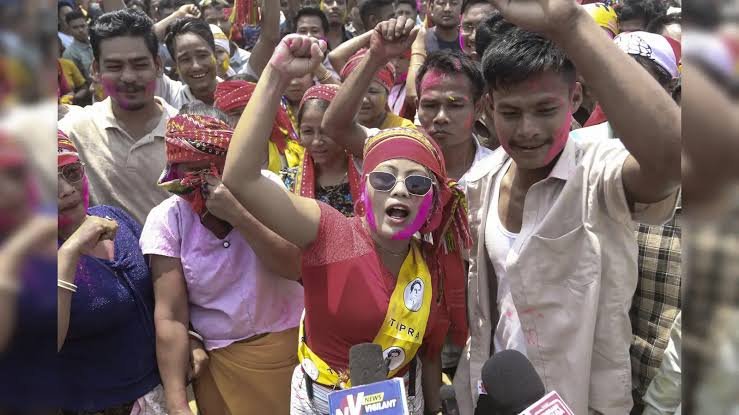
TIPRA Motha is preparing to contest all 587 village committee seats independently in Tripura’s upcoming local elections, according to the party’s reported electoral strategy. The decision signals a strong push to maintain an independent political identity across the state’s tribal areas.
The move comes as political parties intensify preparations for the September 2026 village polls. Moreover, TIPRA Motha’s decision to contest without an alliance could create direct electoral battles with the BJP and other political organisations across several tribal constituencies.
The party has built its campaign around indigenous rights, constitutional safeguards, land protection, cultural identity, language, and political representation. However, contesting all 587 seats will require extensive organisation, strong candidates, and significant grassroots mobilisation.
Supreme Court Allows Kuki Legal Groups Access to Biren Singh Forensic Report
TIPRA Motha Targets All 587 Seats
TIPRA Motha’s reported plan to contest all 587 village committee seats represents an ambitious grassroots strategy.
The decision would give the party an opportunity to establish candidates across the entire electoral field rather than limiting its campaign to selected areas. Furthermore, a statewide grassroots campaign could help TIPRA Motha measure its support across different tribal communities.
The strategy also reinforces the party’s independent political identity.
However, contesting every seat requires considerable organisational resources and candidate availability.
Pradyot Debbarma Maintains Independent Line
TIPRA Motha founder Pradyot Kishore Manikya Debbarma has continued to emphasise political independence ahead of the village elections.
The party has resisted immediate electoral realignment and focused instead on its own political agenda. Additionally, an independent campaign allows TIPRA Motha to select candidates without negotiating seat-sharing arrangements with other parties.
This approach gives the party greater control over its campaign.
However, independence also means TIPRA Motha cannot rely on an alliance partner to share organisational or electoral responsibilities.
BJP Could Face Direct Competition
TIPRA Motha’s decision could increase direct competition with the BJP.
If the party contests across all 587 seats, both organisations could compete for support in numerous tribal communities. Moreover, multi-cornered contests could emerge where other parties and independent candidates also enter the race.
The BJP may therefore need to strengthen its own village-level campaign.
However, the strength of the competition will vary significantly from one committee to another.
Constitutional Rights Remain Central
Constitutional safeguards remain an important part of TIPRA Motha’s political message.
The party has consistently raised issues involving indigenous rights, political representation, land protection, cultural identity, and administrative safeguards. Furthermore, an independent campaign allows TIPRA Motha to present these demands without modifying them to suit an alliance partner.
The strategy could reinforce its position as a distinct tribal political force.
However, constitutional matters often require formal legal and institutional processes.
Tripartite Agreement Remains Relevant
The Tripartite Agreement continues to influence political discussions surrounding TIPRA Motha.
The party has called for meaningful implementation of commitments affecting indigenous communities. Moreover, disagreements over the pace of implementation have contributed to political differences between TIPRA Motha and the BJP.
The village elections could provide a new platform for TIPRA Motha to highlight these concerns.
However, the implementation of individual commitments can involve multiple government institutions.
Land Protection Could Shape Campaign
Land protection is expected to remain an important electoral issue.
Land directly affects agriculture, livelihoods, settlement, and cultural identity. Additionally, indigenous voters may want political representatives to strengthen existing safeguards and address concerns about land administration.
TIPRA Motha can connect these concerns with its broader constitutional agenda.
However, local land issues can differ considerably between communities.
Language and Cultural Identity Matter
TIPRA Motha can also use the campaign to emphasise language and cultural preservation.
Tribal languages form an important part of indigenous identity. Moreover, education and public administration policies can influence the preservation and use of these languages.
The party may therefore connect cultural issues with its wider demand for political safeguards.
However, voters will also assess candidates on practical development concerns.
587 Seats Create Huge Organisational Challenge
Contesting all 587 seats would require a large network of candidates, campaign workers, and local organisers.
Each village committee can have its own political dynamics and community priorities. Furthermore, candidates must maintain voter outreach while addressing local issues that may differ from the party’s statewide campaign.
TIPRA Motha would therefore need strong coordination across the entire electoral process.
However, the party’s ability to field credible candidates everywhere will be crucial.
Candidate Selection Becomes Critical
The quality of candidates could determine whether TIPRA Motha’s strategy succeeds.
Local voters may evaluate candidates based on community relationships, accessibility, reputation, and understanding of village problems. Additionally, experienced grassroots leaders can help parties mobilise supporters and manage local campaigns.
TIPRA Motha will therefore need careful candidate selection across the 587 seats.
However, a strong candidate cannot guarantee victory in a competitive contest.
Development Issues Will Influence Voters
The election campaign will not focus exclusively on political identity.
Voters may prioritise roads, drinking water, electricity, healthcare, schools, employment, agriculture, and welfare delivery. Moreover, candidates who provide practical solutions to local problems could gain an advantage.
TIPRA Motha will need to combine its broader political agenda with clear development priorities.
However, individual communities will place different importance on each issue.
Vote Division Could Become Important
Contesting all 587 seats independently could increase the possibility of vote division.
Where TIPRA Motha, the BJP, other parties, and independent candidates compete simultaneously, no single organisation may dominate the vote. Furthermore, closely divided contests can produce unexpected outcomes.
The electoral arithmetic could therefore become complicated.
However, TIPRA Motha may view broad participation as more important than short-term alliance calculations.
Strong Results Could Increase Political Leverage
A successful campaign across all 587 seats could significantly strengthen TIPRA Motha’s political position.
Winning a substantial number of village committees would demonstrate that the party can maintain grassroots support without depending on a larger political alliance. Moreover, strong results could improve Debbarma’s bargaining position in future political negotiations.
The elections could therefore influence political calculations beyond local governance.
However, the scale of the contest also increases the possibility of uneven results across different regions.
September Polls Become Major Test
The September 2026 village elections will provide a direct test of TIPRA Motha’s independent strategy.
The party must demonstrate that it can organise candidates, mobilise supporters, and campaign effectively across a large number of committees. Additionally, the results could reveal where TIPRA Motha retains strong support and where rival organisations have expanded.
The election could consequently shape the party’s future strategy.
However, village election results should not automatically predict outcomes in Assembly or parliamentary elections.
Future Alliances Could Depend on Results
TIPRA Motha’s decision to contest independently does not necessarily determine its long-term relationship with other parties.
Political strategies can change after elections depending on results and broader circumstances. Furthermore, a strong performance could encourage TIPRA Motha to continue its independent approach, while weaker results could prompt discussions about future cooperation.
The 587-seat contest could therefore influence the party’s longer-term political calculations.
Conclusion
TIPRA Motha’s reported decision to contest all 587 village committee seats alone marks an ambitious expansion of its independent electoral strategy in Tripura. The party is seeking to build a broad grassroots presence while keeping indigenous rights, constitutional safeguards, land protection, language, and political representation at the centre of its campaign.
Moreover, the decision could produce direct contests with the BJP and other political organisations across the state’s tribal areas. At the same time, contesting all 587 seats will require substantial organisational strength, credible candidates, and sustained voter mobilisation.
Overall, the September 2026 village polls will provide a major test of TIPRA Motha’s grassroots reach. If the party performs strongly, it could strengthen its political leverage and reinforce its independent identity. If results fall short, the party may need to reassess its future electoral strategy.
FAQs
1. How many village committee seats will TIPRA Motha contest?
TIPRA Motha is reportedly preparing to contest all 587 village committee seats independently.
2. Why is TIPRA Motha contesting without an alliance?
The strategy allows the party to maintain its independent political identity and campaign around its own priorities without seat-sharing arrangements.
3. Could the move increase competition with the BJP?
Yes. Contesting across all 587 seats could create more direct competition between TIPRA Motha and the BJP in tribal areas.
4. What issues will TIPRA Motha highlight?
Indigenous rights, constitutional safeguards, land protection, language, cultural identity, political representation, and local development are expected to remain important issues.
5. Why are the 587 seats important?
The large number of seats provides a broad test of TIPRA Motha’s grassroots organisation and could influence its political leverage after the elections.