


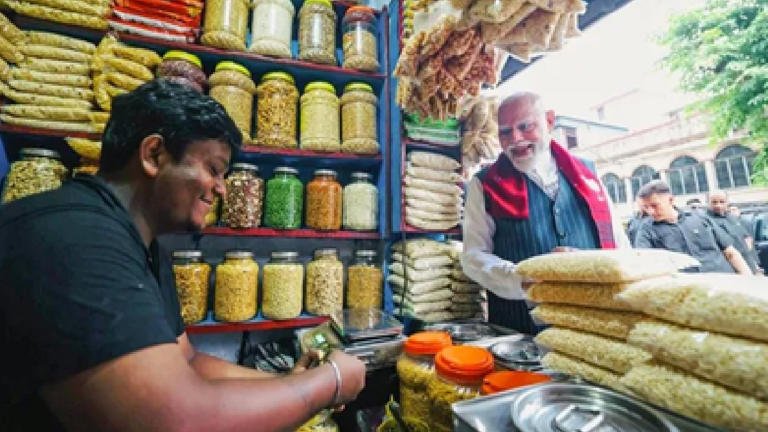
Vikram Sahu, the jhalmuri seller who came into the spotlight after serving the popular Bengali snack to Prime Minister Narendra Modi during the West Bengal Assembly election campaign, has shared an emotional account of his journey from hardship to stability. Sahu recently stated that if the government had not changed, he would have been forced to return to his native Bihar in search of a livelihood.
His remarks have once again drawn attention to the struggles faced by small vendors and migrant workers who depend on local economic opportunities for survival. Sahu’s story reflects the challenges and aspirations of thousands of people who move across states in search of better prospects.
Read More: Manipur CM Visits Makhan Relief Camp, Assures Justice and Rehabilitation for Displaced Families
A Memorable Encounter During Bengal Polls
Vikram Sahu became widely known during the high-profile West Bengal Assembly election campaign when Prime Minister Narendra Modi stopped at a roadside stall and interacted with him while enjoying jhalmuri, a popular street food made from puffed rice, vegetables, spices, and mustard oil.
The interaction quickly gained attention across social media and news platforms. Images and videos of the Prime Minister speaking with the vendor went viral, making Sahu a recognizable face across the country.
For Sahu, the moment was unexpected. He had been running his small food business like any other day when the Prime Minister’s visit transformed his life. The publicity that followed helped bring attention to his work and introduced his story to a wider audience.
Even years later, people continue to associate him with that memorable interaction during the election campaign.
From Bihar to West Bengal in Search of Livelihood
Like many migrant workers, Vikram Sahu left his native Bihar in search of better opportunities. He settled in West Bengal and began earning a living through small-scale food vending.
Running a street food business was not easy. Sahu had to work long hours every day to support his family and meet daily expenses. Despite the challenges, he remained determined to build a stable future.
According to Sahu, economic uncertainty and limited opportunities often forced migrant workers to make difficult choices. Many struggled to maintain their businesses and support their families during challenging periods.
His experience mirrors the journey of countless workers who migrate from one state to another to improve their financial conditions.
‘I Would Have Returned to Bihar’
Speaking about his circumstances, Sahu said that he might have been forced to return to Bihar if the government had not changed and conditions had not improved for small traders like him.
The statement reflects his belief that changes in governance and administrative policies played a role in creating a more supportive environment for local businesses and vendors.
Sahu explained that stable economic conditions and improved opportunities allowed him to continue operating his business in West Bengal. Otherwise, he would have faced significant financial difficulties and may have had no option but to return to his home state.
His comments have generated discussions about the role of governance in supporting small entrepreneurs and informal sector workers.
Importance of Small Businesses in Local Economies
Street vendors and small traders form an important part of India’s economy. They provide affordable goods and services while generating employment for millions of people.
Jhalmuri sellers, tea vendors, fruit sellers, and other small entrepreneurs contribute significantly to local markets. However, they often face challenges such as limited access to credit, rising costs, and economic uncertainty.
Experts note that supportive policies can help these businesses grow and become more sustainable. Access to better infrastructure, financial assistance, and market opportunities can improve the livelihoods of small traders.
Vikram Sahu’s experience highlights the importance of creating conditions that allow small businesses to thrive.
A Symbol of Aspiration and Resilience
Over the years, Sahu’s story has evolved into more than a simple account of a roadside vendor meeting the Prime Minister. For many people, it symbolizes determination, resilience, and the hope of achieving stability through hard work.
His journey from a migrant worker to a nationally recognized street vendor resonates with many individuals who face economic hardships. Despite numerous challenges, he continued to pursue his livelihood and support his family.
The publicity surrounding his interaction with the Prime Minister also brought attention to the everyday struggles faced by small business owners across India.
Many people see his story as an example of how ordinary citizens can become part of larger national conversations.
Political Significance of the Remarks
Sahu’s comments have also attracted political attention because they touch upon issues related to governance, employment, and economic opportunities.
Supporters of the government view his statement as an endorsement of policies that have benefited small traders and entrepreneurs. Meanwhile, political observers note that personal experiences often influence public perceptions about governance and development.
Regardless of political interpretations, Sahu’s remarks underscore the importance of economic stability for working-class families. Access to opportunities often determines whether migrant workers can build sustainable lives away from their native places.
The discussion generated by his comments highlights the broader connection between governance and livelihood security.
Looking Ahead
Today, Vikram Sahu continues to run his business and remains grateful for the opportunities that have come his way. While his encounter with Prime Minister Narendra Modi brought him national recognition, his journey reflects years of hard work, persistence, and determination.
His statement about returning to Bihar offers insight into the challenges many migrant workers face when economic opportunities become uncertain. At the same time, it highlights the importance of policies that support small businesses and local entrepreneurship.
As India continues to focus on economic growth and employment generation, stories like Vikram Sahu’s serve as reminders of the impact that governance and opportunity can have on ordinary lives. For the jhalmuri seller who once served a snack to the Prime Minister, the journey continues, carrying with it lessons of resilience, ambition, and hope for a better future.
Read More: Education Minister Admits ‘Some Discrepancies’ in CBSE Class 12 Revaluation