


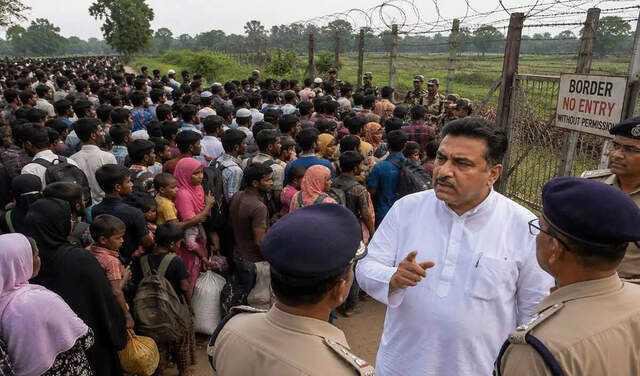
West Bengal has initiated a fresh set of administrative measures aimed at addressing illegal immigration, with the state government beginning implementation of a new framework focused on identification, detention procedures, and deportation processes. The latest developments include setting up holding centres across districts and introducing systems intended to streamline handling of cases involving foreign nationals staying without legal authorisation.
Officials stated that the measures form part of a broader administrative effort aligned with existing central guidelines governing immigration management and deportation procedures. The initiative has gained attention because of West Bengal’s strategic location along the India-Bangladesh border and long-standing discussions around border management and migration.
The government has presented the move as an effort to improve coordination, strengthen monitoring mechanisms, and create structured processes for handling immigration-related cases.
Read More: PM Modi Hands Over 51,000+ Job Letters at Rozgar Mela
Government Begins Setting Up Holding Centres Across Districts
One of the key measures announced involves the creation of holding centres designed to temporarily house individuals identified as foreign nationals while verification and deportation procedures continue. According to official directives, district administrations have been instructed to establish infrastructure that can accommodate apprehended foreign nationals and released foreign prisoners awaiting repatriation or deportation.
Officials clarified that these centres are intended to function as temporary facilities rather than long-term detention locations. Authorities stated that the process includes verification of identity, documentation checks, and coordination with relevant agencies before any further action takes place.
Reports indicate that the first such facilities have already become operational in border districts including Malda and Murshidabad, where identified cases are being processed under the new framework.
Administration Moves Towards Structured Immigration Procedures
The state government stated that the new measures aim to establish a more organised process for handling immigration-related cases.
According to officials, the framework includes district-level preparedness, temporary accommodation facilities, identity verification procedures, and coordination with border and registration authorities. Authorities also indicated that the system follows procedural requirements linked to existing national immigration guidelines.
Officials explained that administrative preparedness can reduce delays and improve consistency in handling cases involving undocumented foreign nationals. Therefore, district administrations have been directed to strengthen infrastructure and operational readiness.
The government stated that the objective remains effective implementation of legal and procedural requirements while maintaining administrative efficiency.
Border Districts Expected to Play Important Role
West Bengal’s border districts remain central to the implementation of the new measures because of their geographical importance and cross-border movement concerns.
Officials stated that districts located near international borders often require stronger administrative coordination and faster response mechanisms. Therefore, authorities continue focusing on improving monitoring and preparedness in these areas.
The administration believes that stronger district-level systems can improve implementation and create better coordination between local authorities and central agencies.
Moreover, officials highlighted that border management involves both security considerations and procedural compliance.
The government stated that administrative readiness remains necessary for ensuring effective implementation.
Verification and Deportation Procedures Receive Greater Focus
Authorities indicated that the latest measures also place greater emphasis on identity verification and processing mechanisms.
According to officials, suspected cases require documentation review and procedural examination before authorities make final decisions. The framework reportedly includes collection of relevant records and coordination with designated agencies responsible for verification and repatriation processes.
Officials stated that structured procedures help maintain consistency and reduce operational uncertainty.
Additionally, the government believes that stronger documentation systems and coordinated workflows can improve efficiency in handling cases.
Authorities maintained that legal procedures remain central throughout the process.
Government Highlights Administrative and Legal Framework
The state administration has described the latest measures as procedural steps designed to strengthen implementation and align operations with existing legal frameworks.
Officials stated that district authorities, police departments, and related institutions will continue coordinating to ensure smooth execution of the new system. The government also emphasised that immigration-related processes involve legal verification and administrative review before final outcomes are determined.
Authorities believe that stronger institutional coordination can improve governance outcomes and support effective administration.
At the same time, officials maintained that public communication and operational clarity remain important for implementation.
New Measures Mark Shift Towards Stronger Monitoring
The implementation of holding centres and structured immigration procedures marks a significant administrative development in West Bengal’s approach to handling illegal immigration cases.
Officials stated that stronger monitoring, improved district preparedness, and coordinated procedures remain key priorities moving forward. Moreover, authorities expect the measures to support better implementation of existing regulations and strengthen administrative response capabilities.
As the state moves ahead with the new framework, attention remains focused on how these measures shape border administration, immigration management, and district-level preparedness in the coming months.
Read More: Bhutan PM Discusses Regional Cooperation Issues with Assam Governor, CM