


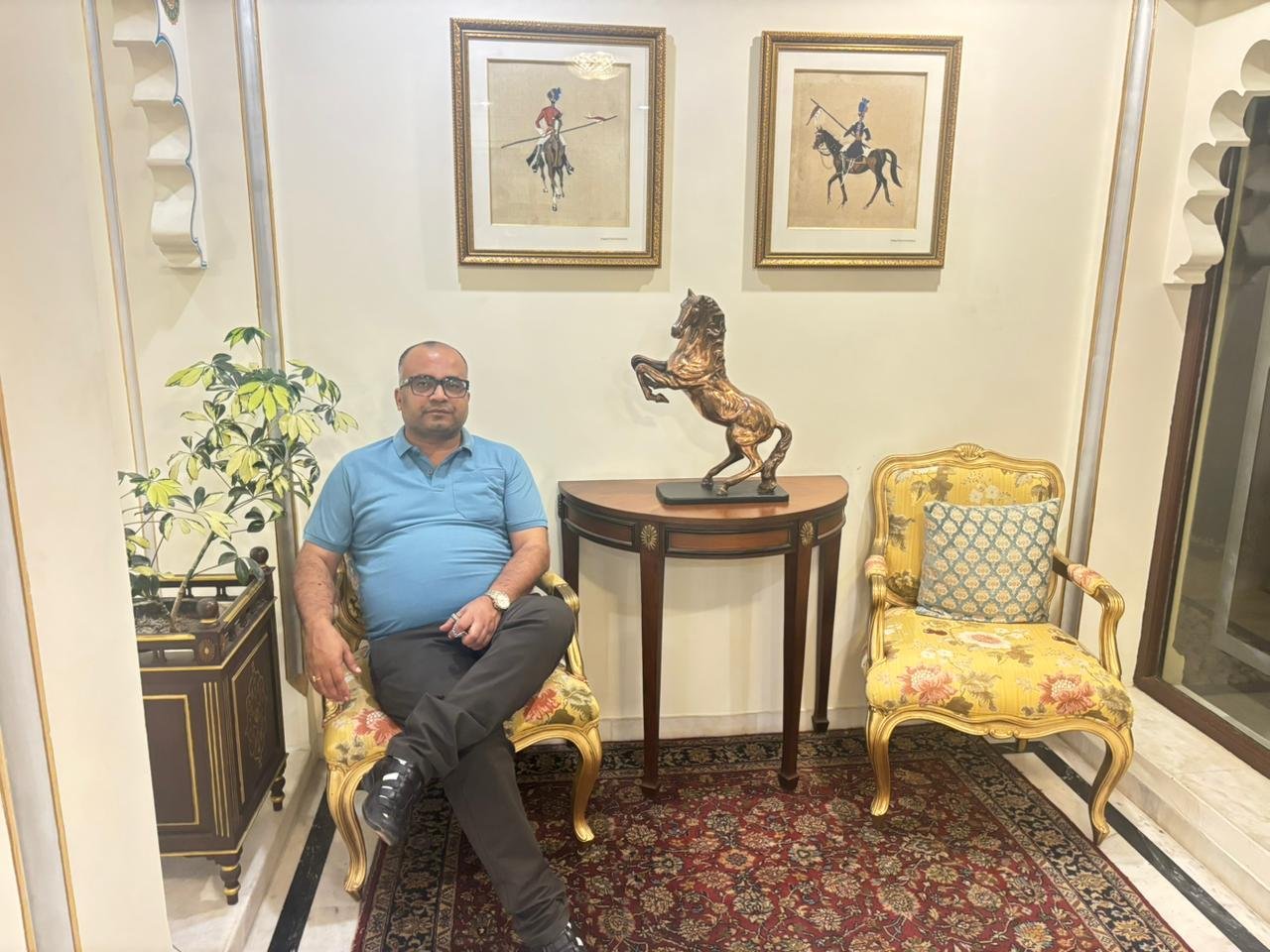
The name Navneet Chaturvedi, national president of the Janata Party, has once again stirred political debate after he filed his nomination as an Independent candidate for the upcoming Rajya Sabha elections from Punjab. His decision has not only surprised political circles but also reignited conversations about the place of independent voices in India’s parliamentary democracy.
Early Life and Background
Navneet Chaturvedi’s story is unlike many career politicians in India. Coming from a modest family background, he grew up away from the privileges of dynastic politics. His formative years were marked by a strong interest in public service, governance, and the role of institutions in protecting citizens’ rights. Unlike leaders who inherit constituencies and networks, Chaturvedi’s rise has been shaped by persistence and self-made credibility.
Those who have observed him closely point out that his journey reflects the struggles of an ordinary Indian determined to influence politics. Friends from his early years recall his deep engagement with student activities, debates on governance, and his willingness to question established power structures. These traits, they argue, later defined his political persona.
Leadership of the Janata Party
As the president of the Janata Party, a once-powerful national force that played a historic role in post-Emergency politics, Chaturvedi has worked to keep the party relevant despite its diminished presence in electoral contests.
Under his leadership, the Janata Party has highlighted issues that often fall between the cracks of mainstream political campaigns — the plight of small traders, farmers battling debt, and unemployed youth struggling to find opportunities.
Though the party no longer commands the influence it once enjoyed during the 1970s and 1980s, Chaturvedi’s stewardship has ensured that its voice continues to echo in public discourse. Supporters believe that he represents a strand of politics that prioritizes ground realities over the rhetoric of national alliances.
A Different Political Approach
Unlike many politicians who climb ladders through party patronage, Chaturvedi has consistently carved his own path. He is often described as someone unwilling to compromise on core values of transparency, accountability, and people-centric governance.
His speeches and writings reflect this conviction, often critiquing not only ruling governments but also the complacency of opposition parties. He has argued that democracy must allow for alternative voices beyond the binary of big alliances, a stance that sometimes puts him at odds with both mainstream national and regional players.
Independent Rajya Sabha Nomination
The latest twist in his career came when Chaturvedi filed his Rajya Sabha nomination as an Independent candidate from Punjab. Instead of contesting on the Janata Party’s symbol, he chose to present himself as a broader representative of legislators dissatisfied with conventional politics.
Political observers see this as a strategic move. By running as an Independent, he opens the door for MLAs from various parties to support him discreetly, without being seen as endorsing a smaller outfit. Speaking to reporters, he stressed that the Rajya Sabha must embody diverse opinions and cannot remain the monopoly of large parties.
“Several legislators want to express their discontent with existing party leaderships. By contesting independently, I stand for them and for citizens who feel unrepresented,” he told the media.
Reactions and Political Ripples
His decision has generated sharp reactions. Critics question whether an Independent can realistically secure a Rajya Sabha seat against the strength of larger parties. Yet others argue that his candidacy could resonate with legislators seeking to challenge conventional alignments.
Analysts suggest that even if Chaturvedi does not win, his entry has already altered the tone of the by-election. Instead of a routine, uncontested affair, the Punjab Rajya Sabha seat has now turned into a contested battlefield, one that could highlight internal dissent within dominant parties.
A Broader Message
For Chaturvedi, political success is not merely about winning seats but about keeping the debate on governance alive. His consistent advocacy of equity, honesty, and grassroots participation reflects his broader goal of redefining politics.
Observers note that his presence in the Rajya Sabha race — win or lose — ensures that issues of accountability and transparency remain in the spotlight. Supporters view him as a reminder that democracy must have space for non-mainstream voices, while critics contend that symbolic gestures may not be enough in a system driven by numbers.
Outlook and Significance
As India’s political space becomes increasingly polarized, figures like Navneet Chaturvedi highlight a different strand of politics — one rooted in independent thinking and people-driven change. His candidature, bold and unconventional, forces larger parties to reckon with voices outside their control.
Whether he succeeds or not in the October vote, Chaturvedi has positioned himself as a leader who dares to challenge prevailing equations. His nomination is not just about a Rajya Sabha seat; it symbolizes the endurance of alternative politics in India.
For many observers, the question is not simply whether Navneet Chaturvedi wins, but whether his bold stand will encourage more legislators and citizens to imagine politics differently.