


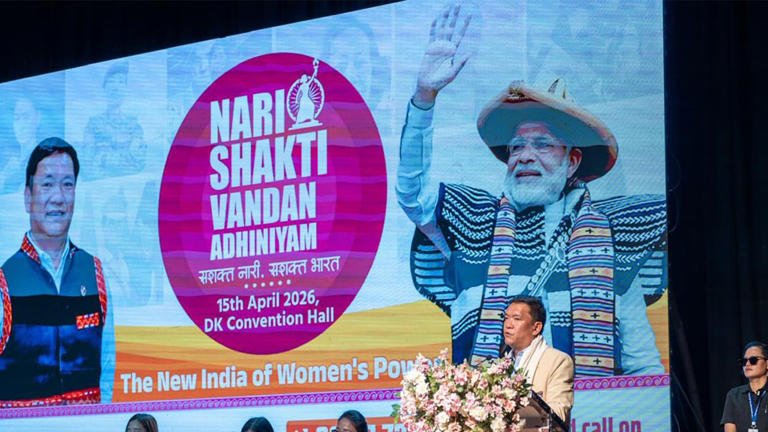
Arunachal Pradesh Chief Minister Pema Khandu has described the women’s reservation bill as a historic reform. He said the move will transform political representation and strengthen democracy in India.
Khandu made the statement while addressing a public gathering. He highlighted the importance of equal participation of women in governance. According to him, the bill marks a major step toward inclusive development.
The women reservation bill reform has drawn praise from several leaders across the country. Many see it as a milestone in India’s democratic journey.
Read More: Congress Pushes Women Reservation in Lok Sabha Seats
Significance of the Women’s Reservation Bill
The women’s reservation bill seeks to reserve seats for women in legislative bodies. It aims to increase their representation in decision-making processes.
Khandu said that women have long contributed to society in various roles. However, their presence in politics remains limited. The bill addresses this gap directly.
The women reservation bill reform reflects a commitment to gender equality. It ensures that women get a stronger voice in governance.
Supporters believe the bill will create new opportunities. It can also inspire more women to enter public life.
Pema Khandu Highlights Need for Inclusion
Pema Khandu stressed that inclusive governance leads to better outcomes. When women participate in decision-making, policies become more balanced.
He said that women understand social issues at a deeper level. Their involvement can improve the quality of governance. Therefore, increasing their representation remains essential.
The women reservation bill reform aligns with this vision. It promotes equal opportunities and fair representation.
Khandu also praised the leadership at the national level for introducing the reform. He said such steps require strong political will.
Impact on Arunachal Pradesh
In Arunachal Pradesh, the bill has generated positive reactions. Many leaders and citizens have welcomed the move. They believe it will encourage women to take part in politics.
The women reservation bill reform may also influence local governance. It can lead to greater participation at the grassroots level.
Khandu said the state government will support the implementation of the bill. He added that awareness programs will help women understand its benefits.
He also encouraged young women to prepare for leadership roles. According to him, the future of governance depends on their active involvement.
Strengthening Women’s Empowerment
The bill represents a significant step toward women’s empowerment. It goes beyond symbolic representation. It creates real opportunities for leadership.
Khandu said that empowering women strengthens society as a whole. When women succeed, communities progress.
The women reservation bill reform will also help address gender disparities. It ensures that women have a fair chance to influence policy decisions.
Experts believe that increased representation can lead to better focus on issues such as education, healthcare, and welfare.
Political Reactions Across India
The bill has received support from leaders across party lines. Many have called it a landmark reform. They believe it will reshape the political landscape.
However, some leaders have raised concerns about implementation. They have asked for clarity on timelines and processes.
The women reservation bill reform has thus sparked both praise and discussion. It highlights the complexity of large-scale reforms.
Khandu expressed confidence that these challenges can be addressed. He said the focus should remain on the larger goal of empowerment.
Role in Strengthening Democracy
Democracy thrives when all sections of society participate. The women’s reservation bill aims to make the system more inclusive.
Khandu said that greater representation leads to stronger institutions. It also improves public trust in governance.
The women reservation bill reform will help create a more balanced political system. It ensures that diverse perspectives shape decision-making.
He added that the bill reflects India’s commitment to democratic values. It shows the country’s willingness to evolve and improve.
Challenges and Way Forward
While the bill marks a significant step, challenges remain. Implementation will require careful planning and coordination. Authorities must ensure smooth execution.
The women reservation bill reform will also require social acceptance. Awareness campaigns can help address misconceptions.
Khandu said the government will work to overcome these challenges. He emphasised the need for cooperation from all stakeholders.
He also highlighted the role of education in empowering women. Skilled and informed leaders can make a greater impact.
Conclusion
Pema Khandu’s remarks underline the importance of the women’s reservation bill. He sees it as a transformative reform that can reshape India’s political landscape.
The women reservation bill reform represents a major step toward equality and inclusion. It offers new opportunities for women to participate in governance.
As the country moves forward, the focus will remain on effective implementation. The success of the reform will depend on collective effort.
With strong support and proper execution, the bill can bring lasting change. It can help build a more inclusive and representative democracy for future generations.
Read More: Mama Natung Reviews Women Police Station Work in Koloriang