


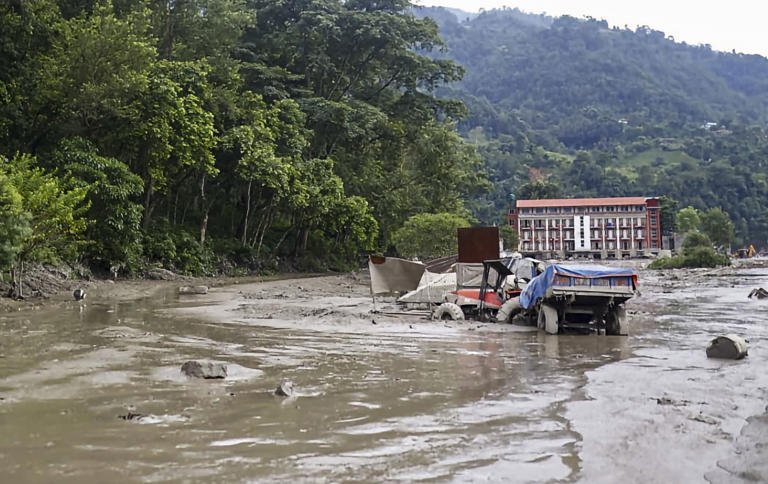
A 32-member group from Kolkata remains untraceable after devastating flash floods struck Nepal near the Tibet border. The group was travelling on the Kailash Mansarovar Yatra when the disaster hit.
The group includes 30 tourists and two tour managers. Officials have also received reports about other people from West Bengal who may be stranded or missing in Nepal.
The disaster has caused widespread destruction across the affected Himalayan region. Rescue teams continue to search for survivors. However, damaged roads and disrupted communication have slowed their efforts.
Read More: CWG Gold Medallist Asmita Dey Named Brand Ambassador of South Tripura Nasha Mukt Premier League 2026
32-member Kolkata group loses contact after flash floods
The Kolkata group left the city for the Kailash Mansarovar Yatra in August. They entered Nepal and travelled towards Rasuwagadhi near the Nepal-Tibet border.
The pilgrims reached the area on the morning of the disaster. They had gathered at the immigration office to cross into Tibet.
Officials said the flash flood struck the area at around 8.30 am. Contact with all 32 members stopped soon after.
The group includes 30 tourists and two tour managers. Their families have since waited anxiously for news about their safety.
Officials are trying to trace every member of the group. However, the flood severely damaged communication networks in the region. This has made contact extremely difficult.
Tour managers were last contacted before the disaster
The Kolkata group travelled through a city-based travel agency. The agency has been trying to gather information from authorities in Nepal.
Two tour managers accompanied the 30 tourists. They reportedly had international mobile roaming facilities.
The agency last contacted them on the morning of the disaster. Some tourists had also reportedly used social media before communication stopped.
However, nobody from the group has contacted the agency since the flash flood struck.
The travel agency contacted Nepal Tourism authorities and the Indian Embassy in Kathmandu. It also reached out to the agency that handled the group’s international travel arrangements.
The international agency has reportedly sent a helicopter towards the affected region. Authorities hope aerial searches will help them locate stranded tourists and pilgrims.
Other people from West Bengal may also be stranded
The 32-member Kolkata group is not the only concern for West Bengal authorities.
Officials said residents of Chandannagar in Hooghly district may also be stranded in Nepal. Authorities have received similar concerns about people from Barasat in North 24 Parganas.
The West Bengal government has started coordinating with the Indian Embassy in Kathmandu. It is also working with Nepalese authorities to gather information.
State officials are trying to identify every resident from West Bengal who may have travelled through the disaster-hit region.
The state has also opened helplines for families seeking information about relatives. Families can contact the West Bengal police control room for assistance.
The available helpline numbers are 033-24793311 and 9147890181, according to reports.
Nepal disaster leaves hundreds missing
The flash floods have caused a major humanitarian crisis in Nepal and the border region.
The disaster killed at least 160 people, according to recent reports. Hundreds of others remain missing.
Officials have reported that many foreign tourists and pilgrims also lost contact with their families and authorities.
More than 130 Indian nationals were among those reported missing in the aftermath. Several of them were travelling on religious pilgrimages or visiting the Himalayan region as tourists.
The affected area includes routes used by people travelling towards Mount Kailash and Lake Mansarovar. The disaster therefore disrupted several groups travelling through Nepal towards Tibet.
Authorities continue to update the numbers as rescue teams gather more information from isolated areas.
Glacial collapse may have triggered the catastrophic flooding
Experts are investigating what caused the devastating flood.
Early reports indicate that a collapse involving ice, rock and glacier material may have triggered the disaster. The massive surge then rushed through valleys near the Nepal-Tibet border.
The flood carried mud, rocks and debris through settlements and infrastructure corridors.
It destroyed roads and bridges in several areas. The disaster also damaged hydropower projects and disrupted transportation.
Experts are continuing to study satellite images and other evidence. They have not yet established every detail about the disaster’s exact trigger.
The difficult Himalayan terrain has added another challenge for rescue teams. Floodwater and debris have blocked several routes.
Helicopters and ground teams are now taking part in search and rescue operations. However, poor access continues to slow the response in some areas.
Rescue teams face major challenges
Nepalese authorities have launched large-scale rescue and relief operations.
The Nepal Army, police and other emergency teams are searching affected areas. Helicopters have also joined the operation.
However, rescuers face difficult conditions. Floods have damaged roads and bridges. In some places, thick mud and debris cover entire stretches of land.
Communication remains another major problem.
Authorities cannot easily contact people in isolated areas. This has also made it difficult to confirm the exact number of missing tourists and pilgrims.
Rescue teams must first reach several affected locations before they can establish the safety of everyone who remains untraceable.
Officials are also coordinating with foreign governments. Several countries have reported missing citizens in the disaster zone.
Indian authorities coordinate with Nepal
Indian authorities have stepped up efforts to assist citizens affected by the Nepal disaster.
The Indian Embassy in Kathmandu is coordinating with Nepalese authorities. Several state governments have also opened helplines for residents and their families.
India has sent humanitarian assistance and essential supplies to support Nepal’s response to the disaster.
Officials continue to collect details about Indians who may be stranded or missing.
For families in Kolkata and other parts of West Bengal, the immediate priority remains establishing contact with their loved ones.
The 32-member Kolkata group had travelled towards the Nepal-Tibet border for a religious journey. The sudden disaster has now left their families waiting for crucial information.
Authorities and rescue agencies continue their search. However, the full scale of the disaster is still emerging.
As communication gradually improves and rescue teams reach isolated areas, officials hope to trace the missing Kolkata group and others from West Bengal.
Read More: Tejasvi Surya on Gen Z’s Political Rise: CJP a Welcome Move, But Questions Remain