


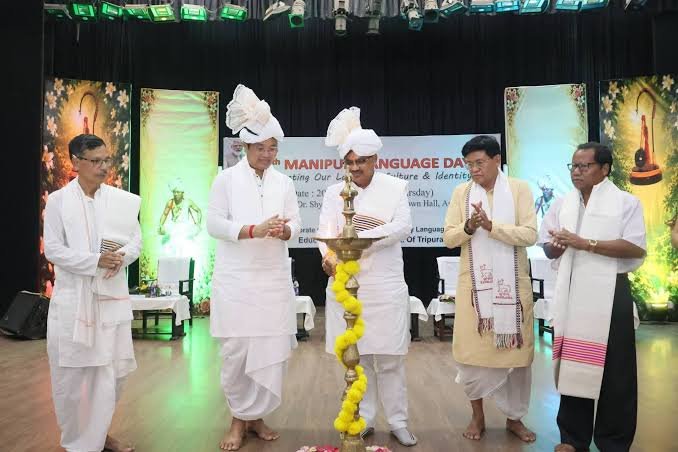
The 35th Manipuri Language Day was celebrated on August 20 across Manipur, Assam, and Tripura, highlighting the cultural and linguistic importance of the Manipuri language.
The observance brought communities together to celebrate Manipuri’s rich linguistic heritage. Moreover, large-scale demands for Classical Language status renewed attention toward efforts to secure greater national recognition for the language.
The occasion consequently became an important platform for cultural preservation and linguistic identity.
Meghalaya IT Park Phase 2: IT Firms Begin Occupying Units at Shillong Technology Park
Manipuri Language Day Celebrated Across States
Communities observed the 35th Manipuri Language Day on August 20 across Manipur, Assam, and Tripura.
The annual observance provides an opportunity to recognise the history, literature, and cultural contribution of the Manipuri language. Furthermore, celebrations outside Manipur demonstrate the language’s continued presence among Manipuri-speaking communities across the Northeast.
The day’s programmes also highlighted ongoing concerns about the language’s future.
Demand for Classical Language Status
One of the major themes surrounding this year’s observance involved demands to recognise Manipuri as a Classical Language.
Supporters argue that greater recognition could strengthen efforts to preserve and promote the language. Additionally, official recognition could encourage further attention toward Manipuri literature, historical texts, research, and linguistic education.
The demand consequently featured prominently during the observances.
Importance of Manipuri’s Heritage
Manipuri represents an important part of the cultural heritage of the Northeast.
Its literary and linguistic traditions have developed over generations and remain closely connected with the region’s cultural identity. Moreover, preserving these traditions can help younger generations maintain connections with their language and history.
Language observances therefore serve both cultural and educational purposes.
Communities Unite Across Northeast India
The celebrations extended beyond Manipur to communities in Assam and Tripura.
Such participation highlights the geographical spread of Manipuri-speaking communities and their continuing cultural connections. Furthermore, collective observances can provide a platform for communities to raise shared concerns about language preservation.
The demand for Classical Language status consequently gained broader visibility.
Role of Language Preservation
Languages require active use and institutional support to remain strong across generations.
Educational initiatives, literary activities, research, and cultural programmes can encourage younger speakers to engage with their linguistic heritage. Additionally, digital content and modern communication platforms can create new opportunities for language promotion.
The annual observance reinforces the importance of these efforts.
Classical Language Recognition
India’s Classical Language framework recognises languages with substantial ancient literary and historical traditions.
Supporters of Manipuri’s recognition seek similar national acknowledgement for the language. Moreover, such recognition can increase attention toward scholarship and preservation of historical linguistic resources.
The campaign reflects a broader effort to protect Manipuri’s cultural and literary legacy.
Youth and Cultural Identity
Young people play an important role in preserving languages in a changing social environment.
Encouraging young speakers to read, write, and create content in Manipuri can help maintain its everyday relevance. Furthermore, cultural programmes can connect traditional language practices with contemporary forms of expression.
The 35th Language Day therefore provided an opportunity to encourage continued youth participation.
Significance for Assam and Tripura
The celebrations in Assam and Tripura also demonstrate the importance of Manipuri cultural communities outside the language’s primary home region.
Community organisations and cultural groups can use such occasions to promote linguistic activities and preserve traditions. Additionally, inter-state participation can strengthen cultural connections among Manipuri-speaking populations.
The wider celebrations consequently added a regional dimension to the observance.
Need for Continued Advocacy
The demand for Classical Language status requires continued engagement with relevant institutions and policymakers.
Supporters may need to document the language’s historical, literary, and linguistic significance as part of the recognition process. Moreover, sustained public discussion can keep language preservation and recognition on the policy agenda.
The August 20 observance provided another platform for that advocacy.
Looking Ahead
The campaign for greater recognition is likely to remain an important issue for Manipuri cultural organisations and communities.
Meanwhile, efforts to strengthen education, literature, research, and everyday language use can complement the demand for official recognition. Furthermore, greater participation from younger generations can help ensure that Manipuri remains a vibrant language for the future.
The 35th Language Day has therefore renewed attention toward both recognition and preservation.
Conclusion
The 35th Manipuri Language Day on August 20 brought communities together across Manipur, Assam, and Tripura to celebrate Manipuri’s linguistic and cultural heritage.
Moreover, the strong demand for Classical Language status highlighted the community’s efforts to secure greater recognition and support for the language. At the same time, long-term preservation will depend on education, literary activity, research, and continued use among younger generations.
Overall, the 35th Manipuri Language Day served as both a celebration of linguistic heritage and a renewed platform for the demand to recognise Manipuri as a Classical Language.
FAQs
1. When was the 35th Manipuri Language Day celebrated?
The 35th Manipuri Language Day was celebrated on August 20.
2. Which states observed the occasion?
The observance took place across Manipur, Assam, and Tripura.
3. What major demand emerged during the celebrations?
Communities strongly demanded that Manipuri receive Classical Language status.
4. Why is language preservation important?
Preserving Manipuri can help protect its literature, history, cultural traditions, and linguistic identity for future generations.
5. How can young people support Manipuri?
Young people can contribute by using, reading, writing, studying, and creating contemporary content in Manipuri.