


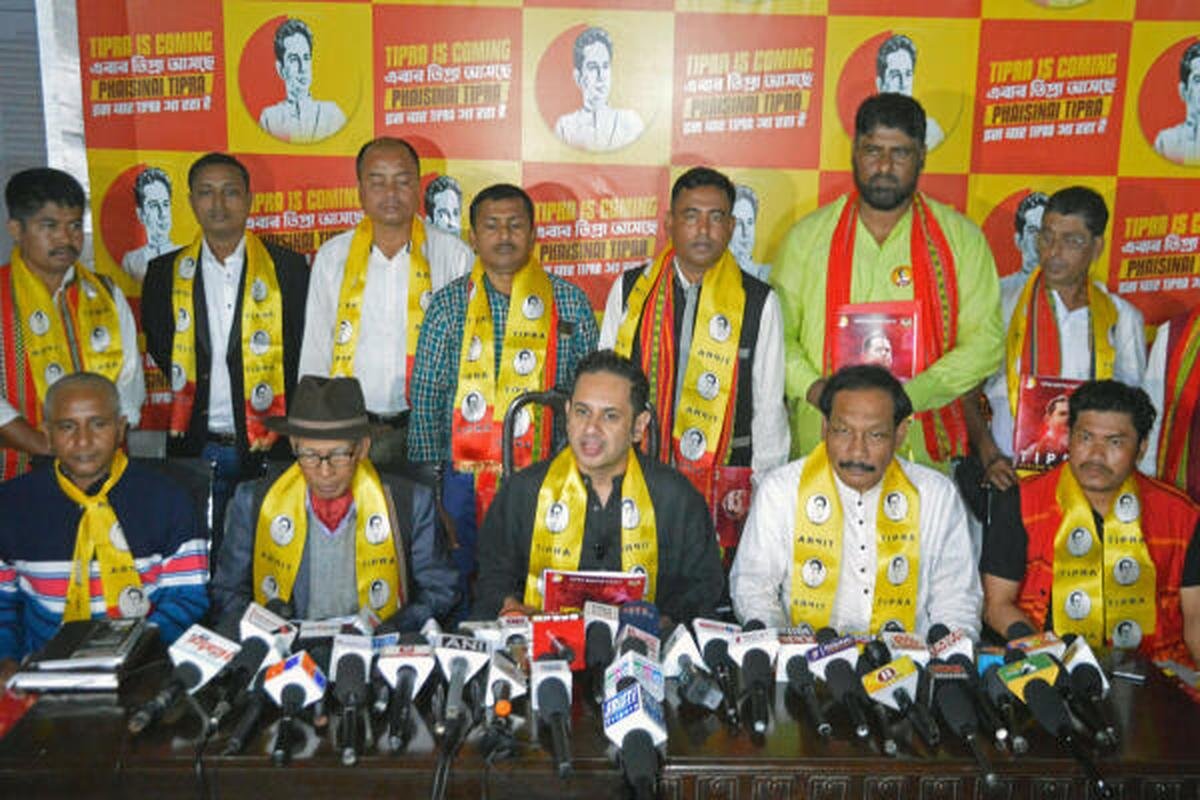
Tripura’s tribal autonomous areas are heading toward a major grassroots electoral contest involving 587 seats, putting local governance, tribal representation, and political organisation at the centre of attention. The large number of seats makes the upcoming village-level elections an important test for political parties competing across the state’s tribal belt.
The contest comes amid heightened activity among tribal political organisations, with parties preparing candidates, strengthening local networks, and developing campaign strategies. Moreover, the elections could influence the balance of grassroots political power across communities administered under Tripura’s tribal autonomous governance framework.
Land protection, indigenous rights, language preservation, employment, infrastructure, and welfare delivery are likely to feature prominently in the campaign. However, local candidates, community priorities, alliances, and voter participation will ultimately shape the outcome.
Tripura Election Commission Gears Up for Intense Voter Roll Upgrades
587 Seats Create Major Electoral Contest
The 587 seats represent a substantial grassroots electoral battlefield in Tripura’s tribal areas.
Political parties will need extensive organisational networks to contest such a large number of positions effectively. Furthermore, candidate selection will become particularly important because village-level elections often depend on local credibility and community relationships.
The scale of the contest could therefore place considerable pressure on party organisations.
However, the number of seats alone cannot determine which political force will gain the strongest position.
Tribal Politics Enters Crucial Phase
The 587 seats have increased the importance of tribal politics in Tripura.
Political organisations are expected to focus on issues involving indigenous identity, land safeguards, cultural preservation, and local development. Additionally, parties will seek to demonstrate their ability to represent community interests at the grassroots level.
The elections could consequently reveal changes in political preferences across tribal areas.
However, village-level contests can produce different outcomes from statewide elections because local issues often carry greater weight.
TIPRA Motha Faces Major Grassroots Test
TIPRA Motha is likely to face an important organisational test across the 587 seats.
The party has built its political identity around indigenous rights, constitutional safeguards, and greater political representation for tribal communities. Moreover, its performance in village-level elections could indicate whether its political message continues to translate into grassroots support.
Strong results could strengthen the party’s organisational position.
However, local candidate quality and alliances could significantly influence individual contests.
BJP Targets Tribal Constituencies
The BJP also has an interest in expanding its political influence across Tripura’s tribal areas.
The party can use the elections to highlight government development programmes and welfare initiatives. Furthermore, a strong village-level network could help the BJP strengthen its position ahead of future electoral contests.
The 587 seats therefore provide a substantial opportunity for organisational expansion.
However, established tribal political forces could create strong competition in several areas.
Land Protection Becomes Key Issue
Land protection could become one of the central issues across the 587-seat contest.
Tribal communities may focus on land ownership, protection of community resources, and implementation of existing safeguards. Moreover, land security can directly affect agriculture, livelihoods, and long-term economic opportunities.
Political parties are therefore likely to present their positions on land-related policies.
However, land concerns can differ considerably between individual villages.
Language and Cultural Identity Gain Focus
Language preservation could also feature prominently during the campaign.
Tribal languages form an important component of cultural identity, while education and public administration can influence their continued use. Additionally, political organisations may propose greater recognition and support for indigenous languages.
These issues could attract attention among voters concerned about cultural preservation.
However, language policy requires long-term educational and administrative planning.
587 Seats Test Local Leadership
The large number of seats makes individual candidates particularly important.
Candidates with strong community networks may have an advantage in village-level contests. Furthermore, voters may judge candidates according to their accessibility, reputation, development record, and understanding of local problems.
Political parties will therefore need to balance central campaign messaging with village-specific priorities.
However, strong candidates cannot guarantee uniform results across all constituencies.
Development Remains Central to Campaign
Despite the focus on tribal identity, development issues will remain important.
Voters may prioritise roads, drinking water, electricity, schools, healthcare, employment, agriculture, and welfare delivery. Moreover, improved connectivity can directly affect access to markets, education, and government services.
Parties will therefore need to address both identity-related and development concerns.
However, the most important issues will vary from one community to another.
Alliances Could Influence 587 Seats
Political alliances could significantly affect the distribution of the 587 seats.
Parties may cooperate in selected areas to avoid dividing their support bases. Additionally, local leaders could negotiate arrangements that differ from broader state-level alliances.
Such agreements could reshape competition in closely contested villages.
However, alliance negotiations can also create disagreements over candidate selection and seat allocation.
Grassroots Campaigning Gains Importance
The scale of the elections will require extensive grassroots campaigning.
Political parties can organise village meetings, local outreach programmes, candidate introductions, and community discussions. Furthermore, digital communication may complement traditional campaign activities in areas with sufficient connectivity.
The campaign could consequently become increasingly competitive as polling approaches.
However, all candidates must follow applicable election rules and maintain peaceful campaigning.
Youth and Employment Issues Matter
Young voters could make employment and economic opportunities important campaign subjects.
Education, vocational training, entrepreneurship, and access to jobs remain closely connected with the future prospects of rural communities. Moreover, improved infrastructure can create new opportunities for local businesses and agricultural producers.
Political parties are likely to present their proposals on these issues.
However, voters may judge those proposals against previous government performance.
587 Seats Could Reshape Political Influence
The 587 seats could influence political calculations beyond the immediate village elections.
A strong performance could help a party build a larger grassroots network and establish new local leaders. Conversely, weaker-than-expected results could prompt parties to reassess their organisational strategies.
The elections may therefore become an important indicator of political strength in Tripura’s tribal areas.
However, village-level results cannot independently predict future Assembly or national elections.
TTAADC’s Wider Political Context
The elections take place within the broader framework of Tripura’s tribal autonomous governance.
The Tripura Tribal Areas Autonomous District Council (TTAADC) remains a major institution representing tribal areas and managing specified subjects under its constitutional framework. Moreover, village-level political structures can influence how local communities interact with wider administrative institutions.
The electoral contest could therefore affect grassroots political organisation around the autonomous council.
However, village institutions and the TTAADC have distinct legal responsibilities.
Conclusion
The 587 seats have created a major electoral battleground across Tripura’s tribal autonomous areas. The upcoming village-level contest will test political organisation, candidate strength, grassroots networks, and the ability of competing parties to address indigenous concerns.
Moreover, land protection, language preservation, employment, infrastructure, welfare delivery, and tribal representation are likely to shape the campaign. TIPRA Motha, the BJP, and other political organisations will face pressure to translate their broader political agendas into local commitments.
Overall, the 587 seats represent more than a large numerical contest. They provide an important opportunity to assess the changing balance of grassroots political influence across Tripura’s tribal communities.
FAQs
1. Why are the 587 seats important?
The 587 seats represent a large grassroots electoral contest across Tripura’s tribal autonomous areas and could influence local political organisation.
2. Which issues could dominate the elections?
Land protection, indigenous rights, language preservation, employment, infrastructure, healthcare, education, and welfare delivery could become major issues.
3. Why is TIPRA Motha important?
TIPRA Motha has established a significant political presence among tribal communities and focuses on indigenous rights and constitutional safeguards.
4. Could alliances affect the 587 seats?
Yes. Local and broader political alliances could influence candidate selection, vote division, and competition in individual village areas.
5. Will the results determine Tripura’s future government?
No. The village-level results can indicate grassroots political trends but cannot directly determine the outcome of future Assembly elections.