


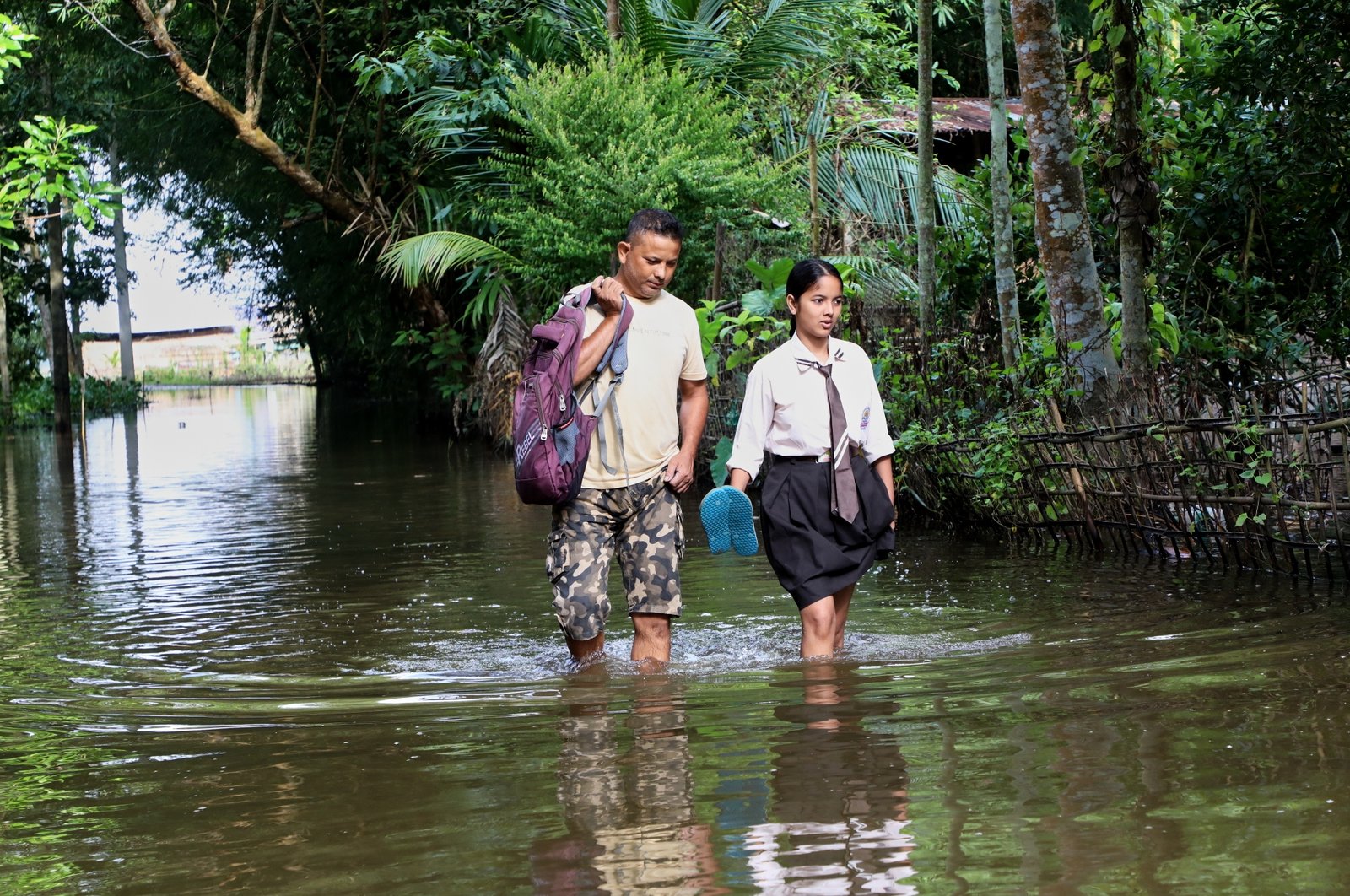
Assam’s flood crisis has intensified after seven embankments reportedly breached during a severe monsoon, while the state’s reported flood-related death toll reached 95. The breaches have increased pressure on authorities to protect vulnerable communities, maintain rescue operations, and strengthen emergency relief across affected areas.
The latest developments have renewed attention on Assam’s long-standing vulnerability to flooding. Moreover, damaged embankments can allow floodwaters to spread rapidly into residential areas, agricultural fields, and transport networks, increasing the challenges facing local administrations.
However, the reported casualty and infrastructure figures can change as officials continue assessments. Authorities must therefore focus on verified information while responding to communities affected by the flooding.
Makhan Relief Camp Row: Naga Groups Demand Justice Before Political Visits
Seven Embankments Breach During Severe Flooding
The reported breaches have become a major concern as floodwaters continue to affect parts of Assam.
Embankments play an important role in protecting settlements and agricultural areas from rising water levels. Furthermore, a breach can quickly increase flooding in surrounding communities and make evacuation more difficult.
The reported seven breaches have therefore added pressure to an already demanding emergency response.
However, the condition and location of each embankment require separate assessment by authorities.
Assam Flood Death Toll Reaches 95
The reported death toll of 95 highlights the severity of the current flood emergency.
Flooding can create multiple risks, including dangerous currents, road accidents, building damage, and difficult evacuation conditions. Additionally, prolonged inundation can isolate communities and restrict access to healthcare.
The rising casualty figure has consequently increased demands for stronger emergency measures.
However, officials may update the figure as they verify deaths and assess affected districts.
Embankment Breaches Threaten Communities
When flood-control structures fail, water can enter areas that residents previously considered safer.
Homes, roads, agricultural land, and public infrastructure can face rapid inundation. Moreover, residents may have limited time to move to higher ground when water levels rise quickly.
Authorities therefore need reliable early-warning and evacuation systems.
However, the impact of a breach depends on water levels, terrain, settlement patterns, and the condition of nearby infrastructure.
Rescue Operations Face Additional Pressure
Breached embankments can complicate rescue operations.
Floodwaters may submerge roads and isolate villages, forcing emergency teams to use boats or alternative routes. Furthermore, rescue agencies must coordinate with local administrations to identify communities requiring immediate assistance.
The expanding affected area can increase logistical demands.
However, rescue operations must also consider the safety of emergency personnel.
Relief Camps Become Essential
Families forced to leave flooded homes may depend on relief camps for temporary shelter.
Authorities need to provide food, drinking water, sanitation facilities, medicines, and safe accommodation. Additionally, officials must monitor the number of displaced residents and identify vulnerable groups.
Effective camp management can reduce hardship.
However, rising displacement can quickly increase demand for supplies and space.
Agriculture Faces Heavy Damage
Embankment breaches can cause serious agricultural losses.
Floodwaters can destroy standing crops, damage livestock shelters, and prevent farmers from accessing fields. Moreover, prolonged waterlogging can affect future cultivation and increase recovery costs.
Farmers may therefore require financial and agricultural assistance after the emergency.
However, officials need detailed assessments before determining the extent of eligible compensation.
Roads and Bridges Become Vulnerable
Floodwaters can damage transport infrastructure and disrupt connectivity.
Submerged roads and bridges can prevent residents from reaching hospitals and markets. Furthermore, relief teams may struggle to deliver essential supplies to isolated communities.
Authorities may therefore need to establish alternative routes or emergency transport arrangements.
However, permanent repairs may have to wait until floodwaters recede.
Healthcare Risks Increase
Severe flooding can place additional pressure on healthcare systems.
Affected residents may need emergency treatment, medicines, medical teams, and access to hospitals. Additionally, contaminated water and inadequate sanitation can create public-health concerns.
Relief camps therefore require continued healthcare monitoring.
However, health risks can remain even after floodwaters begin to decline.
Drinking Water Requires Protection
Flooding can contaminate local water sources.
Authorities must provide safe drinking water to affected communities and relief centres. Moreover, officials need to monitor water quality and maintain sanitation facilities.
These measures can reduce the risk of waterborne illnesses.
However, maintaining supplies becomes more difficult when roads remain submerged.
Government Faces Disaster-Management Challenge
The combination of casualties and infrastructure damage has increased pressure on Assam’s disaster-management system.
Officials must coordinate rescue operations, relief distribution, infrastructure assessments, healthcare, and communication. Furthermore, authorities need accurate information to determine which communities require immediate assistance.
Effective coordination can reduce delays.
However, large-scale flooding can place significant pressure on local resources.
Political Scrutiny Intensifies
The reported death toll and embankment breaches have also intensified political debate.
Opposition parties can question infrastructure maintenance, flood preparedness, emergency spending, and rehabilitation policies. Additionally, political representatives may demand explanations about the condition of breached embankments.
The issue could remain politically significant during the recovery period.
However, allegations of negligence require evidence and appropriate investigation.
Embankment Maintenance Under Focus
The breaches have renewed questions about the maintenance of Assam’s flood-control infrastructure.
Authorities may need to assess embankment design, maintenance schedules, vulnerable points, drainage systems, and emergency repair procedures. Moreover, long-term planning may need to account for increasingly unpredictable rainfall and river conditions.
Such reviews could inform future flood-prevention policies.
However, severe weather can place exceptional pressure on even well-maintained structures.
Central and State Coordination Matters
A major flood emergency can require cooperation between state and central agencies.
National disaster-response teams can provide specialised personnel, rescue equipment, logistics, and other support when requested or required. Furthermore, central assistance can supplement state resources during large-scale emergencies.
Coordination can improve response capacity.
However, district and state administrations remain essential for local implementation.
Compensation Will Become Important
Families affected by deaths, displacement, and property damage may require financial assistance.
Authorities can assess losses involving homes, crops, livestock, and infrastructure before determining eligible compensation. Additionally, affected communities may need assistance rebuilding livelihoods.
The compensation process could therefore become a major part of the recovery effort.
However, eligibility and payment depend on official assessments and applicable relief rules.
Long-Term Flood Management Faces Questions
The crisis has again highlighted Assam’s long-standing flood vulnerability.
Future policies could focus on stronger embankments, drainage systems, river management, flood forecasting, wetland protection, and resilient infrastructure. Moreover, authorities may need to strengthen community-based disaster preparedness.
Long-term measures can reduce the risks associated with future floods.
However, meaningful flood-risk reduction requires sustained investment and monitoring.
Communities Prepare for Recovery
Recovery will begin even while some areas continue to face flooding.
Residents will eventually need to repair homes, restore farmland, replace livestock, and rebuild damaged infrastructure. Furthermore, authorities will need to evaluate which communities require longer-term rehabilitation.
The recovery phase could last considerably longer than the emergency response.
However, its pace will depend on the extent of damage and the speed at which floodwaters recede.
Conclusion
The reported seven embankment breaches and 95 flood deaths in Assam have highlighted the severity of the state’s monsoon emergency. The combination of casualties, displacement, infrastructure damage, and agricultural losses has placed significant pressure on authorities to strengthen rescue and relief operations.
Moreover, the breaches have renewed attention on Assam’s long-term flood-control infrastructure and disaster preparedness. At the same time, political scrutiny is likely to intensify as residents and opposition parties seek answers about embankment maintenance, emergency response, and compensation.
Overall, the immediate priority remains protecting affected communities and providing timely relief. However, once the emergency subsides, authorities will also need to assess infrastructure failures, strengthen flood forecasting and evacuation systems, and develop longer-term strategies to reduce the impact of future monsoon disasters.
FAQs
1. How many embankments have reportedly breached?
Seven embankments have reportedly breached during the current Assam flood emergency.
2. What is Assam’s reported flood death toll?
The reported flood-related death toll has reached 95, although officials may revise figures as verification continues.
3. Why are embankments important in Assam?
Embankments help protect settlements, agricultural land, and infrastructure from rising river and floodwaters.
4. What happens after an embankment breach?
Floodwaters can spread rapidly into nearby communities, potentially damaging homes, roads, farmland, and public infrastructure.
5. What will Assam need after the floods?
The state will need continued relief, compensation, infrastructure repairs, agricultural recovery, and stronger long-term flood-prevention measures.