


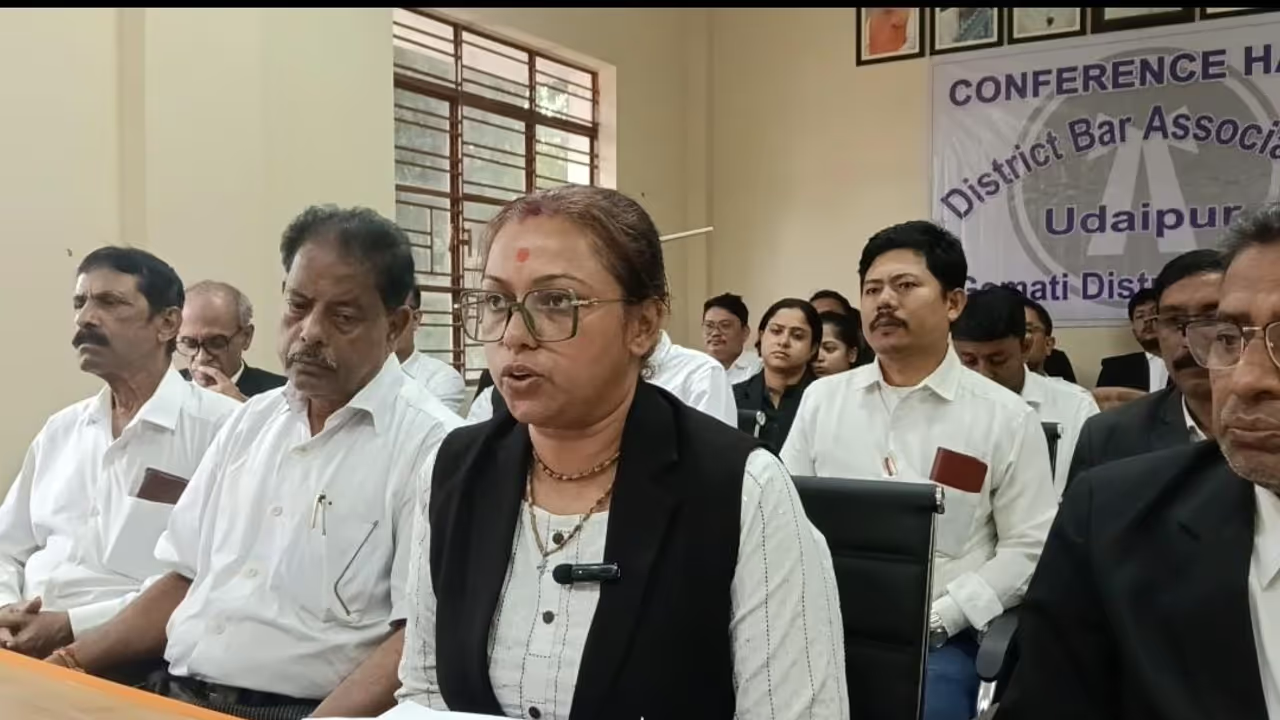
The Gomati lawyers court boycott has disrupted judicial activities across Tripura’s Gomati district, leaving litigants uncertain about their pending cases. The Gomati District Bar Association began an indefinite boycott of court proceedings on November 23, 2026, after a prolonged dispute with District and Sessions Judge Ravi Dahiya remained unresolved. The lawyers have demanded the judge’s transfer from the district, alleging repeated misconduct and discourteous treatment. They describe the confrontation as a 58-day deadlock despite several representations to the Tripura High Court. Meanwhile, ordinary litigants and undertrial prisoners face the consequences of the continuing confrontation.
Manik Saha Orders Probe Into Masked BJP Rally
Gomati Bar Association Announces Indefinite Boycott
The Gomati District Bar Association launched its district-wide boycott on November 23. Members decided to stop attending court proceedings across Gomati until the authorities address their demand for the transfer of District and Sessions Judge Ravi Dahiya.
The decision followed an emergency meeting and a series of earlier protests. Lawyers had initially boycotted proceedings in the judge’s court at Udaipur from September 30.
However, the latest decision expands the protest beyond that particular courtroom. It now affects judicial proceedings across the district.
At a press conference, Association members said repeated efforts to resolve the dispute through institutional channels had failed to produce a satisfactory outcome. They also sought support from the Bar Council of Tripura and other Bar Associations.
Lawyers Allege Misconduct by District Judge
The Bar Association has accused Judge Ravi Dahiya of repeated discourteous behaviour, humiliating remarks and inappropriate treatment of advocates. Members claim that the alleged conduct affected their ability to perform professional duties with dignity.
The lawyers have also raised concerns about the treatment of women advocates. They allege that some women lawyers faced inappropriate remarks during court proceedings.
Furthermore, the Association has questioned certain courtroom practices. It claims that the judge’s approach to advocates and procedural matters has created tension inside the Udaipur court.
These allegations come from the protesting lawyers and have not been independently established. The judicial officer’s response to the latest accusations was not available in the reports reviewed.
Witness Recording and Late Hearings Add to Dispute
One major concern involves the recording of witness statements, particularly when witnesses speak Bengali.
The Bar Association alleges that language-related difficulties affected the recording process. It claims that the court did not adequately address these difficulties through appropriate interpretation arrangements.
Lawyers have also complained about hearings continuing until late at night. According to the Association, some proceedings reportedly extended until 9 pm or even midnight.
Such delays, they argue, created difficulties for litigants travelling from distant areas. Undertrial prisoners also faced problems returning to jail late and receiving meals on time.
The Association maintains that these concerns require administrative attention. However, the allegations need examination through the appropriate judicial and administrative channels.
Repeated Representations Failed to End the Deadlock
The dispute has continued despite several attempts by the Gomati District Bar Association to seek intervention from senior judicial authorities.
The Association submitted representations to the Tripura High Court on June 6 and July 16, 2026. It later approached the Registrar General on October 9 through another delegation.
The lawyers also referred to an earlier meeting with the Portfolio Judge and subsequent efforts to establish dialogue with the High Court administration.
Despite these steps, the Association says it did not receive a response that addressed its concerns. Consequently, members decided to intensify their protest.
The Association has now approached the Bar Council of Tripura for support. It has also urged other Bar Associations to consider extending solidarity.
Litigants Face Delays as Court Work Stops
The indefinite boycott has created uncertainty for people who depend on Gomati district’s courts. Litigants with pending civil, criminal, family and other cases may face adjournments and delays.
People seeking bail hearings or urgent judicial relief could also experience difficulties if advocates remain absent from proceedings.
Undertrial prisoners may face additional uncertainty when hearings cannot proceed as scheduled. Meanwhile, families and witnesses may need to make repeated journeys to court without knowing when their cases will move forward.
The disruption highlights how institutional disagreements can affect people who have no direct role in the dispute.
Access to timely justice depends on cooperation between judges, lawyers and court administration. Therefore, a prolonged confrontation can place considerable pressure on the district’s judicial system.
Need for Institutional Dialogue and Resolution
The continuing dispute has placed the relationship between the Bar and the Bench under scrutiny. The lawyers want the High Court administration to examine their complaints and consider transferring the District and Sessions Judge.
At the same time, allegations against a judicial officer require fair examination through established procedures. An impartial review can help determine the facts and identify appropriate administrative steps.
The immediate challenge is to address the lawyers’ grievances without allowing court services to remain disrupted indefinitely.
The Tripura High Court’s intervention could help restore communication between the two sides. Any resolution should also protect litigants’ access to hearings and urgent legal remedies.
Conclusion
The Gomati lawyers court boycott has entered an indefinite phase after the District Bar Association failed to secure a resolution to its dispute with District and Sessions Judge Ravi Dahiya. The lawyers allege misconduct and demand his transfer, while the wider judicial administration faces growing pressure to address the confrontation. With court proceedings affected across Gomati district, ordinary litigants and undertrial prisoners face mounting uncertainty. A fair institutional review and renewed dialogue will be essential to restore normal judicial functioning.
FAQs
1. Why have Gomati district lawyers started a court boycott?
The lawyers are protesting alleged misconduct and discourteous treatment by District and Sessions Judge Ravi Dahiya.
2. When did the indefinite boycott begin?
The Gomati District Bar Association began the district-wide boycott on November 23, 2026.
3. What is the lawyers’ main demand?
The Association has demanded the transfer of District and Sessions Judge Ravi Dahiya from Gomati district.
4. What allegations have the advocates raised?
They allege humiliating remarks, inappropriate behaviour, concerns over witness statement recording and hearings continuing late into the night.
5. How could the boycott affect ordinary people?
Litigants may face delayed hearings, adjournments and difficulties obtaining timely judicial relief. Undertrial prisoners could also experience disruptions.
6. Has the dispute been resolved?
No resolution had been reported when the indefinite boycott began. The Association was seeking intervention from the Tripura High Court and support from the Bar Council.