


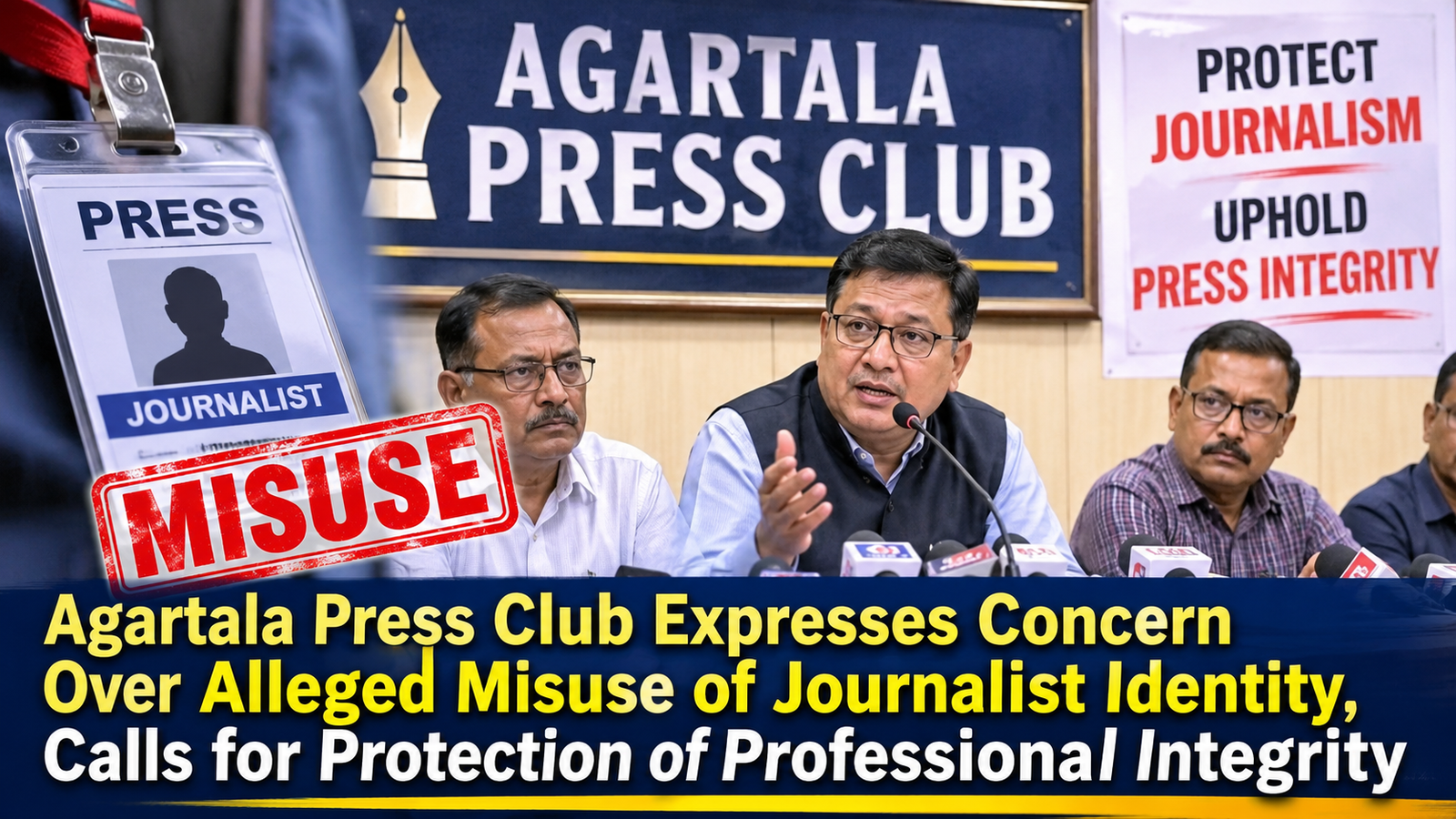
The Agartala Press Club has reportedly expressed serious concern over the alleged misuse of journalist identity in Tripura. Senior journalists and editors say the growing trend threatens the credibility, independence and professional dignity of genuine journalism. They have raised concerns about individuals allegedly using press identities to gain access to official programmes, collect information and seek personal benefits.
Moreover, the rapid growth of social media has made it increasingly difficult to distinguish professional journalists from people operating without established journalistic standards. The development has renewed calls for greater accountability and stronger protection of media ethics across the state.
Read More: Agartala Girl Rescued from Alleged Bengaluru Trafficking Trap
Key Facts About the Journalist Identity Misuse Concerns
- Location: Agartala, Tripura
- Organisation: Agartala Press Club
- Main concern: Alleged misuse of journalist identity and press credentials
- Issues raised: Unauthorised access, personal benefits and lack of professional accountability
- Other concerns: Alleged political favouritism and preferential access to selected media groups
- Main demand: Protection of journalistic integrity and professional standards
Alleged Misuse of Journalist Identity Raises Concern in Tripura
According to senior journalists and editors, some individuals have allegedly started using the identity of journalists without following basic professional ethics or accepted reporting practices.
They claim that these activities have created confusion within the media fraternity. Furthermore, the lack of an effective system to verify professional credentials has reportedly made it difficult for institutions and the public to identify genuine journalists.
The Agartala Press Club has reportedly received several complaints about individuals and groups allegedly exploiting journalist identities. Some complaints claim that these individuals attend official programmes, cover press conferences and collect information by presenting themselves as media representatives.
There are also allegations that certain people use their claimed association with journalism to pressure individuals and institutions or obtain personal advantages.
However, these claims require proper verification. No individual or organisation should face conclusions based solely on unverified allegations.
Concerns Over Unofficial Media Groups and Political Access
Senior members of the journalistic community have also raised concerns about unofficial media groups allegedly maintained by certain political leaders and ministers.
According to the allegations, selected individuals who identify themselves as journalists receive invitations and privileged access to these groups. Meanwhile, experienced journalists and representatives of established media organisations are sometimes reportedly overlooked during important press conferences and official interactions.
This alleged practice has raised questions about transparency and equal access to government information.
Journalists argue that official communication should follow fair and professional procedures. Access to important government events should not depend on personal relationships or political preferences.
Allegations of Favouritism and Financial Benefits
Another issue reportedly discussed within journalistic circles concerns allegations that a few ministers distributed Puja bonuses to selected individuals identifying themselves as journalists.
These claims have not been independently established. Nevertheless, senior journalists say that any financial favour linked to favourable publicity could create serious questions about media independence.
Journalism depends on public trust. Therefore, journalists must maintain professional distance from political and financial interests that could influence their reporting.
Some senior members have also alleged that certain people claiming to represent the media receive support from emerging political leaders. Critics suspect that such relationships could help circulate favourable narratives or target political opponents through social media.
These allegations also require independent examination before anyone draws conclusions.
Social Media Growth Adds to the Challenge
The expansion of digital platforms has created new opportunities for independent reporting, public communication and citizen journalism. However, it has also made professional verification more complicated.
Experienced journalists argue that digital freedom should not become an excuse for misusing press cards or journalist identities. They believe that people covering public events must maintain transparency about their professional roles.
At the same time, digital content creators and independent media workers should not automatically face discrimination. Instead, institutions need clear and fair guidelines to distinguish different media roles and prevent the misuse of official press credentials.
Agartala Press Club Calls for Protection of Professional Integrity
The Agartala Press Club has reportedly expressed strong displeasure over the developments and stressed the need to take complaints seriously.
The concerns highlight the importance of protecting the credibility of recognised media organisations and ensuring accountability among people who claim to work as journalists.
Senior members of the media fraternity believe that authorities, institutions and media organisations should address the issue through transparent verification procedures and consistent professional standards.
The objective, they argue, should be to prevent the misuse of journalist identity without restricting legitimate journalism or independent reporting.
Why the Issue Matters for Tripura and Northeast India
Agartala serves as an important media centre in Tripura, connecting local communities with government decisions and developments across the state.
In Northeast India, journalists also play a significant role in reporting on regional issues, public concerns and administrative activities. Therefore, maintaining public trust in the media remains essential.
Any misuse of press credentials can damage the reputation of the wider journalistic community. Protecting professional integrity is consequently important for both journalists and the public.
Frequently Asked Questions
1. What concern has the Agartala Press Club raised?
The Press Club has reportedly expressed concern over the alleged misuse of journalist identities and press credentials in Tripura.
2. What kind of misuse has been alleged?
Complaints reportedly involve unauthorised access to official programmes, collecting information and seeking personal benefits by claiming to represent the media.
3. Are political leaders or ministers mentioned in the allegations?
Yes. Some senior journalists have raised allegations involving unofficial media groups, preferential access and possible financial favours. These claims require independent verification.
4. Why has social media become part of the discussion?
The rapid growth of digital platforms has made it harder to distinguish professional journalists from individuals who use media identities without following established standards.
5. What is the main demand of the journalistic community?
The central demand is to protect professional integrity, improve accountability and prevent the misuse of journalist identities without restricting genuine journalism.
Conclusion
The concerns raised by the Agartala Press Club have brought attention to an important issue facing journalism in Tripura. While digital platforms have expanded media opportunities, professional ethics and accountability remain essential.
A transparent system for verifying press credentials, ensuring fair access to official events and addressing complaints could help protect the profession. Ultimately, safeguarding journalistic integrity is necessary to maintain public confidence in the media.
Also Read: Nagaland CM Seeks Year-Round PAP Exemption