


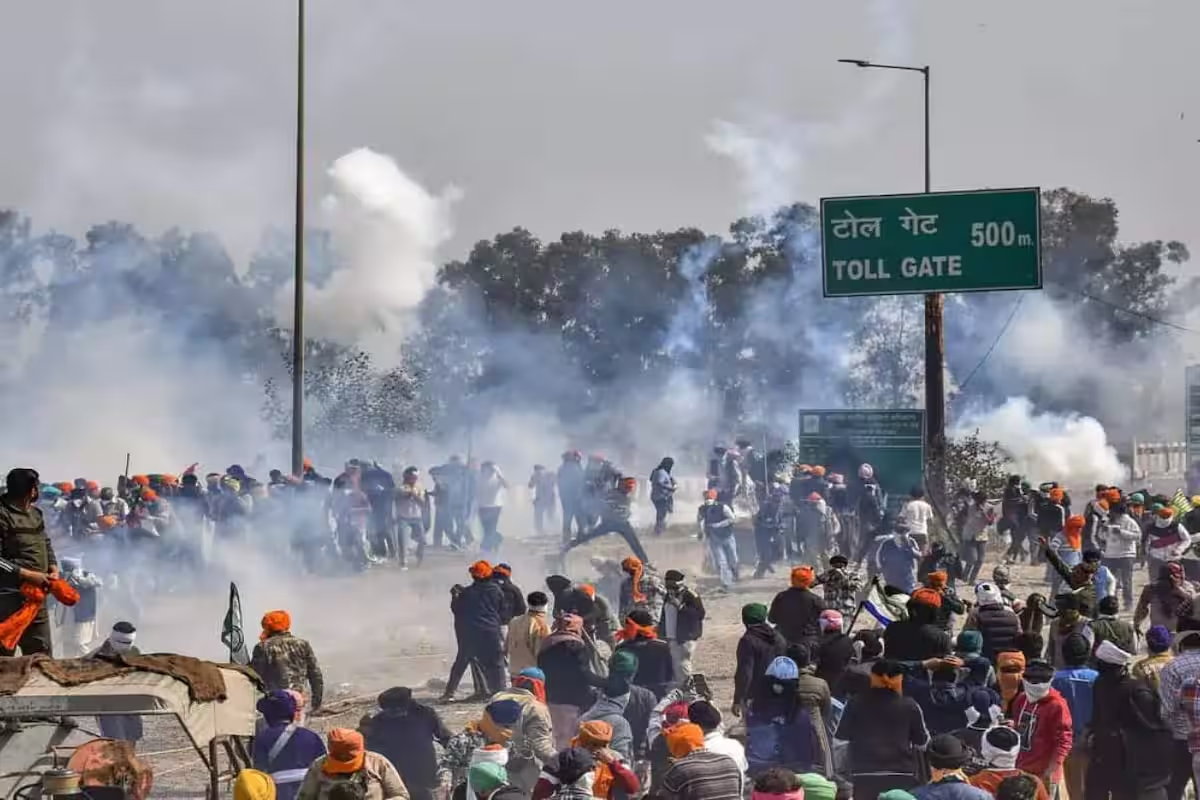
Arunachal capital bandh violence escalated dramatically after a politically backed shutdown protest in the capital city turned confrontational, prompting police to deploy tear gas to disperse demonstrators disrupting public order. Meanwhile, authorities reported clashes between protesters and security personnel in several parts of the city as tensions intensified during the bandh enforcement. The unrest disrupted traffic movement, commercial activities, and administrative operations across sensitive zones in the state capital. Additionally, law enforcement agencies increased security deployment to prevent further escalation and restore normalcy.
Officials stated that protesters attempted to block roads and restrict public movement during the bandh, leading to confrontations with police units stationed in key locations. Furthermore, authorities urged residents to remain calm while security personnel worked to stabilize the situation and prevent additional disturbances.
WBCHSE Declares Class Twelve Merit Results
Bar Council Questions Mamata Court Appearance
Protest Escalates Into Street Clashes
Large groups of demonstrators gathered across multiple locations in the capital during the bandh call. Arunachal capital bandh violence therefore intensified rapidly as protest activities expanded beyond peaceful demonstrations into confrontational street actions.
Meanwhile, police officials stated that protesters allegedly attempted to disrupt vehicular movement and obstruct government-related activities in certain administrative zones. Additionally, security personnel reportedly intervened after clashes broke out between demonstrators and law enforcement officers attempting to clear blocked roads.
Witnesses claimed that tense scenes unfolded near important intersections and commercial areas as protesters shouted slogans and confronted police barricades. Furthermore, authorities alleged that some individuals ignored repeated warnings issued by security officials to disperse peacefully.
Earlier, political organizations supporting the bandh urged citizens to participate in demonstrations connected to their demands. Consequently, public tension increased throughout the day as crowds gathered in different parts of the city.
At the same time, police appealed to protesters to maintain peace and avoid damaging public property during the agitation.
Police Deploy Tear Gas to Restore Order
Law enforcement agencies responded with crowd-control measures after the protests reportedly turned aggressive. Arunachal capital bandh violence reached a critical stage when police deployed tear gas shells to disperse groups of demonstrators in heavily affected areas.
Meanwhile, senior police officials stated that security personnel acted after protesters allegedly attempted to breach barricades and disrupt public administrative functioning. Additionally, authorities claimed that tear gas deployment became necessary to prevent the situation from escalating further.
Several security teams remained stationed near government buildings, marketplaces, and transport corridors throughout the operation. Furthermore, officials confirmed that additional police personnel were mobilized from nearby districts to strengthen security arrangements in the capital.
Observers noted that tear gas deployment in political protests often reflects serious concerns regarding crowd control and public safety. Consequently, the administration intensified monitoring of protest-prone areas following the clashes.
However, some protest organizers accused authorities of using excessive force against demonstrators participating in the bandh. They also claimed that police should have pursued dialogue before resorting to stronger crowd-control methods.
Administrative Activities Face Disruption
Government functioning and public movement experienced major disruption during the bandh-related unrest. Arunachal capital bandh violence therefore affected daily administrative operations and routine public services across several localities.
Meanwhile, commercial establishments in some parts of the city reportedly remained partially closed due to security concerns and reduced public movement. Additionally, public transport services faced interruptions after protesters blocked roads and staged demonstrations near busy traffic routes.
Officials from district administration offices monitored developments closely while coordinating with police units handling law and order responsibilities. Furthermore, authorities urged government employees and residents to avoid unnecessary travel during the peak protest period.
Educational institutions and local businesses also experienced operational difficulties because of traffic disruptions and security restrictions. Consequently, normal civic activity slowed significantly across the capital throughout the agitation.
At the same time, emergency services remained on alert to address medical or security-related incidents linked to the clashes and crowd-control operations.
Political Reactions Intensify Across State
Political leaders and organizations reacted sharply following the violent turn of the bandh protest. Arunachal capital bandh violence discussions therefore expanded into broader political debates involving protest rights, governance, and policing methods.
Meanwhile, opposition parties criticized the administration’s handling of the situation and accused authorities of failing to prevent escalation. Additionally, several leaders demanded an impartial review of the police response and crowd-control measures used during the clashes.
Supporters of the bandh defended the demonstrations and claimed that protesters were attempting to highlight important political and administrative grievances. Furthermore, some organizers alleged that authorities ignored earlier warnings regarding rising public dissatisfaction.
Ruling party representatives, however, defended the police response and stated that maintaining public order remains a priority during politically charged demonstrations. Consequently, officials emphasized that law enforcement agencies acted within legal authority to prevent violence and disruption.
Political analysts observed that bandh-related protests often become flashpoints in northeastern states due to strong local mobilization and emotionally charged political issues. At the same time, experts urged all sides to prioritize peaceful dialogue over confrontation.
Security Monitoring Intensified After Clashes
Authorities increased security monitoring across the capital after the violent incidents. Arunachal capital bandh violence developments therefore prompted closer coordination between district administration officials and law enforcement agencies.
Meanwhile, police conducted patrols in sensitive localities to prevent regrouping of protesters and avoid fresh disturbances. Additionally, intelligence units monitored social media activity and public gatherings to identify possible risks linked to escalating tensions.
Officials indicated that investigations may continue regarding property damage, clashes, and alleged violations connected to the bandh protest. Furthermore, authorities warned that strict legal action could follow against individuals found responsible for violent activities or public disruption.
Several civic organizations appealed for restraint and urged political groups to pursue constitutional methods of protest without encouraging confrontation. Consequently, peace appeals emerged from community leaders and civil society representatives across the state.
At the same time, residents expressed concern regarding the impact of repeated political unrest on business activity, education, and daily public life in the capital region.
Conclusion
Arunachal capital bandh violence intensified after a politically backed shutdown protest turned confrontational, forcing police to deploy tear gas to restore order in the state capital. Meanwhile, clashes between protesters and law enforcement agencies disrupted transportation, commercial activity, and administrative functioning across several areas. Political reactions continue escalating as opposition groups question the police response while authorities defend security measures aimed at maintaining public order. Ultimately, the handling of the unrest may influence future political demonstrations and law enforcement strategies in Arunachal Pradesh.
FAQs
Why did police deploy tear gas in Arunachal Pradesh?
Police used tear gas after protesters allegedly disrupted public order and clashed with security personnel during the bandh.
What caused the bandh protest?
The bandh was reportedly backed by political groups seeking to highlight administrative and political grievances.
Why is Arunachal capital bandh violence significant?
The unrest disrupted government functioning, transportation, and public life in the state capital.
Were public services affected during the protest?
Yes, traffic movement, commercial activities, and some administrative operations faced major disruption.
How did political leaders react to the clashes?
Opposition parties criticized the police response, while ruling party leaders defended the law enforcement action.
What steps did authorities take after the violence?
Police increased patrols, strengthened monitoring, and warned of legal action against individuals involved in violent activities.