


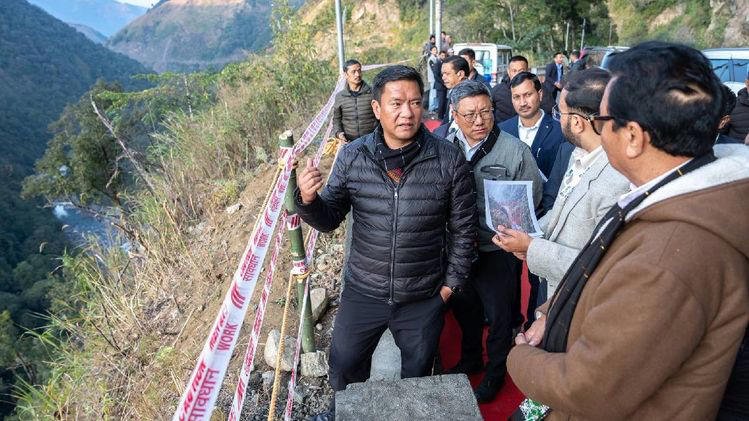
Arunachal Pradesh Chief Minister reviewed the Dibang Valley hydropower projects and stressed the need for timely execution while ensuring the welfare of local communities. He said large infrastructure projects must balance development goals with environmental responsibility and people-centric planning.
During the review meeting, the Chief Minister assessed progress, challenges, and timelines related to the hydropower projects in Dibang Valley. He underlined that delays affect both economic benefits and public confidence. At the same time, he emphasised that the interests of local residents must remain a priority throughout project implementation.
The focus on Dibang Valley hydropower projects reflects the state government’s broader push toward renewable energy-led development.
Read More: Tripura Leads AI Awareness Drive Ahead of India-AI Summit
Review meeting focuses on progress and timelines
The Chief Minister reviewed ongoing and proposed hydropower projects in Dibang Valley with senior officials and project authorities. He examined current construction status, pending clearances, and execution schedules.
Officials presented updates on milestones achieved so far. They also highlighted challenges related to terrain, weather conditions, and logistics.
The Chief Minister said timely execution of Dibang Valley hydropower projects remains essential. Delays, he noted, increase costs and reduce overall project efficiency.
Importance of hydropower for Arunachal
Arunachal Pradesh has significant hydropower potential due to its river systems and terrain. The Chief Minister said hydropower plays a key role in the state’s development strategy.
He noted that renewable energy projects can generate revenue, create employment, and support national energy security. Dibang Valley hydropower projects, he said, hold strategic importance for both the state and the country.
Hydropower development, according to him, must proceed in a planned and responsible manner.
Stress on local welfare and livelihoods
The Chief Minister stressed that local welfare must remain central to project execution. He said communities living in project-affected areas should benefit directly from development.
Officials were directed to ensure fair compensation, rehabilitation support, and livelihood opportunities for affected families. Skill training and employment for local youth were also emphasised.
The Chief Minister said Dibang Valley hydropower projects should contribute to long-term social and economic improvement in the region.
Addressing concerns of local communities
The Chief Minister acknowledged that large projects often raise concerns among local residents. He said transparent communication and continuous engagement help build trust.
He directed officials to address grievances promptly and respectfully. Public consultations, he said, should not remain a formality.
The approach to Dibang Valley hydropower projects, he added, must reflect sensitivity to local culture, land use, and traditional practices.
Environmental safeguards remain crucial
Environmental protection formed a key part of the review. The Chief Minister said hydropower development must follow strict environmental safeguards.
Officials briefed the meeting on environmental management plans, biodiversity protection measures, and monitoring mechanisms. The Chief Minister stressed compliance with all environmental norms.
Dibang Valley’s ecological significance, he said, requires careful planning to minimise environmental impact.
Infrastructure and connectivity benefits
The Chief Minister highlighted that hydropower projects often bring additional infrastructure to remote regions. Roads, bridges, and communication networks improve connectivity.
Such infrastructure benefits local communities beyond the project lifespan. Access to healthcare, education, and markets improves as a result.
The Dibang Valley hydropower projects, he said, should act as catalysts for regional development.
Coordination between agencies
The Chief Minister stressed the need for strong coordination between state departments, central agencies, and project developers. Clear communication reduces bottlenecks and delays.
He directed officials to resolve inter-departmental issues swiftly. Accountability at every level remains essential for timely completion.
Effective coordination, he said, will ensure that Dibang Valley hydropower projects move forward smoothly.
Safety and disaster preparedness
Safety considerations were also reviewed during the meeting. The Chief Minister said construction and operation must follow strict safety standards.
He emphasised disaster preparedness, given the region’s seismic sensitivity. Emergency response plans must remain updated and tested.
Safety of workers and nearby residents, he said, cannot be compromised under any circumstances.
Employment generation and skill development
The Chief Minister said hydropower projects offer opportunities for employment and skill development. Priority, he said, should be given to local youth.
Training programmes can help residents acquire technical skills needed for construction, operation, and maintenance. This approach ensures local participation in development.
Dibang Valley hydropower projects, he said, should build local capacity alongside energy infrastructure.
Revenue generation and state economy
Hydropower projects contribute significantly to state revenue through power generation and royalties. The Chief Minister said efficient execution maximises economic returns.
These revenues can support welfare schemes, infrastructure projects, and social services across Arunachal Pradesh.
The Dibang Valley hydropower projects, he said, form an important part of the state’s long-term economic planning.
Balancing development and tradition
The Chief Minister reiterated that development must respect local traditions and lifestyles. He said progress should not come at the cost of cultural erosion.
Officials were advised to involve community leaders in planning and implementation. Local knowledge, he said, adds value to decision-making.
The approach to Dibang Valley hydropower projects must remain inclusive and respectful.
Monitoring and accountability mechanisms
Regular monitoring was stressed during the review. The Chief Minister said progress reports should be accurate and timely.
He directed officials to fix clear responsibilities and deadlines. Accountability ensures that commitments translate into action.
Dibang Valley hydropower projects, he said, require constant oversight due to their scale and complexity.
Long-term vision for renewable energy
The Chief Minister said Arunachal Pradesh aims to emerge as a leader in renewable energy. Hydropower remains a cornerstone of this vision.
He said future planning must integrate sustainability, technology, and community welfare. Renewable energy development should support climate goals.
The Dibang Valley hydropower projects align with this long-term renewable energy strategy.
Way forward
Concluding the review, the Chief Minister reiterated his commitment to timely execution and people-centric development. He said progress must be measured not only in megawatts but also in social outcomes.
Officials were directed to maintain momentum and address challenges proactively. Transparent communication with communities will remain essential.
As Arunachal Pradesh moves forward with Dibang Valley hydropower projects, the emphasis on timely execution, environmental safeguards, and local welfare reflects a balanced development approach. The projects aim to deliver clean energy while ensuring that growth remains inclusive, responsible, and sustainable for the people of the region.
Read More: Mizoram Targets 1% Share in India’s GDP by 2047