


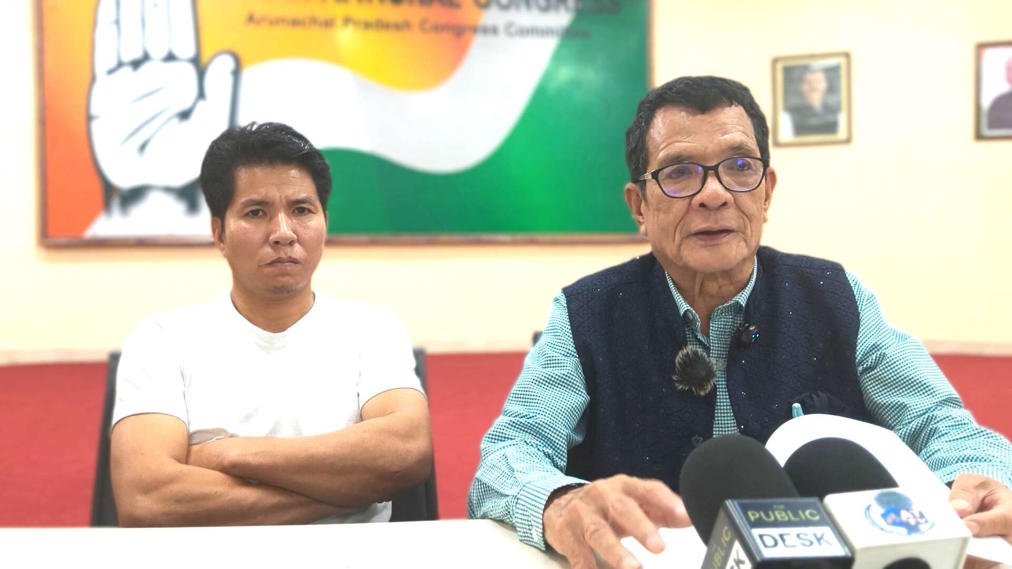
The Arunachal Pradesh Congress Committee (APCC) has formed a study-cum-fact-finding committee to assess the possible impact of the proposed Siang Upper Multipurpose Project (SUMP). The panel will examine social, environmental and livelihood concerns in areas that could face the effects of the mega hydropower project.
APCC president Bosiram Siram announced the committee on Sunday, September 27. The move comes amid protests by sections of indigenous communities and concerns surrounding pre-feasibility surveys and drilling activities in the Siang region. Reports have also emerged about the deployment of paramilitary personnel in areas linked to project-related activities.
Read More: Foundation Laid for India’s Largest Green E-Methanol Plant at Kandla Port
Panel to Visit Affected Villages
The committee will conduct village-to-village visits across East Siang, Siang and Upper Siang districts. During these visits, members will speak with residents and assess conditions on the ground.
The panel will examine the potential impact of the proposed project on communities, land, forests, rivers and local livelihoods. It will also document concerns raised by people living in areas that could fall within the project’s impact zone.
According to the APCC, the committee will submit its findings within 15 days. A nine-member sub-committee will coordinate field visits and community interactions.
The Congress has also invited political parties, civil society groups, student organisations, traditional institutions, village representatives and other stakeholders to participate in the exercise.
Tanga Byaling to Head Committee
APCC working president Tanga Byaling will head the fact-finding committee. Senior Congress leader Takam Sanjoy will serve as vice-chairman.
Advocate Tami Pangu will serve as the member secretary. Daniel Gao and Johny Yangfo will also serve as members.
Pangu will lead the nine-member sub-committee responsible for field visits. Representatives from district Congress committees, district tribal councils and village units will assist the sub-committee during its interactions with residents.
The APCC has asked participating organisations to nominate representatives within three days.
Focus on Social and Environmental Concerns
The committee will examine several issues connected with the proposed Siang project. These include land acquisition, rehabilitation, compensation, livelihoods and local security arrangements.
Environmental concerns will also form an important part of the assessment. The panel plans to examine available information on forests, biodiversity, river ecology, geology, seismic activity and possible downstream effects.
The committee will also review concerns about dam safety and disaster risks. These issues have featured in wider discussions about large hydropower projects in Arunachal Pradesh.
Official environmental procedures already require detailed studies before such projects can receive environmental clearance. The Union government has previously stated that the environmental clearance process includes studies of flora, fauna, socioeconomic conditions and other environmental parameters.
Proposed 11,000-MW Project
The Siang Upper Multipurpose Project is a proposed large-scale hydropower and multipurpose project in Arunachal Pradesh. Recent reports have described its proposed capacity at around 11,000 MW.
The project has attracted attention because of its potential scale and its location in the Siang region.
The government has described the project as having national and strategic importance. At the same time, sections of local communities and organisations have raised concerns about its possible effects on land, livelihoods, the environment and indigenous communities.
The project remains at the preliminary investigation stage. In a 2024 response in Parliament, the Union Power Ministry said the Upper Siang Multipurpose Project was then at the preliminary stage of investigation. It also stated that environmental clearance would be required before construction could begin.
Protests Over Survey and Drilling Activities
The formation of the Congress panel comes against the backdrop of disagreements over project-related surveys and drilling.
Sections of communities in Siang and Upper Siang districts have opposed some of the pre-feasibility activities. Protests have taken place in areas including Komkar and around Uggeng, according to reports.
The APCC has said its committee will examine the current status of the pre-feasibility process. It will also review the legal and administrative basis for surveys, drilling activities, land access and security deployment.
The committee will examine different viewpoints rather than assume that either supporters or opponents represent all residents of the affected areas.
Security Deployment Also Under Review
Security arrangements linked to project-related activities will form another part of the committee’s assessment.
The Congress panel will examine reports concerning the deployment of security personnel in the Siang region. It will also review restrictions imposed in the Geku area of Upper Siang on September 7 under Section 163 of the Bharatiya Nagarik Suraksha Sanhita.
The restrictions came amid concerns about possible law-and-order issues connected with opposition to project activities, according to reports.
The committee plans to meet residents, community organisations, village institutions, government officials and technical experts to gather information about the situation.
Communities Invited to Participate
Tanga Byaling has appealed to a wide range of groups to participate in the fact-finding exercise. These include political parties, civil society organisations, student unions, community bodies, traditional institutions, village elders and Panchayati Raj representatives.
The APCC has also invited the Adi Bane Kebang and Siang Indigenous Farmers’ Forum to take part.
The party said broader participation would allow the panel to collect views from different sections of society. It also aims to document grievances and concerns directly from people living in the potentially affected areas.
Government Position and Environmental Clearance
The proposed project has also been discussed in Parliament in the context of environmental and community concerns.
In 2024, the Ministry of Power said the concerns raised by local villagers were being addressed through confidence-building measures, outreach and awareness activities. The ministry also said environmental clearance would require detailed studies of environmental and socioeconomic conditions.
Such studies typically assess issues including biodiversity, forests, water resources and other environmental factors before authorities consider project clearance.
Therefore, the Congress committee’s proposed assessment will take place alongside the broader official processes associated with the project’s investigation and eventual clearances.
Report Expected Within 15 Days
The APCC has given the fact-finding committee 15 days to complete its assessment and submit its report.
The panel’s village-level interactions are expected to provide information about local concerns, environmental issues and possible livelihood effects. The committee will also consider official documents and available scientific assessments.
For the communities in the Siang region, the proposed project remains an issue involving development, land, livelihoods and environmental concerns. The findings of the Congress panel could add another set of documented observations to the ongoing discussion around the project.
As the investigation continues, further discussions are likely to focus on the project’s environmental implications, community consultations, rehabilitation measures and the concerns raised by residents in the affected areas.