


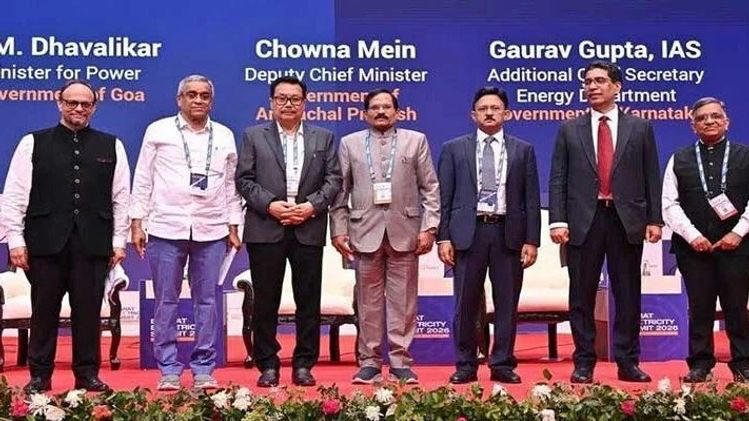
Arunachal hydropower potential took centre stage at a recent national energy meet, where the state’s Deputy Chief Minister highlighted its vast capacity and called for stronger policy support from the Centre. The address underscored Arunachal Pradesh’s strategic importance in India’s renewable energy roadmap and emphasised the need to unlock its untapped resources.
Read More: AIUDF Releases Third Candidate List for Assam Elections 2026
Deputy CM showcases Arunachal’s energy strength
The Deputy Chief Minister of Arunachal Pradesh highlighted that the state possesses one of the highest hydropower potentials in the country. With numerous rivers and favourable terrain, Arunachal offers immense opportunities for clean energy generation.
He stated that harnessing this potential can significantly contribute to India’s energy security. At the same time, it can drive economic growth and infrastructure development within the state.
Moreover, he pointed out that hydropower aligns with the country’s commitment to sustainable and renewable energy. Therefore, investing in this sector can help India meet its climate goals.
Call for stronger policy support
During the national energy meet, the Deputy CM urged the central government to provide enhanced policy support. He stressed that clear and consistent policies can accelerate project implementation.
He also highlighted the need for financial assistance and incentives. Such measures can attract private investment and encourage public-private partnerships in the hydropower sector.
In addition, he called for simplified approval processes. Reducing bureaucratic hurdles can help fast-track projects and ensure timely completion.
Challenges in hydropower development
Despite its vast potential, Arunachal Pradesh faces several challenges in developing hydropower projects. The Deputy CM acknowledged issues such as difficult terrain, limited infrastructure, and environmental concerns.
Transportation and connectivity remain major hurdles in remote areas. These factors increase project costs and slow down progress.
Furthermore, balancing development with environmental sustainability is crucial. Hydropower projects must adhere to strict ecological standards to protect the region’s biodiversity.
Importance of infrastructure development
The Deputy CM emphasised the need for improved infrastructure to support hydropower projects. Better roads, transmission lines, and communication networks can facilitate project execution.
He pointed out that investment in infrastructure will not only benefit the energy sector but also improve overall connectivity in the state. This, in turn, can boost tourism, trade, and local businesses.
Moreover, strong infrastructure can help integrate Arunachal’s energy production with the national grid. This integration is essential for efficient power distribution.
Economic benefits for local communities
Hydropower development can bring significant economic benefits to local communities. The Deputy CM highlighted that projects can create employment opportunities and generate revenue for the state.
He also stressed the importance of involving local populations in the development process. Ensuring community participation can lead to more inclusive growth and reduce resistance to projects.
In addition, revenue generated from hydropower can support social welfare programmes and improve living standards.
Northeast’s role in India’s energy future
The Deputy CM’s address also highlighted the broader role of Northeast India in the country’s energy future. The region’s natural resources make it a key contributor to renewable energy goals.
He called for greater collaboration between northeastern states and the central government. Such cooperation can help develop a comprehensive strategy for energy development.
Furthermore, he emphasised the need for regional integration. Sharing resources and expertise can enhance efficiency and drive progress.
National energy meet discussions
The national energy meet provided a platform for policymakers, industry experts, and stakeholders to discuss key issues. Topics included renewable energy, policy frameworks, and technological advancements.
The Deputy CM’s remarks drew attention to the unique challenges and opportunities in Arunachal Pradesh. His call for policy support resonated with many participants.
Moreover, the discussions highlighted the importance of innovation and investment in the energy sector. These factors are essential for achieving long-term sustainability.
What lies ahead for Arunachal hydropower
The future of Arunachal hydropower potential depends on effective policy implementation and strategic investments. The Deputy CM expressed optimism that increased support will lead to faster development.
He also emphasised the need for continuous dialogue between stakeholders. Collaboration can help address challenges and identify solutions.
At the same time, maintaining environmental balance will remain a priority. Sustainable practices must guide all development efforts.
Conclusion
Arunachal hydropower potential remains a critical component of India’s renewable energy strategy. The Deputy Chief Minister’s address at the national energy meet has highlighted both opportunities and challenges.
By seeking stronger policy support, the state aims to unlock its vast resources and contribute to national energy goals. With the right approach, Arunachal Pradesh can emerge as a major hub for clean energy.
As discussions continue, the focus will remain on balancing development, sustainability, and community welfare. The path forward requires coordinated efforts and a clear vision for the future of energy in the region.
Read More: Sikkim Assembly Session on March 26 Summoned by Governor