


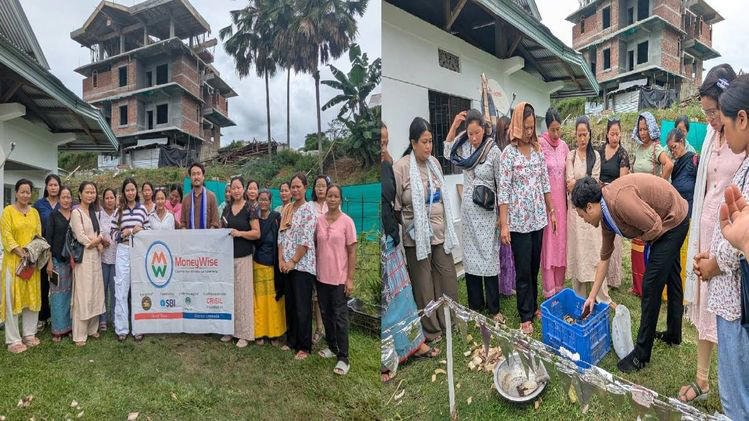
Arunachal Pradesh has taken another step toward rural empowerment. Recently, women farmers training in Arunachal was conducted at Basar, focusing on vermicompost production and financial literacy. The initiative aims to strengthen sustainable farming while encouraging self-reliance among women.
Hands-on sessions on vermicomposting
The program centered on hands-on learning, enabling women farmers to directly experience how vermicomposting works. Trainers explained how organic waste could be converted into nutrient-rich manure with earthworms. Such manure improves soil health, reduces dependence on chemical fertilizers, and lowers farming costs.
The women actively participated in preparing compost beds, maintaining the moisture level, and handling worms with proper care. By practicing the methods themselves, they gained confidence to replicate the techniques back in their villages. Trainers emphasized that vermicompost not only boosts productivity but also supports organic certification, which has growing demand in markets.
Read More: Mizoram Assam status quo after border tensions
Empowerment through financial literacy
Alongside farming skills, women farmers training in Arunachal also highlighted financial literacy. Many rural women often face challenges in managing income, saving systematically, or accessing government schemes. The sessions provided them with basic knowledge of budgeting, banking, and small investments.
Experts guided participants on how to form self-help groups and use collective savings for farming or small businesses. They also explained digital payment systems and mobile banking, ensuring that women farmers can benefit from modern financial tools. By integrating financial knowledge with farming, the program aims to create stronger and more independent rural households.
Government and community collaboration
The training was organized in collaboration with local agricultural officers, women’s groups, and community leaders. The Arunachal Pradesh government has been actively promoting programs that combine skill development with empowerment. At Basar, officials reiterated their commitment to providing technical support and ensuring women farmers training in Arunachal continues regularly.
Community members also joined in appreciating the role of women in agriculture. They pointed out that women form the backbone of farming in rural Arunachal, yet they often lack access to structured training. By addressing this gap, the initiative helps ensure that women not only sustain agriculture but also innovate in their practices.
Long-term benefits for sustainable farming
The introduction of vermicompost methods is expected to reduce chemical dependency and promote healthier crops. Women farmers who master these skills can scale the production and even sell vermicompost as an additional source of income. Moreover, the financial literacy sessions mean that profits from farming are more likely to be managed wisely, with savings directed toward education, healthcare, and reinvestment in agriculture.
The training also creates ripple effects within communities. When a group of women learns a new skill, they often pass it on to others. This peer-to-peer learning ensures the knowledge does not remain limited but spreads widely across rural areas.
Aligning with Arunachal’s vision
The program at Basar reflects the state’s broader vision of sustainable agriculture and rural empowerment. Arunachal Pradesh has vast potential for organic farming due to its natural environment. By combining eco-friendly techniques with financial literacy, the government is ensuring that rural farmers are better prepared to face market challenges.
Women farmers training in Arunachal also aligns with national goals of promoting self-reliance and doubling farmers’ income. By equipping women with both agricultural and financial skills, the initiative addresses two critical aspects of rural development: productivity and empowerment.
Voices from the participants
Participants shared positive feedback about the sessions. Many said they had always practiced traditional farming but lacked knowledge of modern composting methods. Learning vermicomposting gave them practical skills that can be applied immediately.
Several women also expressed excitement about financial literacy training, as it was their first exposure to concepts like budgeting and online banking. They felt encouraged that these tools would help them save and plan better for their families.
A path forward
The program at Basar serves as an example of how targeted interventions can bring meaningful change. With more such training sessions planned across Arunachal, the reach of these initiatives is set to expand. The state’s agricultural department has assured continued support to women farmers in scaling up their efforts and linking with markets.
In the long run, combining vermicompost training with financial education builds a holistic model of empowerment. It not only strengthens agriculture but also enhances social and economic resilience among rural women.
The women farmers training in Arunachal held at Basar shows how sustainable farming practices and financial literacy can transform rural lives. By empowering women with practical skills and financial awareness, the state is paving the way for stronger communities and healthier agriculture. Such initiatives ensure that women farmers remain at the forefront of progress, contributing not only to their households but also to the state’s vision of a sustainable future.
Read More: Sikkim Launches Automated Irrigation at SCA Cricket Ground