


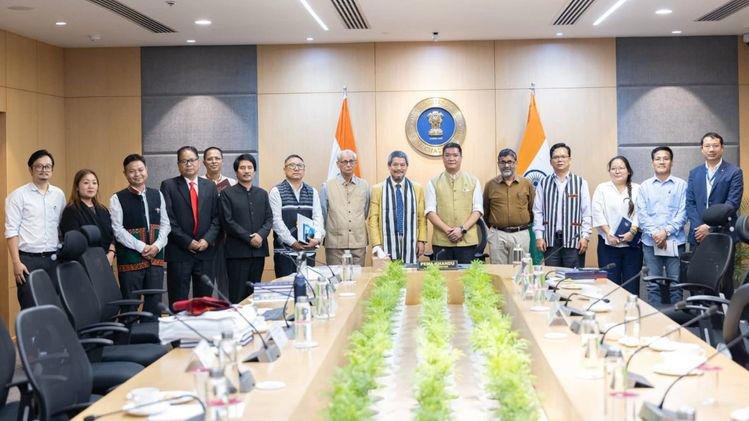
Arunachal Pradesh is exploring new border trade opportunities with Bhutan and Myanmar to strengthen its economy and promote regional cooperation. The state government aims to improve cross-border connectivity and boost commerce through formal trade routes. This initiative is expected to create jobs, increase exports, and help local communities benefit from closer economic ties with neighbouring countries.
Read More: Tripura Launches Food Support Scheme for TB Patients
Chief Minister Pema Khandu said that the state’s border areas hold immense potential for trade. He explained that better road connectivity and market linkages can turn these regions into active trade corridors. Khandu pointed out that the border with Bhutan and Myanmar is not just a geographical boundary but a bridge that connects cultures and economies.
He also said that the state government has already taken steps to improve infrastructure in these areas. Roads leading to the border have been upgraded to support transportation of goods. Plans are also underway to establish more checkpoints and customs facilities to make trade safer and smoother. The Chief Minister added that such developments will help Arunachal Pradesh take advantage of its strategic location in the eastern Himalayas.
According to government officials, the trade potential with Bhutan and Myanmar is significant. Local products such as handicrafts, organic spices, bamboo goods, and horticultural produce are in high demand in both countries. Similarly, imports of goods like textiles, farm tools, and household items can also benefit communities living near the border. The government believes that opening trade routes will improve livelihoods and reduce migration from remote villages.
The Chief Minister said that both Bhutan and Myanmar have shown interest in collaborating on trade and cultural exchange. Discussions are underway to identify key trade points and develop the necessary logistics. He added that Arunachal Pradesh can learn from successful models of cross-border trade in other northeastern states such as Mizoram and Manipur. He also mentioned that the Centre’s Act East Policy provides a strong framework for expanding these initiatives.
The Governor of Arunachal Pradesh praised the government’s efforts and called for careful planning to ensure security and transparency in all trade activities. He said that while border trade offers huge benefits, it must also be regulated to prevent illegal activities. He urged the administration to coordinate with central agencies like the Border Roads Organisation and the customs department. The Governor said that a well-managed border trade system would help the state grow faster while maintaining peace and order.
The state’s commerce and industry department has been tasked with preparing a detailed report on potential trade routes. It will include studies on transport costs, trade volumes, and the economic impact on local businesses. Officials have also proposed setting up small business clusters along border towns to help local entrepreneurs take part in trade. The idea is to turn these towns into growth hubs that attract investment and tourism.
The government is also planning to organize border trade fairs and cultural exchange programmes to strengthen ties with Bhutanese and Myanmar traders. These events will not only showcase Arunachal’s local products but also encourage people-to-people contact. The Chief Minister said that promoting cultural understanding is as important as economic growth, as it helps build long-term trust among border communities.
He also emphasized the need for training local youth in trade management, customs regulations, and export documentation. This will prepare them for jobs created by the new trade routes. According to him, empowering the youth through education and skill development is vital for sustainable growth. The state will collaborate with trade institutions and industry bodies to provide training programs and financial support to young entrepreneurs.
In addition, officials are exploring the use of digital platforms to support traders. Online systems can make cross-border trade more transparent and reduce delays in customs clearance. The Chief Minister said that introducing technology in trade management would simplify procedures and ensure fair pricing for goods. Digital tracking systems could also prevent smuggling and other illegal activities.
The government also aims to develop tourism alongside border trade. Areas near Bhutan and Myanmar offer scenic beauty, vibrant cultures, and traditional crafts that attract visitors. Khandu said that improved trade infrastructure will naturally encourage tourism and hospitality businesses to grow. This will provide an additional source of income for local residents.
Experts say that the opening of new border trade routes could have a far-reaching impact on Arunachal Pradesh’s economy. It will create demand for transport services, storage facilities, and financial services, generating employment for thousands. The agriculture and handicraft sectors will also benefit as producers find new markets for their goods.
However, the success of these border trade opportunities depends on consistent coordination between both governments and local administrations. The Governor said that trade cooperation should always go hand in hand with strong security arrangements. He suggested forming joint committees with Bhutanese and Myanmar authorities to address challenges like smuggling, environmental impact, and border management.
The Chief Minister said that Arunachal Pradesh is committed to peaceful and productive relations with all its neighbours. He expressed hope that with support from the central government, the state will soon have formal trade points recognized under bilateral agreements. He added that trade should not only bring revenue but also strengthen cultural and social bonds among people living along the borders.
In conclusion, Arunachal’s move to explore border trade opportunities with Bhutan and Myanmar marks an important step toward regional cooperation and self-reliance. The initiative blends economic goals with cultural and social progress. With better connectivity, transparent trade systems, and community participation, the border regions of Arunachal Pradesh could soon become gateways of prosperity and collaboration.
Arunachal’s leadership believes that its geographical position gives it a natural advantage in linking India with Southeast Asia. By using this potential wisely, the state hopes to turn its borders into engines of economic growth and friendship.
Read More: NCW Urges Joint Action by Mizoram Police and Assam Rifles to Curb Cross-Border Trafficking