


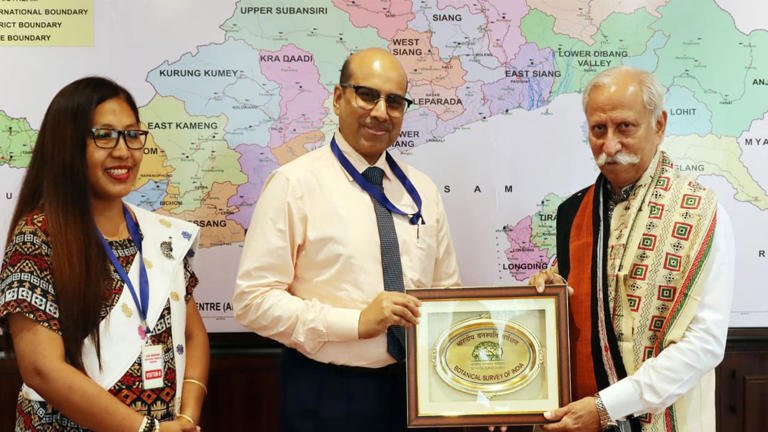
Arunachal Pradesh Governor Lt Gen K T Parnaik met the Director of the Botanical Survey of India (BSI) to discuss the state’s rich biodiversity and the need to strengthen efforts for its conservation and scientific documentation.
The meeting focused on Arunachal Pradesh’s unique ecological wealth and the importance of studying and protecting its diverse plant species. The state, located in the eastern Himalayas, has a wide range of forests and ecosystems that support a rich variety of flora and fauna.
During the interaction, the Governor and the BSI Director discussed the role of scientific research in understanding this natural wealth and ensuring its protection for future generations.
Governor Highlights Arunachal Pradesh’s Ecological Wealth
Governor Lt Gen K T Parnaik highlighted the exceptional biodiversity of Arunachal Pradesh during the discussion. The state’s geographical location and varied landscape have contributed to the development of diverse ecosystems.
From high mountain regions to dense forests and river valleys, Arunachal Pradesh has a wide range of natural habitats. These habitats support numerous plant and animal species.
The Governor stressed the importance of protecting this ecological wealth. He also highlighted the need for scientific studies that can improve knowledge about the state’s biodiversity.
Better documentation can help researchers identify plant species and understand their ecological importance. It can also support conservation planning and sustainable use of natural resources.
BSI’s Role in Biodiversity Research
The Botanical Survey of India plays an important role in studying India’s plant diversity. The organisation conducts botanical research and documents plant species across different parts of the country.
The discussion with the Arunachal Pradesh Governor focused on how scientific institutions can contribute to the study of the state’s plant wealth.
Arunachal Pradesh offers significant opportunities for botanical research because of its diverse geography and climate. Researchers continue to study different regions and document species that may have ecological, medicinal or scientific importance.
The Governor and the BSI Director discussed the need to strengthen research and documentation efforts.
Scientific studies can also help authorities understand the challenges facing ecosystems. Climate change, habitat loss and other environmental pressures can affect biodiversity and require careful monitoring.
Focus on Conservation and Documentation
Conservation formed an important part of the discussion between the Governor and the BSI Director. Protecting biodiversity requires accurate information about species and their habitats.
Documentation can help scientists and policymakers understand what resources exist and where conservation efforts are most needed.
The use of modern scientific methods can improve the process of identifying and studying plant species. Research institutions can also work with universities, local communities and government agencies.
The Governor highlighted the importance of cooperation between scientific organisations and the state government.
Such partnerships can support long-term research and strengthen conservation programmes.
Importance of Indigenous Knowledge
Arunachal Pradesh is home to several indigenous communities with a close relationship with nature. Traditional knowledge can provide valuable insights into the use and conservation of plants and other natural resources.
The state has a long tradition of using local plants for food, medicine and other purposes. Researchers can learn from this knowledge while carrying out scientific studies.
The discussion also highlighted the importance of documenting traditional knowledge in a responsible manner.
Protecting indigenous knowledge and recognising the role of local communities can strengthen biodiversity conservation.
Community participation can also help conservation programmes succeed. People living close to forests and natural habitats often play an important role in protecting local ecosystems.
Strengthening Research and Conservation Efforts
The meeting underlined the need for continued research into Arunachal Pradesh’s biodiversity. Scientists can use research findings to support conservation strategies and sustainable development.
The state government and scientific organisations can work together to expand studies of plant species and ecosystems.
Greater documentation can help create a clearer picture of the state’s biological resources. It can also help identify rare, threatened or previously undocumented species.
The Governor emphasised the importance of preserving biodiversity while pursuing development.
Sustainable development requires a balance between infrastructure needs and environmental protection. Scientific research can help policymakers make informed decisions and reduce the impact of development on sensitive ecosystems.
Arunachal Pradesh’s Biodiversity Holds Global Importance
Arunachal Pradesh’s location in the eastern Himalayan region gives its biodiversity importance beyond the state and the country.
The eastern Himalayas are recognised for their ecological diversity. The region supports several unique species and ecosystems.
Protecting this biodiversity can contribute to wider environmental conservation efforts.
The Governor and the BSI Director discussed ways to increase understanding of the state’s ecological resources. Research and conservation can help ensure that this natural heritage remains protected.
The involvement of scientific institutions such as the Botanical Survey of India can support detailed studies and create reliable records of plant diversity.
Way Forward for Biodiversity Conservation
The meeting between Governor Lt Gen K T Parnaik and the BSI Director highlighted the importance of scientific research and conservation in protecting Arunachal Pradesh’s natural wealth.
The state’s rich biodiversity offers significant opportunities for scientific discovery. However, effective conservation will require continued research, accurate documentation and cooperation among different stakeholders.
The Governor emphasised the importance of preserving Arunachal Pradesh’s ecological heritage for future generations.
Greater collaboration between the state government, scientific institutions, universities and local communities can strengthen these efforts.
The discussion also reflected a broader understanding that biodiversity conservation and sustainable development must move together.
As Arunachal Pradesh continues to develop, protecting its forests, plant species and ecosystems will remain an important priority. Scientific research and responsible conservation practices can help the state preserve its rich natural heritage while supporting sustainable growth.