


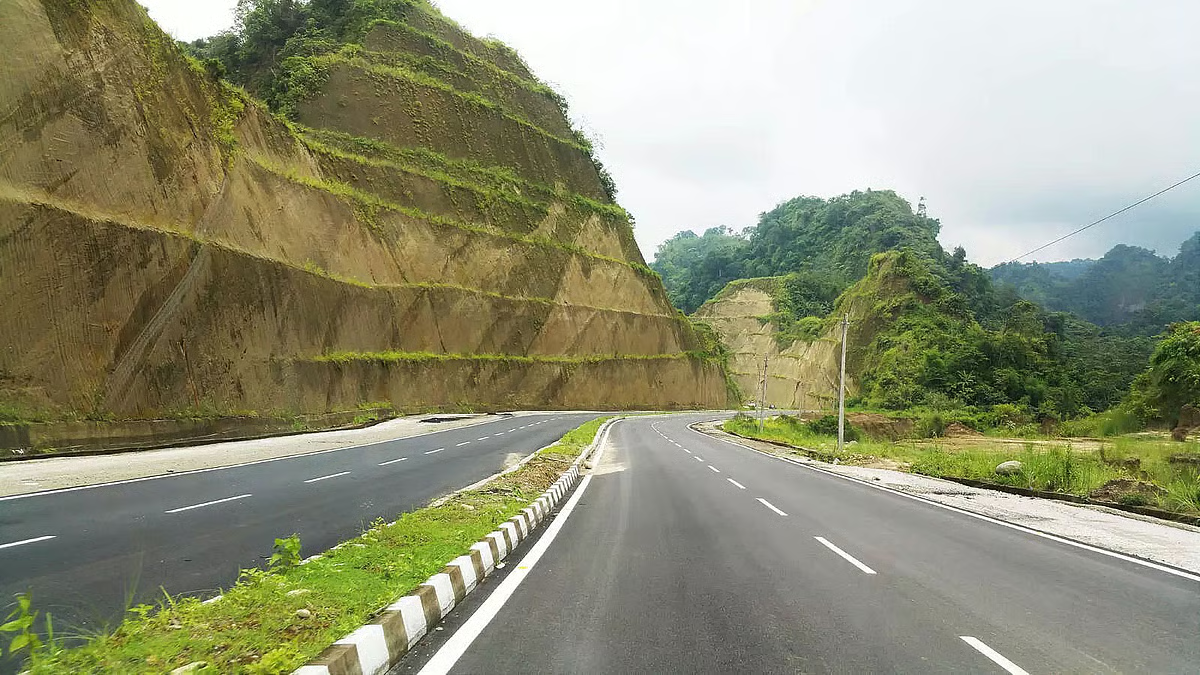
Arunachal border highway project plans gained major attention after authorities announced a new infrastructure initiative aimed at connecting remote villages located along strategically important frontier regions of Arunachal Pradesh. Meanwhile, government officials stated that the proposed highway development seeks to improve transportation access, strengthen regional connectivity, and support economic growth in isolated border communities. The announcement immediately attracted national and regional interest because infrastructure expansion in Arunachal Pradesh carries significant developmental and strategic importance for Northeast India. Additionally, administrative departments reportedly accelerated preliminary planning and coordination efforts linked to the upcoming project.
The development emerged amid continuing efforts to modernize transportation networks across India’s northeastern frontier regions. Furthermore, infrastructure experts observed that road connectivity remains critical for border management, public service delivery, and economic integration in geographically challenging hill states.
Hornbill Festival Preparations Begin Across Nagaland
Assam Flood Alert as Brahmaputra Water Rises
Government Announces Major Border Connectivity Initiative
Authorities formally confirmed plans for a new highway project connecting remote settlements across border districts of Arunachal Pradesh. Arunachal border highway project discussions therefore rapidly expanded across administrative and strategic policy circles.
Meanwhile, officials explained that the initiative aims to improve year-round transportation access for villages frequently affected by isolation because of difficult terrain and adverse weather conditions. Additionally, planners stated that the highway may strengthen movement of goods, public services, and emergency response operations in frontier areas.
Government representatives emphasized that improved road connectivity remains essential for balanced regional development and national infrastructure modernization. Furthermore, departments reportedly initiated surveys and feasibility assessments for proposed highway alignments and construction requirements.
Earlier, several border villages faced transportation challenges because of inadequate road infrastructure and seasonal disruptions. Consequently, the latest announcement generated optimism among residents and local administrative bodies.
At the same time, authorities acknowledged that mountainous terrain and climatic conditions may create engineering and logistical challenges during implementation.
Remote Villages Expected to Gain Better Access
The proposed highway is expected to significantly improve accessibility for remote communities located near international border regions. Arunachal border highway project benefits therefore may directly affect transportation, healthcare access, and local economic activity in isolated districts.
Meanwhile, residents in several frontier villages reportedly welcomed the proposal because road connectivity remains limited during monsoon and winter seasons. Additionally, community leaders highlighted the importance of reliable transport routes for education, medical emergencies, and trade.
Development experts observed that remote hill settlements often face difficulties involving market access, supply distribution, and communication because of poor infrastructure. Furthermore, better roads may strengthen administrative outreach and improve delivery of government welfare services.
Several policy analysts noted that transportation expansion frequently contributes to long-term socioeconomic development in geographically isolated regions. Consequently, infrastructure investment continues becoming a major governance priority across Northeast India.
However, local communities also urged authorities to ensure environmentally responsible construction practices in ecologically sensitive mountain zones.
Strategic Importance of Border Infrastructure Highlighted
Experts emphasized that transportation projects in Arunachal Pradesh carry both developmental and strategic significance. Arunachal border highway project planning therefore attracted attention beyond purely economic considerations.
Meanwhile, security analysts explained that stronger road connectivity improves logistical mobility and administrative coordination across frontier regions bordering neighboring countries. Additionally, transportation infrastructure may enhance disaster response capability and emergency deployment in remote locations.
Government representatives stated that border infrastructure development remains an important national priority because of the region’s challenging geography and security sensitivity. Furthermore, improved connectivity may support civilian settlement stability and strengthen integration with larger economic networks.
Several strategic affairs experts observed that infrastructure modernization in border states increasingly influences regional security planning and long-term geopolitical preparedness. Consequently, highway expansion projects continue receiving major policy focus at both state and national levels.
At the same time, observers stressed that local community participation remains essential for successful infrastructure implementation in sensitive regions.
Engineering and Environmental Challenges Remain Significant
Infrastructure specialists warned that large-scale road construction in Arunachal Pradesh presents complex technical and environmental challenges. Arunachal border highway project implementation therefore may require extensive planning and long-term coordination.
Meanwhile, engineers noted that mountainous terrain, landslide risks, dense forests, and heavy rainfall often complicate construction activity across northeastern hill regions. Additionally, maintaining roads in remote areas requires continuous monitoring and climate-resilient engineering approaches.
Environmental experts expressed concern regarding potential ecological impact involving forest cover, biodiversity, and fragile river systems. Furthermore, conservation groups encouraged authorities to adopt sustainable infrastructure practices minimizing environmental degradation during construction.
Several researchers observed that balancing connectivity expansion with ecological protection remains a major policy challenge in biodiversity-rich states like Arunachal Pradesh. Consequently, environmental assessment and mitigation strategies may become critical aspects of project planning.
However, development planners argued that improved infrastructure may also support better disaster management and emergency response capacity in vulnerable regions.
Economic Opportunities May Expand Across Border Regions
Authorities indicated that stronger connectivity could stimulate broader economic development in remote districts of Arunachal Pradesh. Arunachal border highway project expectations therefore increasingly focused on trade, tourism, and livelihood opportunities.
Meanwhile, local businesses and agricultural communities anticipated easier transportation access for goods and essential supplies once connectivity improves. Additionally, tourism stakeholders highlighted the possibility of expanding eco-tourism and adventure travel in scenic frontier areas.
Economic experts observed that road infrastructure frequently acts as a catalyst for market integration, investment, and employment generation in underserved regions. Furthermore, transportation improvements may reduce travel costs and improve access to regional commercial centers.
Several development analysts emphasized that enhanced connectivity often encourages educational mobility and healthcare accessibility for rural populations. Consequently, infrastructure expansion may contribute to broader social and economic transformation in border districts.
At the same time, policymakers stressed the importance of ensuring inclusive growth benefiting local tribal communities and smaller settlements.
Authorities Accelerate Planning and Coordination
State and central agencies reportedly intensified coordination regarding project planning and implementation strategies. Arunachal border highway project preparations therefore entered an important administrative phase involving surveys and logistical assessment.
Meanwhile, officials stated that departments responsible for transportation, border development, and environmental management continue reviewing technical feasibility and route alignment options. Additionally, inter-agency coordination reportedly increased regarding funding, construction timelines, and public utility integration.
Infrastructure planners highlighted the importance of maintaining efficient execution while ensuring safety standards and environmental safeguards during construction. Furthermore, authorities emphasized that long-term maintenance systems would remain essential for sustaining connectivity in difficult terrain.
Several governance experts noted that large infrastructure projects increasingly require collaboration between local communities, engineers, environmental specialists, and administrative agencies. Consequently, integrated planning approaches may significantly influence project success.
At the same time, residents across remote villages continued closely monitoring future implementation announcements.
Conclusion
Arunachal border highway project plans generated widespread attention after authorities announced a major infrastructure initiative connecting remote villages across strategically important frontier regions. Meanwhile, officials emphasized that the project aims to strengthen transportation access, economic development, and administrative connectivity in isolated districts of Arunachal Pradesh. Experts highlighted both the developmental benefits and strategic importance of expanding road infrastructure across border areas. Ultimately, observers believe successful implementation may depend on sustainable planning, engineering resilience, and long-term coordination between government agencies and local communities.
FAQs
What is the new Arunachal Pradesh highway project about?
The initiative aims to connect remote border villages through improved highway infrastructure.
Why is the Arunachal border highway project important?
The project may improve connectivity, economic development, and strategic mobility in frontier regions.
Which communities are expected to benefit?
Remote villages in border districts facing transportation and accessibility challenges may benefit significantly.
What challenges could affect the project?
Mountainous terrain, landslides, heavy rainfall, and environmental concerns remain major challenges.
Could the highway improve local economic activity?
Yes, better roads may support trade, tourism, healthcare access, and market connectivity.
Why is border infrastructure strategically significant?
Improved connectivity strengthens logistics, governance access, and emergency response capability in frontier areas.