


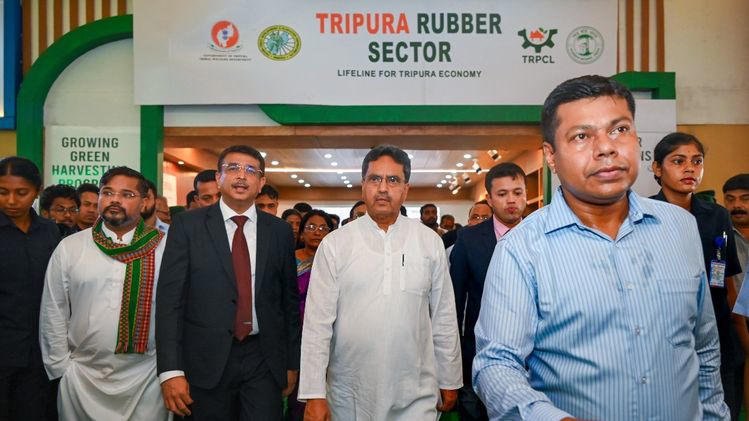
The Tripura government has partnered with the Agro and Food Processing Society (ASMS) to establish a state-of-the-art freeze-drying facility for fruits and vegetables, marking a significant step towards strengthening the state’s food processing sector. The initiative aims to reduce post-harvest losses, add value to agricultural produce, and create new market opportunities for farmers and food entrepreneurs.
The proposed facility will use advanced freeze-drying technology to preserve fruits and vegetables while retaining their nutritional value, colour, flavour, and texture. Officials believe the project will help Tripura emerge as a key player in value-added food processing and increase the competitiveness of the state’s agricultural products in domestic and international markets.
The collaboration reflects the government’s broader strategy of promoting agro-based industries and supporting farmers through modern processing infrastructure.
Read More: Sikkim BJP Opposes Proposed Pakyong–Barapathing Highway Route, Seeks Realignment
Partnership Aims to Strengthen Food Processing
The collaboration between ASMS and the Tripura government focuses on creating modern infrastructure that supports the state’s growing horticulture sector. Tripura produces a wide variety of fruits and vegetables, including pineapple, jackfruit, orange, banana, ginger, turmeric, and seasonal vegetables.
However, farmers often face significant post-harvest losses because of limited processing facilities and inadequate storage infrastructure. The upcoming freeze-drying unit seeks to address these challenges by extending the shelf life of perishable produce without compromising quality.
Officials said the facility will help transform fresh agricultural products into high-value processed goods that can be stored for longer periods and transported to distant markets.
Freeze-Drying Technology Offers Long-Term Preservation
Freeze-drying, also known as lyophilisation, is an advanced preservation process that removes moisture from food under low temperature and vacuum conditions. Unlike conventional drying methods, freeze-drying preserves the natural appearance, taste, aroma, and nutritional content of fruits and vegetables.
The technology significantly increases the shelf life of food products while maintaining their quality. Consumers can easily rehydrate freeze-dried products without substantial loss of flavour or texture.
Experts believe the technology will create opportunities for producing premium food products that meet the quality standards required by domestic retailers and international buyers.
The proposed facility will introduce this modern processing technology to Tripura, opening new avenues for the state’s food processing industry.
Reducing Post-Harvest Losses
One of the primary objectives of the project is to minimise post-harvest losses that affect farmers every year. Many fruits and vegetables have a short shelf life, making it difficult for growers to transport them to distant markets before spoilage occurs.
By processing fresh produce soon after harvesting, the freeze-drying facility will reduce wastage and improve product utilisation. Farmers will have greater flexibility in marketing their produce instead of depending entirely on immediate local sales.
Officials said reducing post-harvest losses would directly improve farm incomes while strengthening the agricultural supply chain across the state.
The facility will also encourage farmers to cultivate high-value horticultural crops by providing reliable processing support.
New Market Opportunities for Farmers
The freeze-drying plant is expected to help farmers access premium markets where demand for high-quality processed food continues to grow.
Freeze-dried fruits and vegetables have gained popularity among consumers because of their convenience, long shelf life, and nutritional value. They are widely used in the food processing industry, hospitality sector, health foods, breakfast cereals, confectionery, ready-to-eat meals, and export markets.
Officials believe the new facility will allow producers from Tripura to supply processed products to large retailers, food manufacturers, and exporters.
The initiative may also encourage farmer producer organisations, cooperatives, and agri-entrepreneurs to participate in value-added food processing activities.
Supporting Agro-Based Industries
The Tripura government has consistently promoted agro-based industries as an important driver of economic growth. Agriculture remains one of the state’s key sectors, providing livelihoods to a large section of the population.
Officials said investments in food processing help increase farmers’ earnings while generating employment opportunities in manufacturing, packaging, logistics, quality control, and marketing.
The freeze-drying facility will complement existing initiatives aimed at strengthening food processing infrastructure and promoting entrepreneurship in rural areas.
The government expects the project to attract private investment in the food processing sector by creating modern processing capabilities within the state.
Employment Generation and Skill Development
Apart from supporting agriculture, the project is expected to generate direct and indirect employment opportunities across multiple sectors.
The facility will require skilled personnel for production, machine operations, packaging, quality testing, maintenance, logistics, and administration. Additional employment opportunities may also emerge in transportation, raw material supply, cold chain operations, and marketing.
Officials said the project could encourage young entrepreneurs to establish businesses related to processed foods, packaging materials, and agricultural value chains.
Training programmes may also help workers acquire specialised skills in modern food processing technologies, improving employment prospects within the sector.
Promoting Value Addition in Agriculture
Value addition remains one of the government’s major priorities for improving farmers’ incomes. Instead of selling raw agricultural produce, farmers can earn better returns by processing fruits and vegetables into premium products.
The freeze-drying facility will support this transition by providing advanced processing infrastructure within Tripura. High-value processed products generally command better prices than fresh produce and offer greater market stability.
Officials said the project aligns with national efforts to strengthen food processing industries and reduce wastage across the agricultural sector.
By encouraging value addition, the government hopes to make agriculture more profitable while creating sustainable economic opportunities for rural communities.
Boosting Tripura’s Food Processing Sector
The establishment of the freeze-drying facility represents an important milestone in Tripura’s efforts to expand its food processing industry.
The state possesses abundant horticultural resources, but greater processing capacity is necessary to fully utilise its agricultural potential. Modern preservation technologies can help bridge this gap by converting perishable produce into high-quality value-added products.
Officials believe the collaboration with ASMS will strengthen Tripura’s position in the food processing sector while supporting exports and improving market access for local producers.
The initiative also aligns with the state’s broader vision of promoting industrial growth through agriculture-based enterprises.
Towards Sustainable Agricultural Growth
The partnership between ASMS and the Tripura government reflects a long-term commitment to building a stronger agricultural economy through technology and innovation.
The proposed freeze-drying facility will reduce food wastage, increase farmers’ incomes, promote value addition, and create new employment opportunities across the food processing value chain.
As the project moves forward, the government expects it to strengthen Tripura’s agricultural competitiveness while supporting sustainable rural development. By combining advanced food processing technology with the state’s rich horticultural resources, the initiative aims to create lasting economic benefits for farmers, entrepreneurs, and consumers alike.
Read More: Tripura Rolls Out Rs 105.73 Crore Development Projects, CM Manik Saha Unveils Growth Agenda