


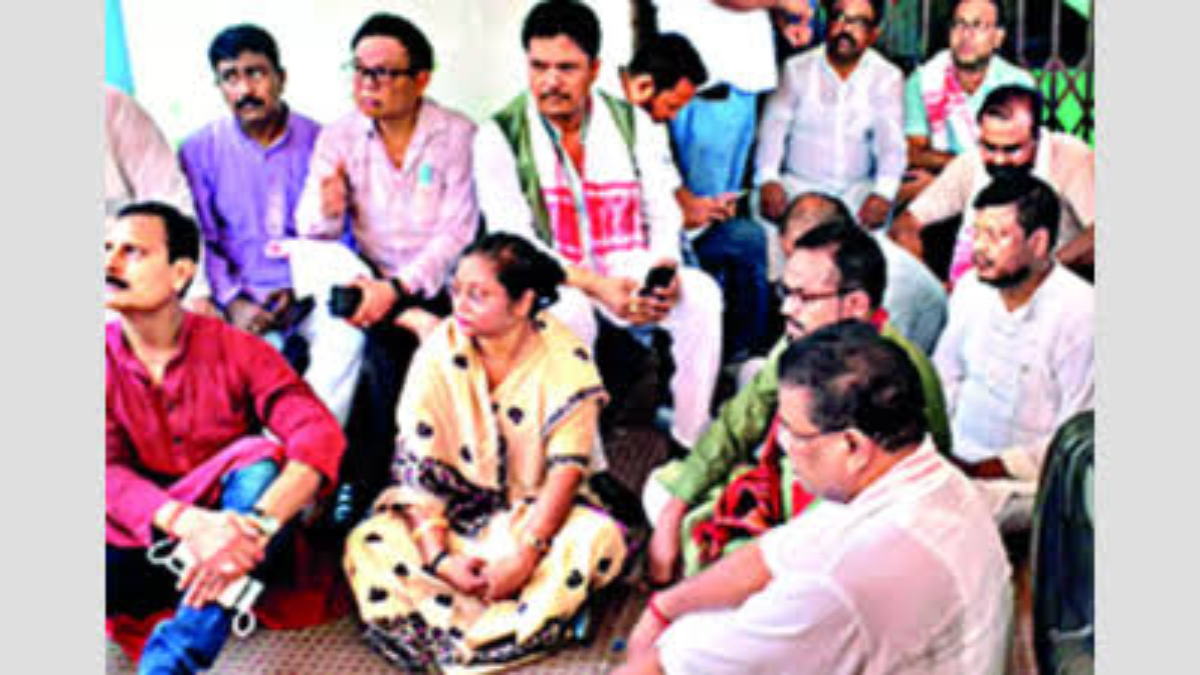
The Assam Congress has approached the Dhubri district administration, seeking rehabilitation and assistance for families affected by the recent eviction drive. A party delegation submitted a memorandum to Dhubri Deputy Commissioner Dibakar Nath, urging the authorities to address the difficulties faced by displaced residents.
The move comes amid growing concerns over the displacement of hundreds of families in Dhubri district. The eviction drive, which began on November 1, has triggered fresh demands for alternative accommodation and support for those who lost their homes.
Assam Congress raises concerns over displaced families
The Congress delegation’s memorandum focuses on the need to rehabilitate families affected by the eviction operation. The party has called on the district administration to consider the humanitarian consequences of the drive and take steps to help residents rebuild their lives.
Moreover, the demand highlights the challenges faced by families who have lost their homes and access to basic facilities. Displacement can disrupt children’s education, employment and daily routines, particularly when families have limited resources to secure alternative accommodation.
By submitting the memorandum directly to the Deputy Commissioner, the Congress has sought administrative attention to the concerns of affected residents. The district administration is the key local authority responsible for handling the situation and addressing issues raised by displaced families.
However, the specific measures requested in the memorandum and the administration’s response to the delegation remain important details for further clarification.
Dhubri eviction drive displaces hundreds of families
The memorandum follows a major eviction operation in Alamganj Part-IX village under the Gauripur revenue circle. On November 1, the Assam government launched a drive to clear approximately 650 bighas of land identified by the administration as government property.
According to officials, the operation could affect around 550 families. The administration had reportedly issued notices to nearly 700 families occupying approximately 800 bighas of land.
Dhubri Deputy Commissioner Dibakar Nath said the authorities excluded around 150 bighas from the operation because some residents had approached the court seeking relief. The remaining 650 bighas were cleared during the drive.
The administration deployed around 50 excavators, tractor-trolleys and other machinery. Thousands of civil and police personnel also supported the operation.
Meanwhile, the eviction drew attention to the scale of displacement in the district. Reports indicated that thousands of residents were affected as houses and other structures were demolished.
Rehabilitation remains a major concern
For families affected by the operation, finding a safe place to live remains a pressing challenge. Some residents have reportedly moved in with relatives, while others face difficulties securing alternative accommodation.
Furthermore, the loss of homes can create financial pressure for families already struggling to meet everyday expenses. Many displaced residents also need access to drinking water, sanitation, healthcare and other essential services.
The rehabilitation demand raised by the Congress therefore brings attention to the wider impact of eviction beyond the removal of structures. Affected families may need support to restore their livelihoods and provide stability for their children.
Some residents have also claimed that they purchased plots from private individuals without knowing that the land belonged to the government. The district administration, however, has maintained that the land belongs to the state.
These competing concerns underline the need for proper examination of individual cases and clear communication between authorities and affected residents.
Questions over due process and pending cases
The Dhubri eviction operation has also brought attention to the legal issues surrounding land ownership and displacement. The district administration maintained that it followed the required procedures before carrying out the demolition exercise.
Officials said notices were issued to residents occupying the identified land. They also stated that affected occupants received opportunities to present documents and challenge the administrative action.
However, some residents approached the court seeking relief. Consequently, the administration excluded the disputed 150 bighas from the November 1 operation.
The pending cases remain an important part of the wider issue. Their outcome could influence further administrative action concerning the disputed land.
Additionally, the situation highlights the importance of transparent procedures during eviction operations. Authorities must consider individual claims, follow applicable legal requirements and communicate decisions clearly to affected residents.
The rehabilitation question also requires attention alongside the legal process. Even when authorities reclaim government land, displaced families continue to face immediate housing and livelihood concerns.
Assam Congress seeks action on rehabilitation
The Congress delegation’s memorandum has brought the rehabilitation issue before the Dhubri administration. Its demand comes at a time when affected residents are facing uncertainty about their future accommodation and livelihoods.
Moreover, the issue has wider significance for Assam, where eviction operations have repeatedly raised questions about land rights, government property and the treatment of displaced communities.
The state government has maintained that its eviction drives aim to reclaim land under unauthorised occupation. However, opposition parties and community organisations have repeatedly called for adequate rehabilitation measures for families affected by such operations.
For the displaced residents of Dhubri, the immediate priority remains access to safe housing and essential services. They also need clarity about the assistance available to them and the steps they can take to address their individual circumstances.
The Congress memorandum has added to the pressure on the district administration to consider these concerns. Whether the authorities announce specific rehabilitation measures will remain an important development to watch.
Ultimately, the situation calls for a response that addresses both lawful land administration and the humanitarian needs of displaced families. The coming days will be important in determining whether their demand for rehabilitation receives concrete attention.
MANITEX 2026 Opens in Imphal East