


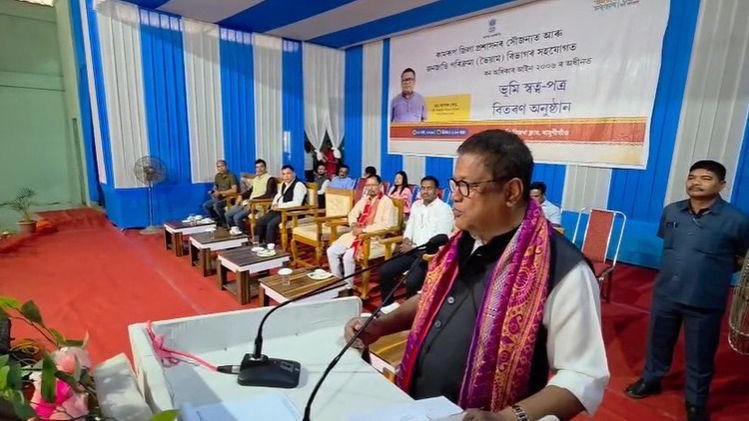
The Assam government has distributed 892 forest land titles to indigenous communities across the state, marking a significant step toward strengthening land rights and livelihood security. The initiative aims to recognize the traditional rights of indigenous groups living in forest areas and ensure legal ownership of the land they have occupied for generations.
Officials said the distribution took place under the provisions of the Forest Rights Act, which recognizes the rights of forest-dwelling communities over land and natural resources. The move has brought relief to hundreds of families who depended on forest land for agriculture and daily livelihood activities.
Read More: Tripura BJP Holds Core Committee Meet on Dharmanagar By-Poll, ADC Elections
Government Recognizes Traditional Land Rights
The distribution of 892 Assam forest land titles reflects the government’s effort to recognize long-standing claims of indigenous communities. Many families have lived in forest areas for decades, yet they lacked legal documents confirming their ownership.
Through this initiative, the state government aims to provide legal recognition to such families. The land titles allow beneficiaries to secure their homes, farms, and livelihoods.
Officials stated that the government verified each claim through a detailed process before issuing the titles. Authorities examined historical records, land usage patterns, and community testimonies to ensure genuine beneficiaries received the rights.
As a result, the initiative strengthens the legal standing of indigenous communities living in forest regions.
Forest Rights Act Strengthens Community Ownership
The distribution of Assam forest land titles took place under the Forest Rights Act (FRA), a law designed to protect the rights of forest-dwelling communities. The act allows eligible families to claim ownership or usage rights over forest land that they have traditionally occupied.
The FRA also empowers communities to manage and protect forest resources. Therefore, it not only ensures land ownership but also promotes sustainable forest management.
Experts say the act plays a crucial role in balancing environmental protection with community rights. When communities gain legal ownership, they often become active participants in protecting forest ecosystems.
In Assam, the implementation of the Forest Rights Act has helped several communities secure legal access to land used for agriculture and housing.
Support For Indigenous Communities
The distribution of 892 forest land titles provides significant support to indigenous groups in Assam. Many families depend on forest land for cultivation, gathering forest produce, and maintaining their traditional way of life.
With legal titles, these families can now access government welfare schemes and agricultural support programs. The recognition also reduces the risk of eviction from forest areas.
Moreover, land ownership improves economic stability. Families can invest in farming activities with greater confidence once they secure legal ownership.
Community leaders welcomed the move and said it would strengthen the social and economic security of indigenous groups across the state.
Transparent Verification Process
Officials conducted a multi-level verification process before distributing the Assam forest land titles. Local forest committees, district authorities, and community representatives participated in verifying land claims.
Authorities examined land use history and community records to confirm that applicants genuinely depended on forest land for their livelihood.
The verification process also ensured that the titles reached eligible indigenous families rather than outside claimants.
Officials emphasized that transparency remained a key priority throughout the process. As a result, the distribution has received positive feedback from many communities.
Boost To Rural Livelihoods
The recognition of land rights is expected to improve rural livelihoods in forest regions of Assam. Many beneficiaries rely on small-scale farming and forest-based activities to sustain their households.
Legal ownership of land enables them to adopt better agricultural practices and access institutional support. For example, farmers can now apply for government agricultural schemes, irrigation programs, and financial assistance.
Furthermore, the titles provide long-term security for future generations. Families can pass the land to their children without fear of losing their homes.
Experts believe such initiatives help reduce poverty in remote forest areas.
Government Focus On Inclusive Development
The distribution of Assam forest land titles also reflects the government’s focus on inclusive development. By recognizing the rights of indigenous communities, authorities aim to ensure that development benefits reach historically marginalized groups.
Government officials said the state will continue reviewing pending land claims in forest areas. Authorities also plan to strengthen awareness campaigns to help eligible families apply for land titles.
The administration has emphasized that protecting indigenous rights remains a key priority while maintaining environmental conservation.
Officials added that future initiatives may focus on improving infrastructure, education, and healthcare in forest communities.
A Step Toward Social Justice
The distribution of 892 forest land titles marks an important milestone in recognizing the rights of indigenous communities in Assam. For many families, the titles represent long-awaited legal recognition of land they have lived on for generations.
The initiative also supports social justice by empowering communities that historically faced uncertainty over land ownership.
As the government continues implementing the Forest Rights Act, more families may benefit from similar recognition in the coming years.
The recent distribution therefore highlights the importance of balancing development, environmental protection, and community rights. It also demonstrates how legal recognition of land ownership can improve livelihoods and strengthen the social security of indigenous communities across Assam.
Read More: Tipra Motha Won’t Break, Tiprasa Are United: Pradyot Debbarma