


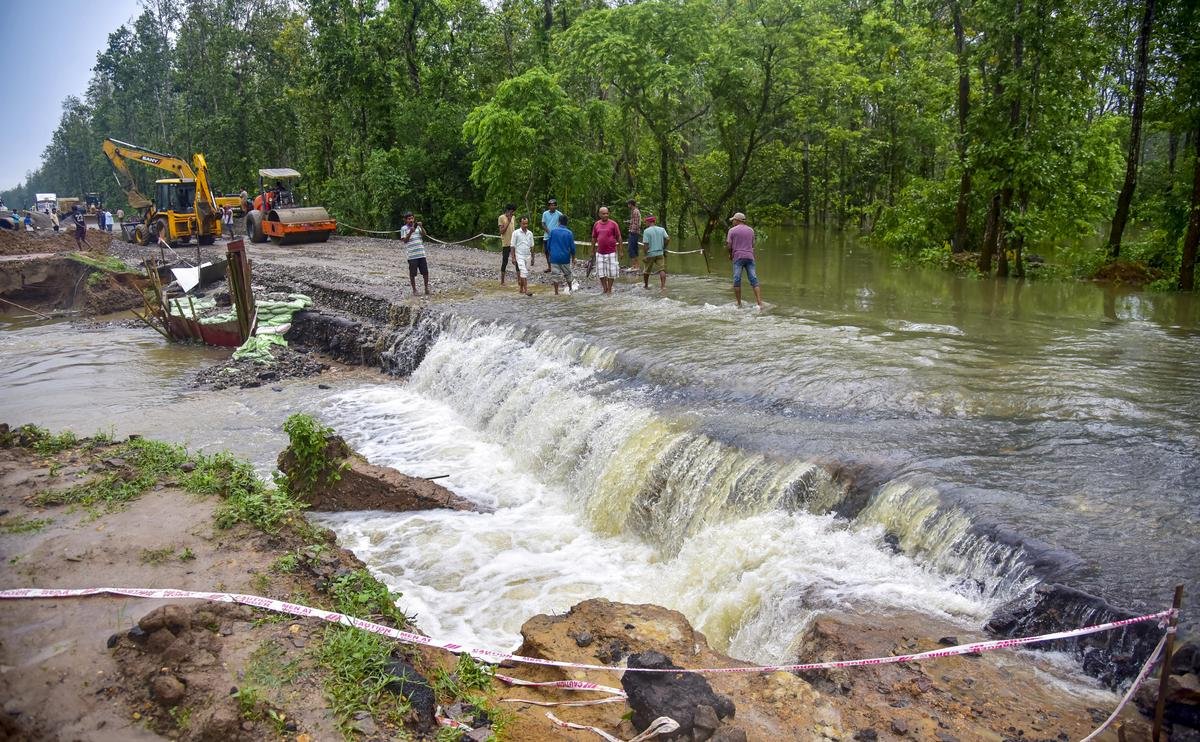
The Assam downstream flood evacuations have intensified after authorities issued urgent warnings over potential flooding linked to the artificial dam formed on the Siji River in Arunachal Pradesh’s Lower Siang district. Officials fear that any sudden release of impounded water could rapidly increase river levels downstream, affecting communities near the Assam border. District administrations, disaster management agencies, and emergency responders have begun precautionary evacuations in vulnerable areas while continuously monitoring water levels. Residents have been advised to remain alert and follow official instructions as authorities work to minimize risks and ensure public safety.
Northeast Rainfall Deficit Despite Flash Floods
West Bengal Assembly Passes Two Bills Amending OBC Reservation Laws
Authorities Issue Immediate Flood Warnings
The Assam downstream flood evacuations began after emergency agencies assessed the potential impact of the landslide-created dam on the Siji River. Officials warned that if the natural barrier weakens or breaches, a sudden surge of water could travel downstream and inundate settlements located along vulnerable riverbanks.
District administrations activated emergency communication networks to inform residents about the evolving situation. Public announcements, local warning systems, and coordination with village authorities helped ensure that communities received timely information. Disaster management officials also monitored river conditions around the clock to identify any significant changes that could require additional action.
Hydrological experts continue assessing water accumulation behind the artificial dam while evaluating the possible speed and extent of downstream flooding. Authorities emphasized that precautionary measures are necessary even before any structural failure occurs.
Evacuation Efforts Focus on Vulnerable Communities
The Assam downstream flood evacuations have focused on villages located close to river channels and low-lying areas near the Assam-Arunachal Pradesh border. Local administrations coordinated with emergency response teams to relocate residents from locations considered most vulnerable to potential flash flooding.
Temporary shelters were prepared to accommodate displaced families, while officials arranged transportation and essential supplies where required. Health departments, police personnel, and disaster response teams remained on standby to assist evacuation efforts and respond quickly if conditions changed.
Authorities also advised residents to avoid crossing swollen rivers, remain away from unstable embankments, and closely monitor official weather and flood advisories. Continuous communication with local communities remains a priority to ensure prompt responses during any emergency.
Officials stressed that the evacuations are precautionary and intended to protect lives while technical experts continue evaluating the stability of the natural dam upstream.
Cross-Border Coordination Strengthens Emergency Response
The Assam downstream flood evacuations have highlighted the importance of coordination between Arunachal Pradesh and Assam during natural disasters affecting shared river systems. Officials from both states are exchanging information on river conditions, water levels, and emergency preparedness to support timely decision-making.
Disaster management authorities continue monitoring hydrological data to improve forecasting and provide early warnings for downstream communities. Emergency control rooms remain operational to facilitate communication between district administrations and response agencies.
Technical teams are also evaluating whether additional protective measures may be required if water levels rise significantly. Continuous surveillance allows authorities to respond rapidly while minimizing potential damage to infrastructure, agriculture, and residential areas.
Experts note that coordinated planning is particularly important during the monsoon season, when rapidly changing weather conditions can alter river behaviour within a short period.
Monitoring Continues as Flood Risks Remain
The Assam downstream flood evacuations remain in effect as authorities continue monitoring the artificial dam and downstream river conditions. Officials have indicated that emergency measures will remain active until technical assessments confirm that the threat has substantially reduced.
River level observations, weather forecasts, and geological inspections continue to guide operational decisions. Authorities are also reviewing evacuation plans regularly to ensure communities can respond quickly if additional warnings become necessary.
Residents have been encouraged to rely only on official information and avoid spreading unverified reports that could create unnecessary confusion. Disaster management agencies continue emphasizing preparedness while maintaining readiness for any rapid changes in the evolving situation.
The incident also highlights the increasing importance of early warning systems, coordinated disaster planning, and continuous monitoring in reducing the impact of natural hazards across northeastern India.
Conclusion
The Assam downstream flood evacuations demonstrate the swift response of authorities to a potential cross-border flood emergency triggered by the Siji River landslide dam. While no sudden breach has been confirmed, precautionary evacuations and continuous monitoring remain essential to protecting lives and property. Ongoing coordination between state agencies, disaster management teams, and local administrations will play a crucial role in managing the evolving situation and ensuring timely action if river conditions change.
FAQs
1. Why were evacuations ordered in Assam?
Authorities issued precautionary evacuations because of possible downstream flooding from the artificial dam on the Siji River.
2. Where is the Siji River landslide located?
The landslide occurred in Lower Siang district of Arunachal Pradesh.
3. What are the Assam downstream flood evacuations?
The Assam downstream flood evacuations refer to precautionary relocations of vulnerable communities due to the potential flood threat from the upstream river blockage.
4. Are emergency agencies still monitoring the situation?
Yes. Authorities continue monitoring river levels, geological conditions, and weather forecasts around the clock.
5. What should residents do during flood warnings?
They should follow official advisories, stay away from riverbanks, and move to safer locations if instructed.
6. Why is coordination between the two states important?
Shared river systems require timely information exchange to improve emergency response and public safety.