


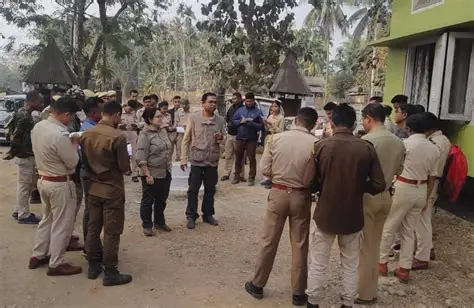
The Assam Forest School, in collaboration with the Balipara Foundation, has organized a special program on hands-on geospatial training for forest frontline staff. The initiative aims to strengthen conservation practices by equipping staff with modern tools and techniques. With Assam’s forests facing challenges such as deforestation, poaching, and climate change, this training marks a significant step towards sustainable management.
Read More: Nagaland CM Rio Promotes Handloom to Tackle Unemployment
Enhancing Conservation Skills with Technology
The program focused on teaching forest personnel how to use geospatial technology in their daily duties. Geospatial tools, which include GPS devices, satellite imagery, and mapping software, are increasingly vital in modern conservation. Through this training, frontline staff in Assam can now monitor forest areas more effectively and respond quickly to emerging threats.
The Assam geospatial training provided participants with practical sessions on data collection, mapping, and resource monitoring. Instead of relying only on traditional patrolling, staff can now integrate digital methods to track wildlife, detect illegal activities, and assess forest health.
Assam Forest School’s Role in Skill Development
The Assam Forest School has long been recognized as a training hub for forest officials and frontline workers. By hosting this program, the institution continues its mission of empowering staff with knowledge and skills to protect natural resources.
Officials highlighted that the school’s collaboration with the Balipara Foundation reflects a forward-looking vision. With geospatial training, forest staff will be better prepared to handle the complexities of modern conservation, ensuring that Assam’s biodiversity is preserved for future generations.
Balipara Foundation’s Contribution to Conservation
The Balipara Foundation, known for its initiatives in ecological sustainability, played a key role in designing and implementing the program. The foundation has consistently supported projects that combine community involvement with environmental protection.
In the Assam geospatial training program, its expertise helped tailor sessions to the specific needs of forest staff. Trainers emphasized the importance of applying geospatial tools not only for patrolling but also for long-term planning, habitat restoration, and resource allocation.
Building Capacity of Forest Frontline Staff
Forest frontline staff are often the first responders in conservation challenges. They face threats ranging from illegal logging to wildlife-human conflicts. Yet, they are sometimes limited by outdated methods. The Assam geospatial training directly addressed this gap by providing hands-on exposure to digital tools.
Participants learned how to use handheld GPS devices, record geotagged data, and generate maps that can guide their fieldwork. Such skills will enhance their efficiency and accuracy, reducing dependence on guesswork or manual record-keeping.
Protecting Assam’s Rich Biodiversity
Assam is home to some of India’s most important wildlife habitats, including Kaziranga National Park, Manas National Park, and Dibru-Saikhowa National Park. These areas face constant pressures from encroachment, poaching, and climate impacts.
Through geospatial training, staff can now better monitor sensitive zones, track movement of wildlife, and plan patrols more strategically. The Assam geospatial training program ensures that conservation is not just reactive but also preventive. By anticipating threats, staff can safeguard the state’s forests and biodiversity more effectively.
Encouraging Collaboration Between Institutions
One of the highlights of the initiative is the partnership between a government institution and a non-profit organization. The Assam Forest School and Balipara Foundation collaboration demonstrates how collective efforts can lead to impactful outcomes.
Officials noted that this partnership sets a model for future programs. Combining the resources of state agencies with the expertise of conservation groups can accelerate progress in tackling environmental challenges.
Long-Term Benefits of Geospatial Training
The benefits of the Assam geospatial training go beyond immediate skill development. By integrating geospatial tools into forest management, Assam’s conservation strategies will become more data-driven and transparent.
Over time, the information collected by staff can be compiled into databases that guide policy decisions. It can also be used to study long-term trends in deforestation, wildlife behavior, and climate resilience. Such insights are essential for framing adaptive conservation measures.
Empowering Local Communities Through Technology
The training program also emphasized the role of communities living around forests. By involving locals in data collection and monitoring, the Assam geospatial training creates a sense of shared responsibility. Communities can learn how to report illegal activities or environmental changes using simple mobile applications linked to geospatial platforms.
This participatory model not only empowers residents but also ensures that conservation becomes a collective effort. It strengthens the bond between forest staff and villagers, making protection of natural resources a common goal.
The hands-on geospatial training program organized by the Assam Forest School and the Balipara Foundation marks a progressive step in conservation. By equipping frontline staff with modern digital tools, the initiative strengthens Assam’s ability to protect its forests and wildlife.
The Assam geospatial training also highlights the importance of collaboration between institutions and communities in addressing ecological challenges. With continued support and scaling up, such initiatives can transform conservation from traditional methods into a modern, data-driven approach. For Assam, this training represents not just skill-building but a promise of a more sustainable future for its forests and people.
Read More: 5 Best Juices for Hair Growth: Amla to Beetroot Drinks