


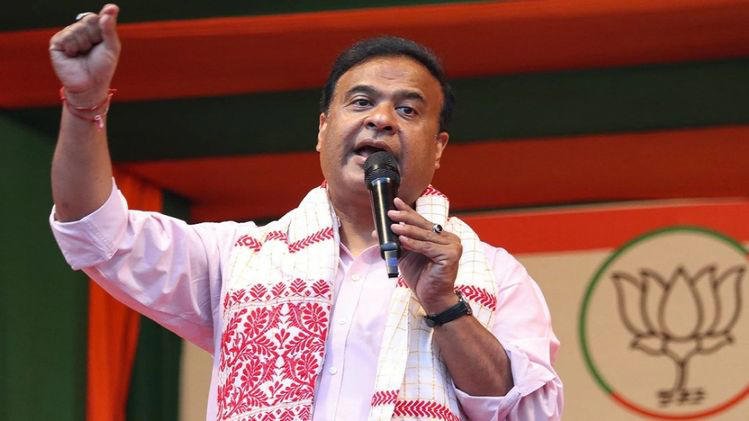
Assam land of Sankar Madhav represents a shared spiritual and cultural heritage rooted in harmony, Chief Minister Himanta Biswa Sarma said while firmly rejecting what he termed as distorted narratives about the state’s identity. Speaking at a public event, Sarma stressed that Assam’s civilisational ethos emerged from the combined legacy of Srimanta Sankardeva and Madhavdeva, not from politically motivated reinterpretations of history.
His remarks came amid renewed debates over Assam’s cultural symbols and social fabric. According to Sarma, such debates often ignore historical facts and the deep influence of the Vaishnavite movement that shaped Assam’s collective consciousness.
Read More: Tripura 1971 War Battalion Bangladesh Unrest Briefing
Assam Land of Sankar Madhav and Its Cultural Roots
Assam land of Sankar Madhav draws its moral and spiritual foundations from the teachings of Srimanta Sankardeva and his foremost disciple Madhavdeva. The Bhakti movement they led transformed Assamese society by promoting equality, devotion, and cultural unity. Through literature, music, theatre, and community prayer, the movement created a common identity across regions and communities.
Sarma said Sankardeva did not divide society but united people through Eka Saran Naam Dharma. Similarly, Madhavdeva expanded this vision by strengthening cultural practices that continue to influence Assam today. Therefore, describing Assam through labels that dilute this shared heritage misrepresents its true history.
He added that Assam’s cultural evolution occurred organically and was not imposed through force or conflict. Instead, it developed through dialogue, devotion, and artistic expression that welcomed people into a shared civilisational space.
CM Rejects ‘Sankara–Azan’ Narrative
Referring to the phrase “Sankara–Azan,” Sarma argued that such terminology falsely equates unrelated historical contexts. While acknowledging Assam’s diversity, he clarified that cultural coexistence does not mean rewriting history. According to him, historical figures should be understood within their own timelines and contributions.
The chief minister maintained that Assam land of Sankar Madhav reflects continuity rather than contradiction. He said that selective narratives often aim to provoke division by questioning established cultural foundations. However, Assam’s identity, he asserted, has remained resilient because it rests on shared values rather than fragmented interpretations.
Sarma also urged intellectuals and opinion makers to engage responsibly with history. Misrepresentation, he warned, can weaken social harmony and confuse younger generations about their roots.
Vaishnavite Movement’s Lasting Influence in Assam
The Vaishnavite movement remains one of the most unifying forces in Assam. Institutions such as namghars and satras continue to serve as centres of social cohesion. Sarma noted that these spaces welcome people irrespective of background, reinforcing the inclusive vision of Sankardeva and Madhavdeva.
Assam land of Sankar Madhav is visible not only in religious practice but also in language, music, and community life. From Borgeet to Ankiya Naat, the cultural contributions of the Bhakti era still shape Assam’s artistic landscape.
According to Sarma, acknowledging this influence does not exclude diversity. Instead, it recognises the historical process through which Assam evolved as a culturally confident society.
Political Context and Identity Debate
Sarma’s statement also carried political significance, as identity debates often resurface during periods of social change. He said Assam has always accommodated diversity while maintaining a clear civilisational core. However, attempts to redefine that core for political gain could create unnecessary tensions.
He emphasised that Assam land of Sankar Madhav should remain the guiding narrative for future generations. This, he said, ensures cultural continuity while allowing democratic expression and pluralism.
The chief minister further stated that respecting Assam’s heritage does not conflict with constitutional values. On the contrary, it strengthens social unity by grounding modern governance in historical awareness.
Public Response and Broader Implications
The remarks triggered wide reactions across political and cultural circles. Supporters said the statement reaffirmed Assam’s historical truth, while critics called for more inclusive language. Nevertheless, Sarma maintained that historical clarity is essential for meaningful coexistence.
He concluded by urging citizens to engage with Assam’s history through study and dialogue rather than slogans. Assam land of Sankar Madhav, he said, stands as a reminder that unity emerges from shared values, not from selective reinterpretations.
By reaffirming Sankardeva and Madhavdeva’s legacy, Sarma positioned Assam’s cultural identity as both rooted and resilient. His message highlighted that preserving heritage remains vital in navigating contemporary social and political challenges.
Read More: India and Nepal Bolster Healthcare Ties: Focus on Medicine Supply and Capacity Building