


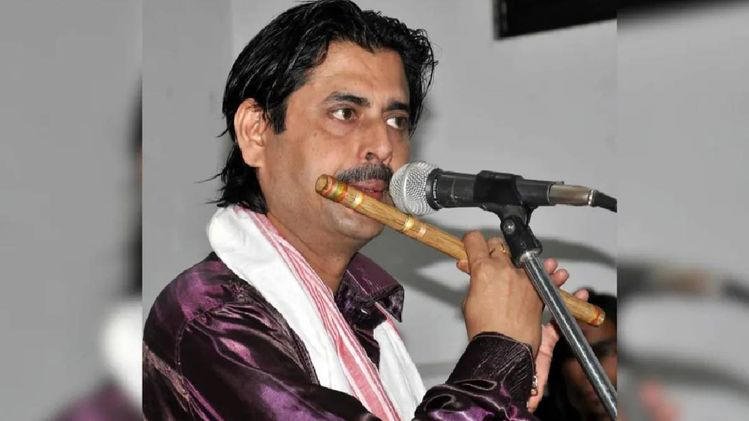
Assam is once more clouded by grief following the death of renowned flutist Dipak Sarma. His passing comes just days after another major loss, the death of singer Zubeen Garg. With the state still reeling from one farewell, it now must face another. The focus keyphrase “Dipak Sarma” carries through this article, and you will see it in headings and in the body too.
Read More: Tripura CM Manik Saha Plans to Make AGMC One of India’s Top 10 Colleges
The passing of Dipak Sarma
Dipak Sarma died early on 3 November 2025 in Chennai, where he had been receiving advanced medical treatment. He was 57 years old. Sarma had been battling chronic liver disease for several years. Earlier he received treatment in Guwahati, but his condition became serious enough to be moved to Chennai. His death marks the end of a musical journey that began in a village in Assam and reached international stages.
The news arrives while Assam is still processing the tragic loss of Zubeen Garg. This double blow has deepened the collective sorrow of the state’s cultural and artistic communities. The passing of Dipak Sarma comes as a reminder of how fragile life and artistic legacies can be.
The life and legacy of Dipak Sarma
Dipak Sarma was born on 23 August 1968 in Panigaon village, in what was then undivided Kamrup district of Assam. He later lived in Guwahati. From a young age he showed strong affinity for the flute and classical music. He studied under noted gurus and developed a style that merged classical ragas with Assamese folk flavours.
He trained under his first teacher Prabhat Sarma in Assam, and later earned a master’s degree in music in Kolkata under guidance of Debu Banerjee. Influenced by the legendary flutist Pandit Hariprasad Chaurasia, he went on to become a noted flautist in his own right.
Over the years, Dipak Sarma made a name not only in Assam but abroad as well. He toured Europe and other regions, performed solo recitals and led fusion music ensembles. He blended the sensitive tones of the bamboo flute with rhythm and innovation, bringing fresh soundscapes to audiences both in India and overseas.
His collaborations ranged across genres and artists. In Assam he worked with cultural icons and lent his flute to film music, television scores and instrumental compositions. His unique blend of melody and tradition earned him admiration from peers, students and music lovers alike.
Yet despite his artistic success, Dipak Sarma faced difficulties. He underwent a liver transplant and sought financial help for his medical expenses. His public plea for aid highlighted the gap that often exists between artistic recognition and financial security. His condition, treatment and struggles drew attention and sympathy from many across Assam.
Assam’s cultural fraternity in mourning
The loss of Dipak Sarma has struck a deep chord in Assam’s music community. His passing arrived at a time when the state was already dealing with the death of Zubeen Garg, leading many to say that the region has lost two major voices in quick succession. The twin losses have magnified the sense of sorrow and nostalgia for Assam’s artistic heritage.
Tributes poured in from fellow musicians, cultural organisations and fans. Many recalled Sarma’s humility, his passion for the flute, and his efforts to popularise classical and folk fusion music. They remembered a man who took the subtle sound of the flute and made it speak of Assam’s identity, of its culture, of its memory.
His death also sparked reflection on how artists are supported in the state. The contrast between his international acclaim and his medical and financial struggles has raised questions about the safety net that the artistic community receives. His passing thus has both cultural and social resonance.
A moment for reflection and the road ahead
With Dipak Sarma’s departure, Assam must reckon with the void he leaves behind. The flute, as he shaped it, carried the land’s rhythms, its valleys and rivers, its light and its longing. To preserve his legacy, future generations must carry forward his commitment to music, innovation and excellence.
His work invites young artistes to explore not just performance but also collaboration, fusion, global outreach and cultural rootedness. His life story shows that talent needs nurturing, exposure and institutional support. It invites stakeholders—governments, cultural bodies, educational institutions—to create ecosystems where musical talent can thrive without fear of neglect.
For Assam’s music enthusiasts, the passing of Dipak Sarma is a call to celebrate the past but also to invest in the future. Programs, scholarships, mentorships and platforms for emerging flutists and classical musicians can help ensure that the flute’s legacy and Sarma’s vision live on.
Final farewell to Dipak Sarma
In bidding farewell to Dipak Sarma, Assam honours one of its finest musical voices. His flute sang of tradition and transformation, of local roots and global branches. His journey from a village in Assam to international concert halls exemplifies the power of dedication and artistry.
Though his presence will be missed, his music remains. The melodies he created, the performances he shaped, the students he inspired—they continue. His life reminds us that art survives even as the artist passes.
As Assam mourns again, the sorrow carries not just loss but also homage—an acknowledgement of the beauty he brought to the world, and a promise that his music will endure. Dipak Sarma may have departed, but his flute will keep speaking.
Read More: ABSU Stages Massive Protests Demanding Full Implementation of Bodo Accord