


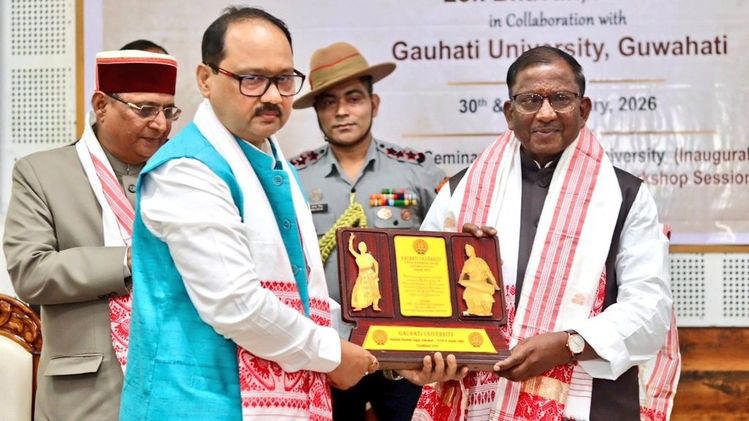
Assam must take urgent and sustained steps to safeguard its manuscript heritage for future generations, the Governor said, highlighting the cultural, historical, and intellectual value of ancient manuscripts preserved across the state. He stressed that these manuscripts are not just old documents but living records of Assam’s civilisational journey, knowledge systems, and cultural identity.
Speaking at a programme focused on heritage preservation, the Governor said Assam possesses one of the richest manuscript traditions in the country. He added that protecting this legacy requires collective responsibility from the government, academic institutions, and society at large. The emphasis on Assam manuscript heritage, he said, reflects the need to preserve knowledge that defines the state’s past and shapes its future.
Read More: Tripura Leads AI Awareness Drive Ahead of India-AI Summit
Manuscripts as carriers of Assam’s civilisational memory
The Governor said manuscripts serve as vital carriers of Assam’s civilisational memory. Written on materials such as sanchi bark, palm leaves, and handmade paper, these texts capture centuries of intellectual activity.
He explained that Assam’s manuscripts cover a wide range of subjects, including literature, philosophy, religion, medicine, astronomy, grammar, and governance. Together, they offer deep insights into how earlier generations understood the world and organised society.
The Assam manuscript heritage, the Governor noted, represents a continuous tradition of learning that deserves careful preservation.
Rich diversity of Assam’s manuscript tradition
The Governor highlighted the diversity within Assam’s manuscript heritage. Texts exist in Sanskrit, Assamese, Tai-Ahom, and other regional languages, reflecting the state’s multicultural character.
He said this diversity shows how Assam functioned as a meeting point of ideas and cultures. Manuscripts reveal exchanges between local traditions and broader Indian knowledge systems.
Safeguarding the Assam manuscript heritage, he said, also means respecting this diversity and ensuring that no tradition fades into obscurity.
Growing threat to fragile manuscripts
The Governor expressed concern over the fragile condition of many manuscripts. Age, humidity, insects, and improper storage continue to threaten their survival.
He said that despite their value, many manuscripts remain stored in private homes, temples, monasteries, and institutions without scientific preservation methods. Over time, neglect could lead to irreversible loss.
Protecting Assam manuscript heritage, he stressed, requires immediate attention to conservation challenges.
Need for scientific conservation methods
The Governor stressed the importance of adopting scientific conservation techniques. Modern methods can slow deterioration and extend the life of manuscripts significantly.
He said trained conservators, controlled environments, and proper handling practices remain essential. Without professional care, even well-intentioned efforts may cause damage.
The Assam manuscript heritage, he added, deserves the same level of care given to other national cultural assets.
Role of digitisation in preservation
Digitisation, the Governor said, plays a crucial role in safeguarding manuscript heritage. Digital copies ensure that content survives even if physical materials deteriorate.
He added that digitisation also improves access for researchers, students, and scholars across the world. Knowledge should not remain locked away due to physical limitations.
The Assam manuscript heritage can gain global visibility through responsible digitisation, he said, while protecting original texts.
Importance of research and documentation
The Governor stressed that preservation must go hand in hand with research. Manuscripts hold value only when studied, understood, and contextualised.
He said proper cataloguing and documentation help scholars identify content and historical significance. Many manuscripts remain unexplored due to lack of systematic study.
Research-driven engagement with Assam manuscript heritage, he noted, will keep it relevant and meaningful.
Involving academic institutions
Universities, research centres, and libraries have a key role to play, the Governor said. Academic institutions can provide expertise, training, and research support.
He encouraged collaboration between state authorities and educational institutions. Such partnerships strengthen preservation efforts and build long-term capacity.
The Assam manuscript heritage, he said, should become a central focus of academic inquiry in the region.
Community participation and awareness
The Governor emphasised that preservation cannot succeed without community participation. Many manuscripts remain in private custody, passed down through generations.
He said owners must be made aware of proper care and the importance of sharing knowledge. Awareness programmes can help communities see manuscripts as shared heritage rather than personal property alone.
Protecting Assam manuscript heritage, he said, requires building trust and cooperation at the grassroots level.
Ethical responsibility to future generations
The Governor described manuscript preservation as an ethical responsibility. Each generation acts as a custodian of heritage for the next.
He said losing manuscripts means losing voices from the past. Future generations deserve access to their intellectual and cultural inheritance.
Safeguarding Assam manuscript heritage, he added, reflects respect for history and responsibility toward the future.
Cultural identity and pride
Manuscripts strengthen cultural identity, the Governor said. They remind people of Assam’s long tradition of learning and creativity.
He noted that preserving manuscripts nurtures pride among young people. When youth connect with their heritage, they develop confidence and cultural awareness.
The Assam manuscript heritage, he said, plays a vital role in shaping collective identity.
Government support and policy direction
The Governor acknowledged the role of government in preservation efforts. Policy support, funding, and institutional frameworks remain essential.
He said dedicated programmes for conservation, digitisation, and research can create lasting impact. Long-term planning ensures continuity beyond individual initiatives.
Safeguarding Assam manuscript heritage, he noted, requires sustained commitment rather than isolated efforts.
Learning from best practices
The Governor said Assam can learn from best practices adopted in other regions and countries. Successful preservation models combine technology, expertise, and community engagement.
He stressed the importance of adapting these models to local conditions. Heritage preservation must respect cultural context.
Applying proven strategies can strengthen efforts to protect Assam manuscript heritage.
Encouraging youth engagement
The Governor stressed the importance of involving youth in heritage preservation. Young people bring energy, innovation, and technological skills.
He suggested integrating manuscript studies into education and cultural programmes. Exposure at an early stage builds long-term interest.
Youth engagement, he said, ensures continuity in protecting Assam manuscript heritage.
Long-term vision for preservation
The Governor called for a long-term vision that treats manuscript preservation as an ongoing process. Preservation does not end with storage or digitisation.
Regular monitoring, research, and public engagement must continue. Heritage thrives when it remains part of living culture.
The Assam manuscript heritage, he said, deserves a future-oriented approach.
Way forward
Concluding his remarks, the Governor said safeguarding manuscript heritage requires coordinated action. Government agencies, scholars, communities, and citizens must work together.
He urged stakeholders to view manuscripts as shared treasures rather than relics of the past. Preservation strengthens knowledge, identity, and continuity.
As Assam moves forward, the call to safeguard its manuscript heritage serves as a reminder of the state’s rich intellectual legacy. By protecting these fragile texts today, Assam ensures that future generations inherit not just documents, but wisdom, creativity, and cultural depth that define its history and enrich its future.
Read More: Mizoram Targets 1% Share in India’s GDP by 2047