


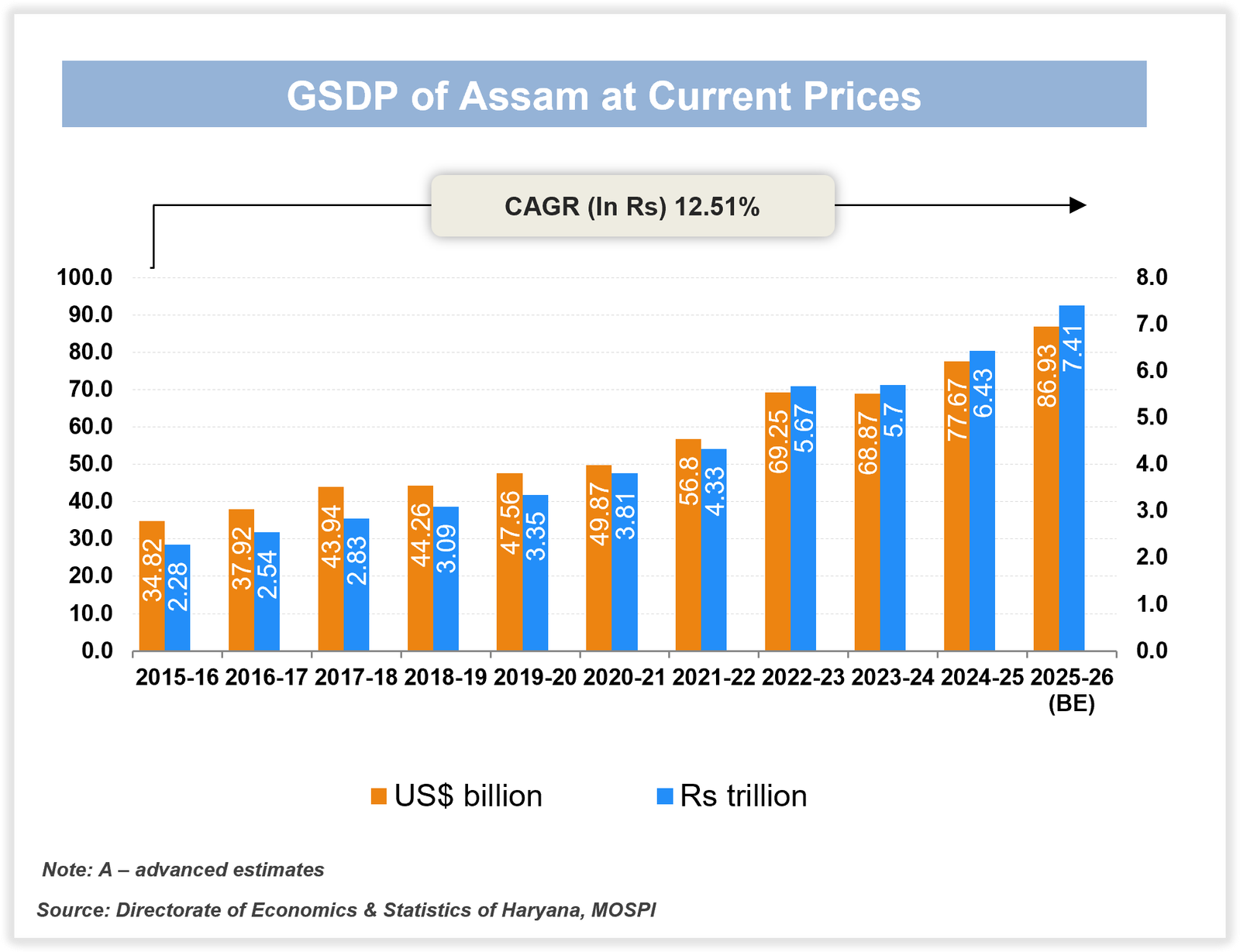
The Assam ₹10 lakh crore economy vision remains a key priority for the state government as it pursues long-term economic growth and development. According to economic briefs circulated by the Chief Minister’s Office (CMO), the government remains committed to achieving a Gross State Domestic Product (GSDP) of ₹10 lakh crore by 2028. Officials said the target will be supported through investments in infrastructure, industry, agriculture, tourism, digital innovation, and employment generation.
Supreme Court Dismisses Plea on Manipur Local Body Election Delay
Tripura Chief Minister Manik Saha Launches Digital Solid Waste Management Tracking Application
Government Reaffirms 2028 Economic Target
The Assam ₹10 lakh crore economy roadmap continues to guide the state’s development strategy. Consequently, the government is implementing policies that accelerate economic expansion, improve the ease of doing business, and attract both domestic and foreign investment.
Moreover, officials stated that sustained public investment in transport, logistics, education, healthcare, and industrial infrastructure will support higher economic growth over the coming years. Therefore, the target reflects the state’s long-term development ambitions and commitment to inclusive progress.
Multi-Sector Growth Strategy
The Assam ₹10 lakh crore economy initiative relies on contributions from multiple sectors. For instance, authorities identified manufacturing, agriculture, tea, petroleum, tourism, information technology, and small and medium enterprises (SMEs) as key drivers of future growth.
Furthermore, the government continues to promote infrastructure projects, skill development programmes, digital governance initiatives, and industrial corridors to enhance productivity and create employment opportunities across the state. In addition, these initiatives encourage balanced regional development. As a result, officials believe diversified growth will strengthen Assam’s economic resilience.
Investment and Infrastructure Remain Key Priorities
The Assam ₹10 lakh crore economy vision also emphasizes expanding infrastructure and improving connectivity. Accordingly, the government continues to invest in highways, railways, inland waterways, airports, and logistics networks to improve trade and support business activity.
Meanwhile, policymakers continue encouraging private sector participation and entrepreneurship through investment-friendly policies and reforms. Consequently, these measures foster sustainable economic development and strengthen investor confidence. Ultimately, the strategy seeks to position Assam as a major economic hub in Northeast India.
Conclusion
The Assam ₹10 lakh crore economy target underscores the state’s commitment to sustained economic growth and inclusive development by 2028. Furthermore, through investments in infrastructure, industrial expansion, human capital, and business-friendly reforms, the government aims to significantly increase the state’s Gross State Domestic Product. Finally, progress toward the target will depend on economic performance, investment flows, and the successful implementation of development initiatives over the coming years.
FAQs
1. What is Assam’s economic target for 2028?
The state government aims to achieve a Gross State Domestic Product (GSDP) of ₹10 lakh crore by 2028.
2. Who announced the economic vision?
The target has been highlighted through economic briefs circulated by the Chief Minister’s Office (CMO).
3. What sectors are expected to drive growth?
Manufacturing, agriculture, tourism, petroleum, tea, information technology, infrastructure, and MSMEs are expected to contribute significantly.
4. Why is the ₹10 lakh crore economy target important?
It represents the state’s long-term strategy to accelerate economic growth, create employment, and improve living standards.
5. How does the government plan to achieve the target?
Through infrastructure development, investment promotion, industrial growth, skill development, and improved connectivity.
6. Is the ₹10 lakh crore economy a confirmed outcome?
No. It is a government target and long-term economic objective. Its achievement will depend on future economic performance and policy implementation.