


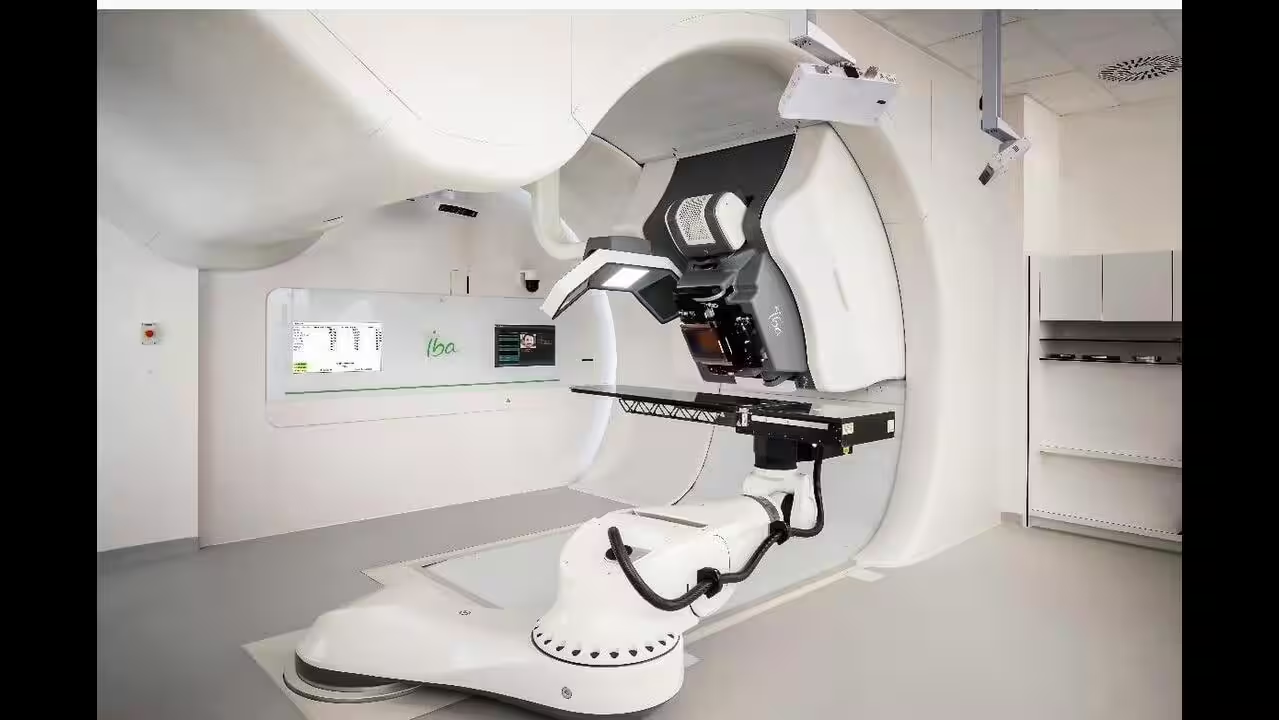
Assam has signed a ₹600 crore agreement with IBA Particle Therapy India Pvt. Ltd. to establish India’s first state-run proton beam therapy centre. The proposed facility will operate at Guwahati Medical College and Hospital (GMCH). It will introduce advanced cancer treatment technology into Assam’s public healthcare system. The project combines ₹315 crore in World Bank financing with ₹285 crore from the state government. Belgium-based Ion Beam Applications (IBA) will install its ProteusONE system and provide specialised technical support. The company expects the centre to begin treating its first patients by the end of 2029.
TTAADC Postpones Executive Members’ Oath Ceremony
Assam Signs Landmark Agreement With IBA
The Assam government signed the agreement with IBA Particle Therapy India at Lok Sewa Bhawan in Guwahati on October 31, 2026. Chief Minister Himanta Biswa Sarma attended the signing ceremony.
The agreement covers the establishment of a proton beam therapy centre within the public healthcare system. IBA subsequently confirmed the contract in an official announcement dated November 5.
The company will install its ProteusONE proton therapy system at GMCH. The agreement also includes a multi-year operations and maintenance arrangement.
The project forms part of the Assam State Secondary Healthcare Initiative for Service Delivery Transformation, known as the ASSIST Project.
The Assam Health Infrastructure Development and Management Society will oversee implementation through the World Bank-supported programme.
The agreement marks a major development in Assam’s efforts to expand specialised cancer treatment facilities.
₹600 Crore Project Gets World Bank and State Funding
The proposed proton therapy centre carries an estimated investment of ₹600 crore.
The funding structure includes two major contributions:
- World Bank financing: ₹315 crore.
- Assam government contribution: ₹285 crore.
The World Bank component will come through the ASSIST Project. The state government will provide the remaining amount.
The investment covers the specialised equipment and the infrastructure required to establish the facility. It also includes training and other project-related requirements.
The partnership brings together the Assam government, the World Bank and IBA.
However, the facility will require substantial technical preparation before it can begin treating patients. Equipment installation, commissioning, clinical approvals and staff training will form important parts of the implementation process.
What Is Proton Beam Therapy?
Proton beam therapy is an advanced form of radiation treatment used against certain cancers.
Unlike conventional radiotherapy, which commonly uses X-rays, this technology uses positively charged particles called protons.
Protons can release much of their energy at a selected depth inside the body. This characteristic allows specialists to target certain tumours while limiting radiation exposure to surrounding healthy tissues.
The technology may offer advantages for patients whose tumours lie close to sensitive organs.
However, proton therapy does not suit every cancer patient. Doctors must evaluate the tumour’s location, type, stage and other clinical factors before recommending treatment.
The technology also requires specialised equipment, trained medical physicists, radiation oncologists and technical teams.
Therefore, establishing the Guwahati centre will involve more than installing an advanced machine. It will also require a trained workforce and a strong clinical support system.
ProteusONE System to Power the Guwahati Centre
IBA will install its ProteusONE system at GMCH.
The system is developed by Ion Beam Applications, a Belgian company specialising in particle accelerator technology and proton therapy solutions.
ProteusONE is designed to deliver proton radiation with precision. Its installation will introduce a specialised treatment platform into Assam’s public healthcare infrastructure.
IBA will also provide training to doctors, medical physicists, technicians and other healthcare professionals.
Selected personnel will receive additional training at international centres that already operate similar systems.
Meanwhile, the Assam government has approached Tata Memorial Centre in Mumbai to support the early onboarding and practical training of medical staff.
This training component will be essential for safe clinical operations. Proton therapy requires coordinated work between medical specialists, physicists and equipment technicians.
Which Cancer Patients Could Benefit?
Proton therapy can help treat selected cancers where reducing radiation exposure to nearby healthy tissues is important.
Potential treatment applications include certain cancers involving the:
- Brain and spine.
- Eyes and head and neck region.
- Oesophagus.
- Lungs and liver.
- Breast.
The technology may also offer particular benefits in paediatric oncology.
Children’s bodies continue to develop, so doctors often pay close attention to radiation exposure to healthy tissues. For suitable cases, proton therapy may help limit certain long-term treatment complications.
Nevertheless, specialists must assess each patient individually. Proton therapy remains one treatment option within a wider cancer-care plan.
The new centre could expand treatment choices for eligible patients in Assam and neighbouring states.
Assam Strengthens Its Existing Cancer Care Network
The proton therapy project will complement Assam’s wider cancer-care infrastructure.
The state government and Tata Trusts established the Assam Cancer Care Foundation to develop a network of cancer hospitals across different districts.
The programme includes 17 cancer hospitals. According to figures shared by the Chief Minister, 12 facilities were already functional when the agreement was announced.
The network has recorded more than 2.6 lakh outpatient consultations and provided inpatient treatment to over 82,500 patients.
It has also administered more than 1.88 lakh chemotherapy cycles. Around 20,000 patients have received radiation treatment, while doctors have performed more than 400 major cancer surgeries.
The addition of proton therapy would expand this network’s specialised treatment capabilities.
However, the new facility will serve a different role from district-level cancer hospitals. Its advanced technology will support selected cases requiring specialised radiation treatment.
Guwahati Could Become a Regional Cancer Treatment Hub
The proposed centre could benefit patients from across Northeast India.
At present, access to highly specialised cancer treatments often requires patients to travel to major metropolitan centres outside the region.
A public-sector proton therapy facility in Guwahati could reduce some of these travel requirements for eligible patients.
It may also strengthen referrals from hospitals across Assam, Meghalaya, Tripura, Nagaland, Manipur, Mizoram, Arunachal Pradesh and neighbouring regions.
Chief Minister Himanta Biswa Sarma has also highlighted the possibility of attracting patients from neighbouring countries.
These could include Bangladesh, Bhutan, Nepal and Myanmar.
Guwahati’s transport links and healthcare infrastructure could support such regional referrals. However, the centre’s ability to serve international patients will depend on clinical capacity, affordability and future operational arrangements.
The project could also create demand for specialised medical professionals and technical support services.
First Patient Treatment Expected by End of 2029
IBA’s official announcement states that the first patient treatment is expected by the end of 2029.
This timeline places the project several years away from routine clinical operations.
Before that, the implementing agencies must complete the required infrastructure, install the ProteusONE system and conduct technical testing.
They must also recruit and train medical personnel. Clinical commissioning and regulatory requirements will remain important before the centre accepts patients.
The multi-year operations and maintenance arrangement with IBA will support the facility after installation.
The government will also need to ensure that treatment remains accessible through the public healthcare system.
The project’s long-term value will depend on timely completion, trained staff, reliable operations and affordable patient access.
Conclusion
Assam’s ₹600 crore agreement with IBA Particle Therapy India will establish India’s first state-run proton beam therapy centre at GMCH in Guwahati. The project combines ₹315 crore in World Bank financing with ₹285 crore from the state government. Its ProteusONE system will introduce advanced radiation treatment for selected cancer patients, including suitable paediatric cases. IBA expects the first patient treatment by the end of 2029. The facility could strengthen specialised cancer care across the Northeast, provided authorities complete the infrastructure and training requirements on schedule.
FAQs
1. What has Assam signed with IBA Particle Therapy India?
The Assam government has signed an agreement to establish a proton beam therapy centre at Guwahati Medical College and Hospital.
2. What is the total cost of the project?
The proposed project carries an estimated investment of ₹600 crore.
3. How will the proton therapy centre receive funding?
The World Bank will provide ₹315 crore in financing, while the Assam government will contribute ₹285 crore.
4. Which technology will the new centre use?
The facility will use IBA’s ProteusONE proton therapy system.
5. Which patients could benefit from proton therapy?
Selected patients with cancers involving the brain, spine, eyes, head and neck, lungs, liver and other areas may benefit, subject to clinical assessment.
6. When will the Guwahati proton therapy centre begin treating patients?
IBA expects the first patient treatment by the end of 2029.