


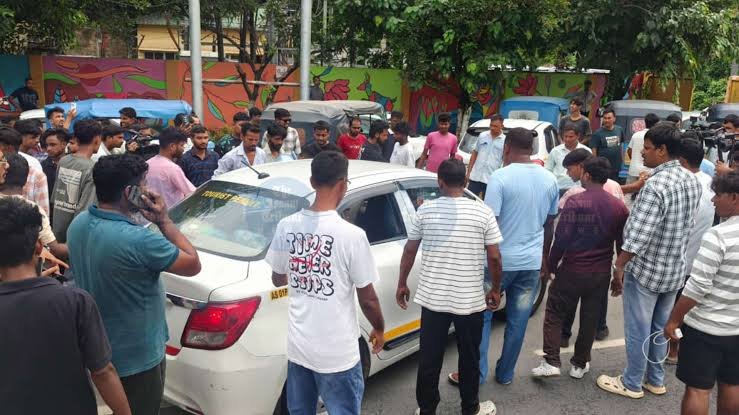
The Assam State Driver Union standoff has intensified the debate over fare structures, operating costs and government intervention in Guwahati’s app-based transport sector. Union president Dhrubaraj Axom rejected reports that the drivers had called off their protest and said the agitation would continue until authorities addressed their demands.
The dispute involves drivers operating app-based cabs, auto-rickshaws and two-wheelers across Guwahati. Moreover, the protesters have sought higher minimum fares and additional charges to offset rising fuel, maintenance and operating expenses.
PM Modi Turns 76: Himanta Credits Him for Assam’s Growth and Development
Assam State Driver Union Rejects Strike Withdrawal Reports
The Assam State Driver Union standoff developed after app-based commercial vehicle operators began an indefinite service shutdown in Guwahati on September 1. Several driver organisations participated in the agitation, citing inadequate fares and increasing operating expenses.
However, reports about the suspension of the protest created a division among driver groups. Some representatives who attended discussions with the Assam Transport Department agreed to temporarily withdraw the agitation after receiving assurances that authorities would examine their concerns.
Dhrubaraj Axom, president of the Assam State Driver Union, took a different position. He said reports that the drivers had completely called off the protest were incorrect and described them as misinformation. According to his statement, the protest would continue until the transport authorities ensured that the drivers’ demands were addressed.
The disagreement therefore reflects differences among driver organisations rather than a single, unified decision. While one section accepted a temporary pause, another section maintained its position that the core issues remained unresolved.
Meanwhile, the dispute has kept attention focused on the role of the state government in regulating app-based transportation. The drivers want clearer intervention on fares and payment structures, while the authorities have begun action involving the major aggregators.
Drivers Seek Higher Fares and Additional Charges
The central issue in the Assam State Driver Union standoff concerns the gap between drivers’ earnings and their operating costs. Driver organisations have argued that existing fares have not increased sufficiently despite higher fuel, maintenance and other expenses.
The protesting drivers have demanded a minimum fare of ₹25 per kilometre for hatchback vehicles and ₹30 per kilometre for sedans. They have also sought cancellation charges and waiting fees.
Furthermore, drivers have argued that the current payment structure does not adequately reflect the expenses involved in operating commercial vehicles. Fuel costs, vehicle maintenance, insurance, loan repayments and other expenses can reduce the amount that remains from each trip.
Some driver representatives have also raised concerns about the share they receive from fares after platform-related deductions. Consequently, they are seeking a more transparent mechanism for determining fares and ensuring that drivers receive a sustainable portion of trip earnings.
The organisations have previously approached government authorities seeking intervention. However, drivers have maintained that earlier discussions did not produce a concrete resolution. Therefore, they turned to collective action and suspended services across the city.
The demands extend beyond an immediate fare increase. Driver organisations have called for a regulatory mechanism through which per-kilometre and per-minute rates can be determined. Such a system, they argue, could provide greater clarity for drivers and passengers alike.
Transport Department Takes Regulatory Action
The Assam Transport Department has taken steps amid the dispute by issuing show-cause notices to major app-based cab aggregators. The notices sought explanations over alleged regulatory violations and gave the companies a specified period to respond.
The department’s intervention became an important development in the dispute because the drivers had repeatedly sought government involvement. Rather than immediately imposing penalties or suspending operations, the department asked the aggregators to respond to the issues raised.
The notices reportedly covered concerns involving fare-related grievances, office and grievance-redressal requirements, tipping-related directions and the methodology used for suggesting fares. The department provided 14 days for responses.
As a result, some drivers agreed to temporarily suspend their protest while authorities examined the complaints. Nevertheless, the Assam State Driver Union maintained that the broader issues had not yet been resolved.
The conflicting positions have created uncertainty over the overall status of the agitation. Some driver groups have accepted the government’s intervention as a reason to pause the protest, whereas the union led by Axom has continued to demand concrete action.
Additionally, the government’s involvement has shifted part of the dispute from direct negotiations between drivers and aggregators toward a wider regulatory discussion. This could become important if the authorities consider changes to fare-setting mechanisms or other rules governing app-based transportation.
Guwahati Commuters Face Continuing Transport Uncertainty
The dispute has also affected passengers who rely on app-based services for daily travel. During the initial shutdown, commuters reported difficulties finding cabs and other app-based vehicles, particularly for journeys to workplaces, educational institutions, railway stations and other important locations.
Alternative transport options also came under pressure as passengers searched for available autos and other vehicles. Consequently, some commuters faced longer waiting periods and higher fares when using alternatives outside the regular app-based system.
The situation has highlighted the growing importance of app-based transport in Guwahati’s urban mobility network. Thousands of drivers and passengers depend on these services, making prolonged disruptions capable of affecting both workers and commuters.
However, the drivers have argued that maintaining services under the current fare structure has become increasingly difficult. They therefore want authorities to address the underlying economic concerns rather than simply focusing on the disruption caused by the strike.
Meanwhile, the divided response among driver organisations means the situation cannot be described as a complete settlement. The Transport Department’s 14-day response period for aggregators provides a temporary framework for discussions, but the union leadership has indicated that further agitation could follow if its demands remain unresolved.
The next stage of the dispute will therefore depend on the responses submitted by the aggregators and the government’s subsequent action. Furthermore, any decision concerning minimum fares, cancellation charges or waiting fees could affect both driver earnings and passenger costs.
Conclusion
The Assam State Driver Union standoff remains centred on fare revision, operating costs and demands for stronger government intervention in Guwahati’s app-based transport sector. Union president Dhrubaraj Axom has maintained that the agitation cannot be considered over until the drivers’ principal demands receive a satisfactory response.
Although some driver groups temporarily suspended their protest following assurances from the Transport Department, the union’s position remains different. Moreover, the department has issued show-cause notices to major aggregators and given them time to respond to alleged regulatory shortcomings.
Therefore, the dispute currently remains unresolved rather than fully settled. The responses from the aggregators and subsequent government decisions will determine whether the competing sides can reach a broader agreement on fares and operating conditions.
FAQs
What is the Assam State Driver Union standoff about?
The Assam State Driver Union standoff centres on demands for higher app-based transport fares, cancellation and waiting charges, and stronger government intervention in fare regulation.
Who is leading the Assam State Driver Union?
Dhrubaraj Axom is the president of the Assam State Driver Union and has opposed reports suggesting that the entire driver community had withdrawn its protest.
What fares are drivers demanding?
Driver organisations have sought a minimum fare of ₹25 per kilometre for hatchbacks and ₹30 per kilometre for sedans. They have also demanded cancellation and waiting charges.
Has the Guwahati driver strike been completely called off?
No. Different driver groups have taken different positions. Some temporarily suspended the protest after government assurances, while the Assam State Driver Union said the agitation would continue until its demands were addressed.
What action has the Assam Transport Department taken?
The Transport Department issued show-cause notices to major app-based cab aggregators and sought responses concerning alleged regulatory issues, including fare-related grievances and grievance-redressal requirements.