


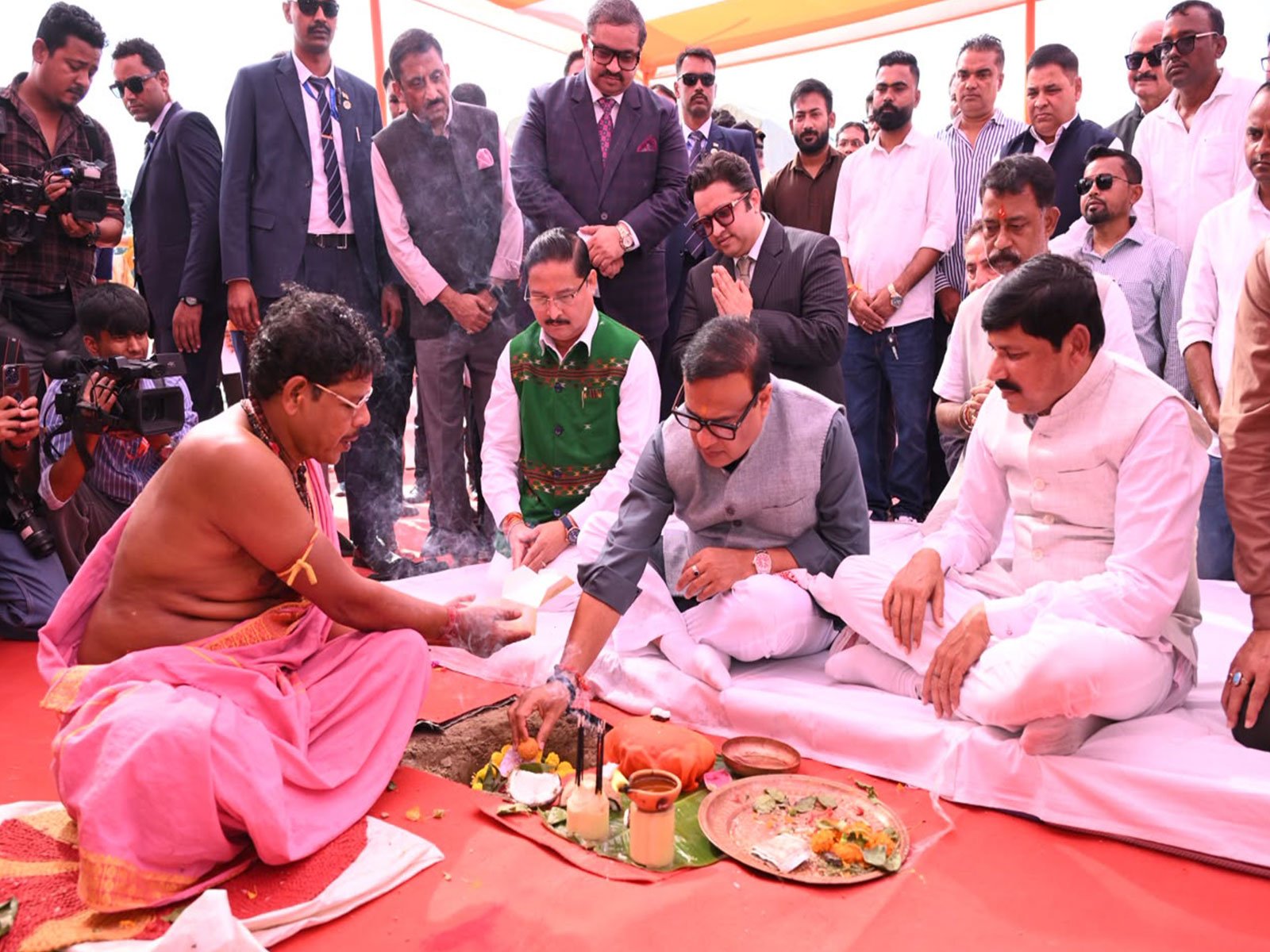
Assam has taken a major step towards entering the defence manufacturing sector with the foundation stone for its first drone and defence equipment manufacturing facility in Kamrup district. Chief Minister Himanta Biswa Sarma laid the foundation stone of the upcoming unit at Tulsibari in Rangia on November 25, 2026. Mumbai-based Speed4 Defence Systems Private Limited will develop the facility with an initial investment of approximately ₹50 crore.
Nagaland Makes Hotel App Registration Mandatory for Out-of-State Guests Ahead of Hornbill Festival
Assam Enters Drone and Defence Manufacturing
The proposed facility marks an important development in Assam’s efforts to expand its industrial and technological capabilities.
Speed4 Defence Systems will establish the manufacturing unit at the Assam Industrial Development Corporation (AIDC) Industrial Estate in Tulsibari, Rangia. The project will cover approximately 14 acres and produce drones, counter-drone systems and other equipment for the armed forces.
Chief Minister Himanta Biswa Sarma described the investment as the first major step towards building a defence manufacturing ecosystem in Assam.
According to PTI, the state government sees the project as an opportunity to strengthen domestic defence production and support the vision of Atmanirbhar Bharat.
The facility will also mark Assam’s entry into a specialised manufacturing sector that has so far had limited industrial presence in the Northeast.
What Will the Rangia Manufacturing Facility Produce?
The upcoming unit will manufacture several categories of defence equipment. These products will support military operations, infrastructure requirements and protection against unmanned aerial threats.
Once fully operational, the facility is expected to achieve the following annual production capacity:
- 1,500 drones for defence and other applications.
- 100 counter-drone systems to detect and respond to potential drone threats.
- 300 underground bunkers and protective structures for defence requirements.
- 5,000 prefabricated, rapidly deployable structures for military and operational use.
These figures represent the projected production capacity after the facility reaches full operational status. Therefore, the plant will not begin with its entire planned output.
The project aims to develop a broader manufacturing base rather than focus exclusively on drones. It will combine unmanned aerial technology with protective infrastructure and other defence-related products.
The Times of India reported that production could begin by January 2028.
₹50 Crore Investment and Employment Opportunities
Speed4 Defence Systems plans to invest around ₹50 crore in the first phase of the project. The company will establish the facility across approximately 14 acres at the Rangia industrial estate.
The project is expected to generate around 150 direct jobs during its initial phase. Moreover, employment opportunities could increase to approximately 500 when the facility reaches full production capacity.
The investment could also create opportunities for local businesses. The company plans to involve local suppliers, micro, small and medium enterprises (MSMEs), and supporting industries in around 25–30 per cent of its production and supply chain.
Consequently, local entrepreneurs, machinery manufacturers, construction companies and service providers could benefit from the new industrial activity.
The project may also encourage skilled young people in Assam to explore careers in engineering, manufacturing, electronics and defence technology.
IIT Guwahati Partnership to Support Research and Innovation
Research and development will form another important part of the proposed manufacturing initiative.
Speed4 Defence Systems plans to collaborate with IIT Guwahati to promote research, technological innovation and the development of new products.
The proposed partnership could create opportunities for students, researchers and faculty members to participate in defence and engineering projects. Additionally, collaboration between industry and academic institutions could help strengthen local technical expertise.
Such partnerships can support the development of specialised skills and encourage innovation within Assam’s emerging industrial ecosystem.
However, the project’s long-term technological impact will depend on the scale of research activities, industry participation and the development of skilled local talent.
Assam Plans a Wider Defence Manufacturing Ecosystem
The Rangia project forms part of the Assam government’s broader plan to attract aerospace and defence industries.
The state has already introduced the Assam Aerospace and Defence Manufacturing Policy, 2025, to encourage investment in these sectors. Chief Minister Sarma indicated that the government plans to amend the policy to make Assam more attractive to defence equipment manufacturers.
Furthermore, the government is exploring plans to establish a dedicated defence park in the Jagiroad area of Morigaon district.
The proposed park could attract additional companies and support industries connected with defence production. However, the Rangia facility represents the immediate manufacturing investment, while the larger defence park remains a separate development proposal.
According to The Indian Express, the Chief Minister has also highlighted the potential strategic importance of developing defence manufacturing facilities closer to the Northeast.
Strategic Importance for the Northeast
Assam’s location gives the project additional significance beyond industrial development.
The Chief Minister highlighted the facility’s proximity to the international borders of four countries. He also said that a stronger defence manufacturing ecosystem in the Northeast could support the armed forces stationed in the region.
According to his remarks, approximately one-fourth of the Indian Army’s personnel are positioned in the Northeast. Therefore, manufacturing certain equipment closer to the region could help strengthen supply capabilities.
Moreover, the project aligns with the national push to increase domestic defence production and reduce dependence on overseas suppliers.
Nevertheless, the actual contribution of the facility will depend on its production performance, quality standards and future procurement arrangements.
A New Chapter for Assam’s Industrial Development
The foundation of the Rangia facility represents a significant step in Assam’s effort to diversify its industrial base.
Until now, the state’s industrial activity has largely centred on established sectors such as tea, petroleum and other traditional industries. The proposed defence manufacturing unit introduces opportunities in advanced manufacturing, unmanned aerial systems and engineering.
Additionally, the planned collaboration with IIT Guwahati and participation of local MSMEs could help build supporting capabilities within the state.
With production targeted for January 2028, the coming years will determine how effectively the project translates its investment plans into manufacturing output and employment.
The Rangia facility could therefore become an important starting point for Assam’s ambitions in drone technology and defence manufacturing.
Frequently Asked Questions
1. Where will Assam’s first drone manufacturing facility come up?
The facility will come up at the Assam Industrial Development Corporation Industrial Estate in Tulsibari, Rangia, in Kamrup district.
2. Which company is establishing the manufacturing unit?
Mumbai-based Speed4 Defence Systems Private Limited is developing the facility.
3. How much investment will the project receive?
The company plans an initial investment of approximately ₹50 crore for the project.
4. What products will the Rangia facility manufacture?
The unit will manufacture drones, counter-drone systems, underground bunkers, protective structures and prefabricated rapidly deployable structures.
5. When is production expected to begin?
The company and state authorities are targeting January 2028 for the start of production.
6. How many jobs will the project generate?
The facility is expected to create around 150 direct jobs initially, with employment potentially reaching approximately 500 at full operational capacity.