


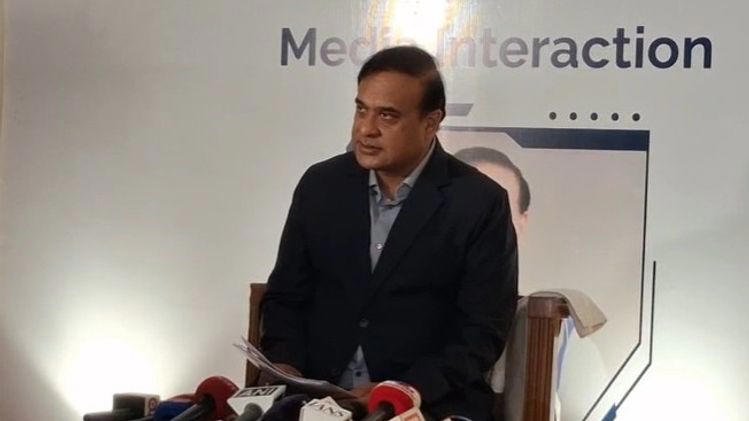
The Assam government has decided to approach the Gauhati High Court seeking the constitution of a fast-track court in the Zubeen Garg death case, signalling a renewed push for speedy justice in a matter that has drawn widespread public attention. The move reflects the state’s intent to accelerate judicial proceedings and address concerns over delays in a case that has deeply affected public sentiment.
Senior government officials confirmed that preparations are underway to formally move the High Court with a request aimed at expediting the trial. The decision comes amid growing demands from various sections of society for swift and transparent legal action.
Read More: BJP to Win All 28 Seats in Tripura District Council Polls: CM
Assam government’s decision to move Gauhati High Court
The Assam government’s decision to approach the Gauhati High Court marks a significant step in the Zubeen Garg death case. Officials stated that the aim is to ensure that the legal process moves without unnecessary delays and that justice is delivered in a time-bound manner.
By seeking a fast-track court, the government intends to prioritise the case within the judicial system. Such courts are designed to handle sensitive or high-impact cases swiftly, reducing prolonged uncertainty for all parties involved.
Authorities stressed that the move reflects respect for due process while acknowledging public concerns regarding the pace of proceedings.
Background of the Zubeen Garg death case
The Zubeen Garg death case has remained in focus due to the circumstances surrounding the incident and the public interest it has generated. Since the case came to light, it has prompted discussions on accountability, investigation standards, and judicial efficiency.
Over time, calls for faster resolution intensified, with many expressing concern that delays could undermine confidence in the justice system. The case has also highlighted broader issues related to handling high-profile or emotionally charged matters within the legal framework.
The government’s decision to seek a fast-track court appears aimed at addressing these concerns directly.
Why a fast-track court is being sought
Fast-track courts are typically constituted to handle cases that require urgent attention due to their social impact or complexity. In the Zubeen Garg death case, the Assam government believes that such a mechanism can help streamline proceedings.
Officials explained that a fast-track court would allow focused hearings, reduced adjournments, and continuous monitoring of progress. This approach can ensure that evidence, witness testimonies, and legal arguments receive timely consideration.
By moving the Gauhati High Court, the state hopes to obtain judicial approval for a dedicated framework that accelerates the trial while maintaining fairness.
Government’s stance on speedy justice
The Assam government has reiterated its commitment to ensuring speedy justice in sensitive cases. Officials emphasised that delays not only affect the families involved but also erode public trust in institutions.
In the context of the Zubeen Garg death case, the government has framed its action as a response to public expectations and constitutional responsibility. Speedy justice, officials noted, remains a cornerstone of effective governance and rule of law.
The move also signals that the state intends to remain proactive rather than reactive when legal proceedings face prolonged timelines.
Role of the Gauhati High Court
The Gauhati High Court will play a crucial role in determining the next course of action. Once the Assam government submits its plea, the court will examine whether the case meets the criteria for fast-track adjudication.
Legal experts point out that the High Court’s approval would set procedural guidelines and define the scope of the fast-track court. The judiciary’s involvement ensures that acceleration of the trial remains consistent with legal safeguards.
Observers note that the court’s decision could also influence how similar cases are handled in the future.
Public response and expectations
The announcement has generated strong public interest, with many viewing it as a positive step toward accountability. Civil society members and legal observers have welcomed the intent to reduce delays, while also stressing the need for transparency throughout the process.
Families affected by the case are expected to closely watch developments, hoping that the fast-track mechanism delivers clarity and closure. At the same time, legal experts caution that speed must not compromise thorough examination of evidence.
Balancing efficiency with fairness remains a key expectation from the proposed fast-track proceedings.
Broader implications for Assam’s justice system
Beyond the Zubeen Garg death case, the government’s move reflects a broader concern about judicial delays. The decision highlights the growing emphasis on institutional reforms that improve case management and reduce pendency.
If approved, the fast-track court could serve as a model for handling other complex or sensitive cases in Assam. Officials believe that targeted judicial mechanisms can strengthen public confidence and improve overall efficiency.
Such steps also align with national efforts to modernise the justice delivery system.
Next steps in the legal process
The Assam government is expected to file its petition before the Gauhati High Court in the coming days. Once admitted, the court will review submissions from all relevant parties before deciding on the request.
Until then, authorities have stated that existing legal procedures will continue as scheduled. The outcome of the High Court’s decision will determine whether the Zubeen Garg death case moves into a fast-track framework.
A push toward timely justice
The Assam government’s move to seek a fast-track court underscores its intent to ensure timely justice in the Zubeen Garg death case. By approaching the Gauhati High Court, the state has taken a formal step toward addressing public concern and reinforcing faith in the legal process.
As the matter progresses, attention will remain on how effectively institutions balance urgency with judicial integrity. The coming weeks are likely to shape the future course of one of Assam’s closely watched legal cases.
Read More: Madurai Temple Ritual Row Explained Ahead of Tamil Nadu Polls