


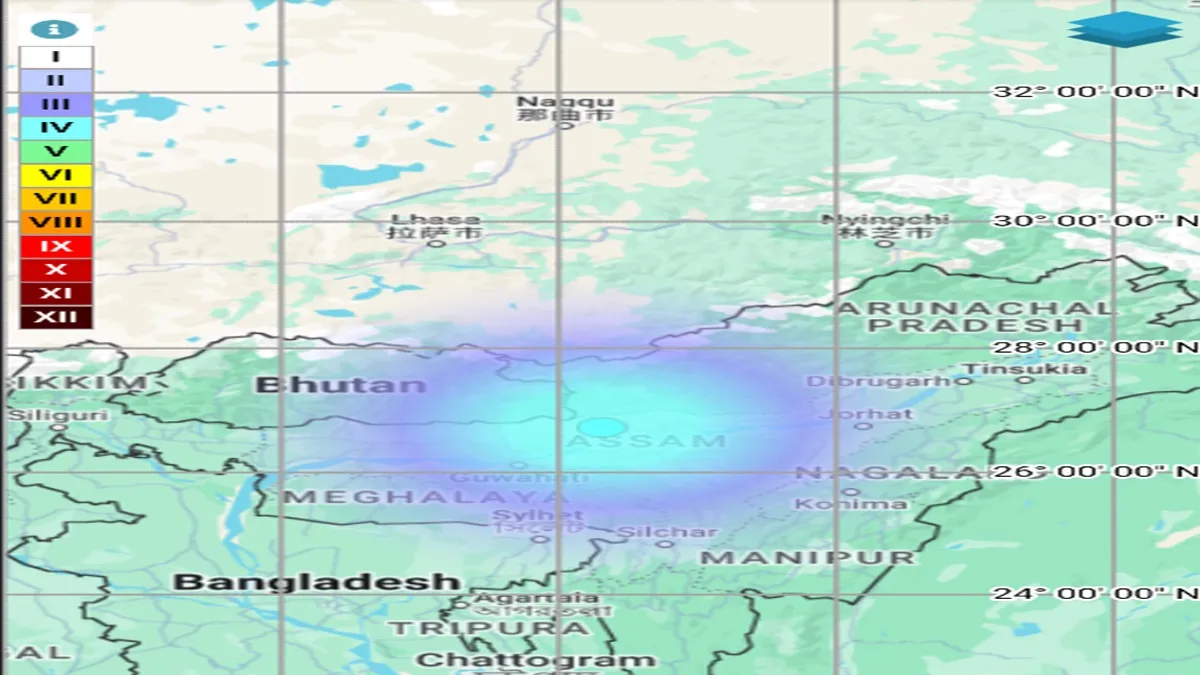
The Bhutan Earthquake Tremors Assam event caused concern across several parts of Northeast India after a powerful 5.8-magnitude earthquake struck Bhutan. The tremors were strongly felt in Guwahati and other areas of Assam, prompting residents to move outdoors as a precaution. Moreover, authorities reported no immediate casualties or significant damage, while monitoring continued following the seismic activity.
Teesta River Recovery Operation Ends After Four Bodies Found in Sikkim
Thrilling Meghalaya State League Final Sees Nongkseh Triumph
Bhutan Earthquake Tremors Assam Felt Across Multiple Areas
The Bhutan Earthquake Tremors Assam incident unfolded after a 5.8-magnitude earthquake struck Bhutan, sending noticeable vibrations across neighboring regions. Residents in Guwahati and several districts of Assam reported feeling strong tremors that lasted for several seconds.
Moreover, the earthquake generated immediate concern among citizens as buildings swayed and people quickly evacuated homes, offices, and commercial establishments. The tremors were also felt in parts of the wider Northeast region.
Strong Vibrations Prompt Residents to Move Outdoors
Many residents reacted swiftly when the tremors began. Consequently, people gathered in open spaces and public areas while waiting for the shaking to subside.
Additionally, precautionary evacuations are a common response during seismic events, especially in urban centers where multi-story buildings are present. Public awareness regarding earthquake safety has increased significantly in recent years.
No Immediate Damage Reported
Authorities stated that no major damage or casualties were reported immediately following the earthquake. Therefore, the situation remained largely under control despite the initial panic caused by the tremors.
Furthermore, local administrations continued monitoring conditions to ensure that no delayed reports of structural damage emerged from affected areas.
Guwahati Among Areas Experiencing Tremors
Guwahati was among the locations where residents reported feeling the earthquake distinctly. Consequently, social media platforms and communication networks quickly filled with updates from people sharing their experiences.
Moreover, the city’s dense population and concentration of commercial activity contributed to heightened public attention following the seismic event.
Earthquake Originated in Bhutan
The earthquake’s epicenter was located in Bhutan, a Himalayan nation that lies within a seismically active region. Therefore, tremors extended beyond national boundaries and were felt in neighboring areas, including Assam.
Additionally, earthquakes originating in the Himalayan belt often affect multiple regions due to the area’s complex geological structure and tectonic activity.
Northeast India Lies in a Seismically Active Zone
Northeast India is recognized as one of the country’s most earthquake-prone regions. Consequently, seismic events are monitored closely by scientific and disaster management agencies.
Furthermore, the region’s geological characteristics make preparedness and infrastructure resilience important components of public safety planning.
Authorities Continue Monitoring the Situation
Following the earthquake, authorities maintained communication with local administrations and emergency response teams. Therefore, officials remained alert to any reports that might require immediate attention.
Moreover, disaster management agencies routinely assess conditions after significant seismic events to ensure public safety and coordinate responses if necessary.
Importance of Earthquake Preparedness
The incident serves as a reminder of the importance of earthquake preparedness in vulnerable regions. Consequently, experts continue to encourage public awareness regarding emergency response measures and safety protocols.
Additionally, preparedness initiatives help communities respond more effectively during unexpected natural events. Awareness campaigns and safety drills remain important tools for reducing risks.
Public Response Reflects Growing Awareness
The swift reaction of residents demonstrated increased awareness of earthquake safety practices. Therefore, many individuals chose to move away from buildings and gather in safer open areas.
Furthermore, public knowledge of emergency procedures can play a critical role in minimizing injuries and ensuring orderly responses during seismic incidents.
Seismic Monitoring Remains Essential
Earthquake monitoring systems continue to play a crucial role in tracking seismic activity across the Himalayan region. Meanwhile, scientific agencies remain focused on analyzing data related to the event.
Moreover, accurate monitoring helps authorities assess risks, communicate information to the public, and strengthen long-term disaster preparedness efforts.
Conclusion
The Bhutan Earthquake Tremors Assam incident caused widespread concern after a 5.8-magnitude earthquake struck Bhutan and sent noticeable vibrations across Guwahati and several parts of Assam. Although the tremors triggered moments of panic and prompted residents to move outdoors, authorities reported no immediate casualties or significant property damage. The event nevertheless highlighted the sensitivity of the region to seismic activity.
Moreover, the earthquake underscores the importance of maintaining strong disaster preparedness systems in Northeast India, which remains one of the country’s most seismically active regions. Public awareness, emergency planning, and resilient infrastructure are essential components of reducing risks associated with future earthquakes.
Furthermore, the response from residents and authorities demonstrated the value of preparedness and effective communication during natural events. As monitoring continues and assessments are completed, attention will remain focused on ensuring public safety and strengthening readiness for potential future seismic activity. Overall, the Bhutan Earthquake Tremors Assam event serves as a reminder of the region’s geological realities and the need for ongoing vigilance.
FAQs
Q1. What caused the tremors felt in Assam?
The tremors were caused by a 5.8-magnitude earthquake that originated in Bhutan and was felt across parts of Northeast India.
Q2. What is the Bhutan Earthquake Tremors Assam event?
The Bhutan Earthquake Tremors Assam event refers to the seismic activity that sent strong vibrations across Guwahati and other parts of Assam following an earthquake in Bhutan.
Q3. Were there any reports of damage?
Authorities reported no immediate casualties or significant damage following the earthquake.
Q4. Why are earthquakes common in Northeast India?
The region lies in a seismically active zone influenced by tectonic movements associated with the Himalayan geological system.
Q5. What should people do during an earthquake?
People should move to a safe location, avoid hazardous structures, follow official safety guidelines, and remain alert for further instructions from authorities.