


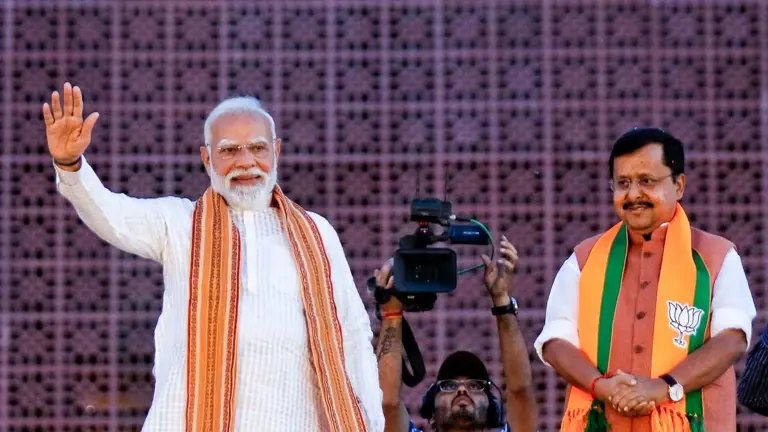
The BJP and its alliance partners have emerged as dominant political forces in SC-ST reserved constituencies in Assam and West Bengal following the latest election results. The alliance performed strongly in reserved seats and achieved a remarkable 100 percent strike rate in several tribal constituencies, according to political data and party leaders.
The results have strengthened the BJP-led NDA’s position among Scheduled Caste and Scheduled Tribe voters in eastern and northeastern India. Political analysts believe the performance reflects the alliance’s growing outreach among marginalised communities and tribal populations in the region.
Leaders from the BJP described the results as a major political achievement and said the alliance’s welfare programmes, grassroots campaigns, and focus on regional development helped secure voter support in reserved constituencies.
The results have also triggered fresh political discussions regarding changing voting patterns in Assam and West Bengal, especially in tribal-dominated regions.
Read More: Gaurav Gogoi Says Assam Is BJP’s Laboratory For National Strategy
BJP alliance performs strongly in SC-ST reserved seats
The BJP-led alliance recorded impressive results in SC-ST reserved seats across Assam and West Bengal during the elections. In several constituencies reserved for Scheduled Tribe communities, BJP allies reportedly maintained a perfect strike rate.
Political observers said the performance highlights the alliance’s expanding influence in areas where regional identity, welfare policies, and community representation remain important electoral issues.
In Assam, the BJP and its allies strengthened their position in several reserved constituencies by focusing on development projects, welfare schemes, and infrastructure improvements. Party leaders claimed voters supported the alliance because of its governance record and emphasis on regional growth.
Meanwhile, in West Bengal, the BJP alliance also made significant gains in tribal and Scheduled Caste-dominated areas. Analysts believe the results indicate increasing political competition in constituencies that traditionally supported regional parties.
The election outcome has become particularly important because SC-ST reserved seats often play a decisive role in state-level political equations.
Tribal constituencies witness strong NDA performance
The NDA’s strong performance in tribal constituencies has become one of the key highlights of the election results. Reports suggest the alliance secured victories in all contested tribal seats in certain regions, resulting in a 100 percent strike rate.
Political experts noted that tribal voters in both Assam and West Bengal responded positively to targeted welfare initiatives and promises related to infrastructure, employment, and social welfare.
The BJP and its allies also focused heavily on grassroots campaigning in remote and rural areas before the elections. Party workers organised meetings, outreach programmes, and community interactions to strengthen voter engagement.
Analysts said the alliance successfully projected itself as a development-oriented political force in tribal regions. Issues such as road connectivity, housing, healthcare, education, and employment reportedly influenced voter decisions in many constituencies.
At the same time, local leadership and alliance coordination also played an important role in improving electoral performance.
Assam emerges as key political battleground
Assam remained one of the most closely watched states during the elections because of its political significance in the Northeast. The BJP-led alliance performed strongly in reserved constituencies and consolidated its support base among different social groups.
Party leaders said welfare schemes and infrastructure projects helped the alliance gain voter confidence in rural and tribal regions. The BJP also highlighted road projects, education initiatives, and employment programmes during its campaign.
Political observers noted that tribal communities in Assam increasingly support parties that promise development and stronger representation in governance.
The BJP alliance also benefited from cooperation with regional allies that maintain strong grassroots networks in tribal and reserved constituencies. Analysts believe this alliance strategy contributed significantly to the strong election results.
Several reserved constituencies in Assam witnessed high voter turnout, reflecting increased political participation among local communities.
West Bengal sees shifting political trends
West Bengal also witnessed important political shifts in SC-ST reserved constituencies during the elections. The BJP and its allies reportedly improved their performance in tribal-dominated areas where political competition has intensified in recent years.
Political analysts said the results suggest changing voter preferences in some reserved constituencies of the state. The BJP alliance focused on issues related to social welfare, central schemes, and local development while campaigning in these regions.
Tribal and Scheduled Caste voters remain electorally important in several districts of West Bengal. Therefore, strong performance in reserved constituencies can significantly influence the broader political landscape.
Observers also noted that the BJP’s organisational expansion in rural and border districts helped improve outreach among voters.
At the same time, regional political parties continue maintaining influence in several reserved constituencies. Therefore, analysts expect political competition in these areas to remain intense in future elections.
Welfare schemes and outreach credited for success
BJP leaders credited welfare schemes and grassroots outreach programmes for the alliance’s strong performance in SC-ST reserved seats. According to party leaders, central and state welfare initiatives helped improve voter trust in the alliance.
Schemes related to housing, healthcare, free ration distribution, financial assistance, and rural infrastructure reportedly influenced voter sentiment in many constituencies.
Party leaders also highlighted the importance of direct communication with local communities. BJP workers and alliance partners conducted extensive campaigns in villages and remote areas before the elections.
Political observers believe consistent outreach efforts helped the alliance strengthen connections with tribal and marginalised voters. Local leadership and candidate selection also reportedly contributed to the success in reserved constituencies.
Meanwhile, opposition parties are expected to review their electoral strategies after the results. Analysts believe the latest outcome may force political parties to increase focus on tribal and SC-ST dominated regions ahead of future elections.
Political significance of reserved constituencies increases
Reserved constituencies continue to play an important role in Indian electoral politics because they represent diverse social and regional communities. Political parties often view these seats as crucial for building broader voter coalitions.
The BJP alliance’s strong performance in SC-ST reserved seats in Assam and West Bengal has therefore gained national political attention. Analysts believe the results may influence future political strategies in eastern and northeastern India.
The 100 percent strike rate in certain tribal constituencies has particularly boosted the morale of BJP workers and alliance partners. Party leaders described the results as evidence of growing public support among tribal and marginalised communities.
At the same time, political observers cautioned that maintaining voter trust would require continued focus on development, representation, and welfare delivery.
As political parties analyse the election outcome, the latest results from reserved constituencies in Assam and West Bengal are likely to shape campaign strategies and alliance calculations for future elections across the region.
Read More: Assam BJP Prepares For New Government Swearing-In Ceremony