


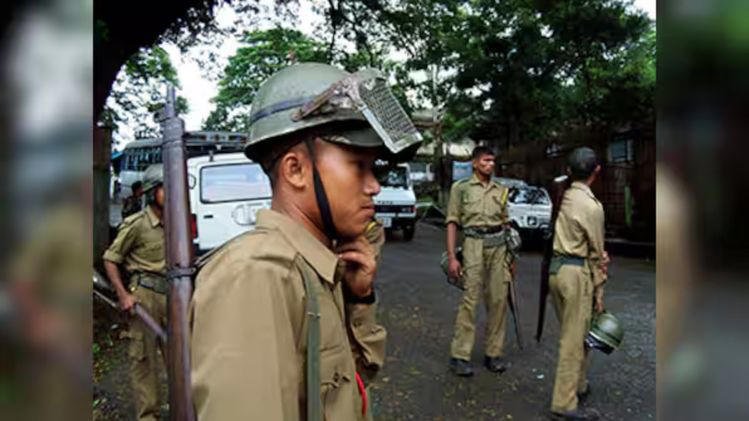
The Bharatiya Janata Party has blamed alleged Bangladeshi infiltration for the recent unrest in the Garo Hills region of Meghalaya. Party leaders claimed that illegal infiltration from neighboring Bangladesh has created demographic pressure and triggered tensions in several parts of the region.
The BJP also emphasized the need to protect the rights of indigenous communities living in Garo Hills. Party leaders said the government must take firm steps to address infiltration and ensure that local groups receive proper protection under existing laws.
The statement came amid growing political attention over the situation in the Garo Hills area, where tensions have surfaced in recent weeks over issues related to land rights and demographic concerns.
Read More: Tripura Assembly Speaker Election Set for March 18
BJP Raises Concerns Over Garo Hills Unrest
Leaders of the Bharatiya Janata Party said that the unrest in Garo Hills reflects deeper concerns about illegal infiltration and its impact on local communities. According to party representatives, infiltration from Bangladesh has increased pressure on land and resources in border regions.
They argued that demographic changes caused by such infiltration can lead to social tensions in areas where indigenous communities depend heavily on land and forest resources for their livelihoods.
BJP leaders said the government should strengthen border monitoring and enforce stricter verification measures to prevent illegal entry.
Furthermore, the party stated that maintaining law and order remains crucial to ensuring peace in the Garo Hills region.
Support For Tribal Rights
The BJP also reiterated its support for the rights of indigenous communities in Meghalaya. Party leaders stressed that protecting tribal land and identity must remain a priority for policymakers.
According to the party, local communities have a long history of living in the Garo Hills and maintaining their cultural traditions. Therefore, safeguarding their land rights forms an important part of preserving the region’s heritage.
The BJP stated that laws designed to protect tribal land ownership must be implemented effectively. Party representatives added that authorities should prevent illegal occupation of land belonging to indigenous communities.
They also urged the government to ensure that development policies respect the traditional rights and customs of local groups.
Garo Hills Region Faces Rising Political Attention
The Garo Hills region has recently drawn attention from political leaders and civil society organizations. Discussions have intensified around issues related to land ownership, demographic changes, and border security.
Political observers note that concerns about infiltration and tribal land rights have often shaped debates in several northeastern states.
In Meghalaya, the issue has gained prominence because the state shares an international border with Bangladesh. Authorities frequently monitor border areas to prevent illegal migration and cross-border activities.
The BJP’s recent statement highlights how political parties continue to focus on these concerns while addressing regional tensions.
Call For Stronger Border Monitoring
BJP leaders called for stronger monitoring of the international border to prevent illegal infiltration. They said improved surveillance and coordination between security agencies could help control unauthorized movement across the border.
The party also suggested that authorities strengthen identification procedures to detect illegal residents. According to BJP representatives, effective border management will help reduce tensions in border districts.
Additionally, leaders stressed the importance of cooperation between central and state governments in addressing such challenges.
They argued that coordinated action can help maintain security while protecting the rights of indigenous communities.
Importance Of Protecting Indigenous Communities
The BJP emphasized that protecting the rights of indigenous communities remains essential for maintaining social harmony in Meghalaya.
Many local communities depend on agriculture, forest resources, and traditional land ownership systems for their livelihood. Therefore, any disruption to these systems can create concerns among residents.
Party leaders said policies must prioritize the welfare of local groups while ensuring sustainable development in the region.
They also encouraged dialogue between community leaders, government authorities, and civil society organizations to resolve tensions peacefully.
Political Debate Likely To Continue
The BJP’s remarks on Garo Hills unrest are likely to intensify political debate in Meghalaya. Opposition parties and local organizations may raise questions about the causes of the unrest and possible solutions.
Political analysts say discussions around infiltration, border security, and tribal rights often remain sensitive issues in the Northeast.
However, many experts also emphasize the importance of balanced policies that protect indigenous communities while maintaining peaceful coexistence.
Authorities continue to monitor the situation in the Garo Hills region to prevent further tensions.
Focus On Peace And Stability
Despite political disagreements, most leaders agree that maintaining peace and stability in Meghalaya remains a priority. Ensuring security in border areas and protecting indigenous communities are considered essential steps toward achieving that goal.
The BJP stated that resolving the concerns surrounding the Garo Hills unrest requires firm action, effective governance, and respect for local rights.
As discussions continue, authorities and political leaders will likely focus on finding solutions that address both security concerns and community interests.
The developments surrounding the Garo Hills unrest highlight the broader challenges faced by border regions in the Northeast, where issues of migration, land rights, and cultural identity often intersect.
Read More: Tipra Motha Won’t Break, Tiprasa Are United: Pradyot Debbarma