


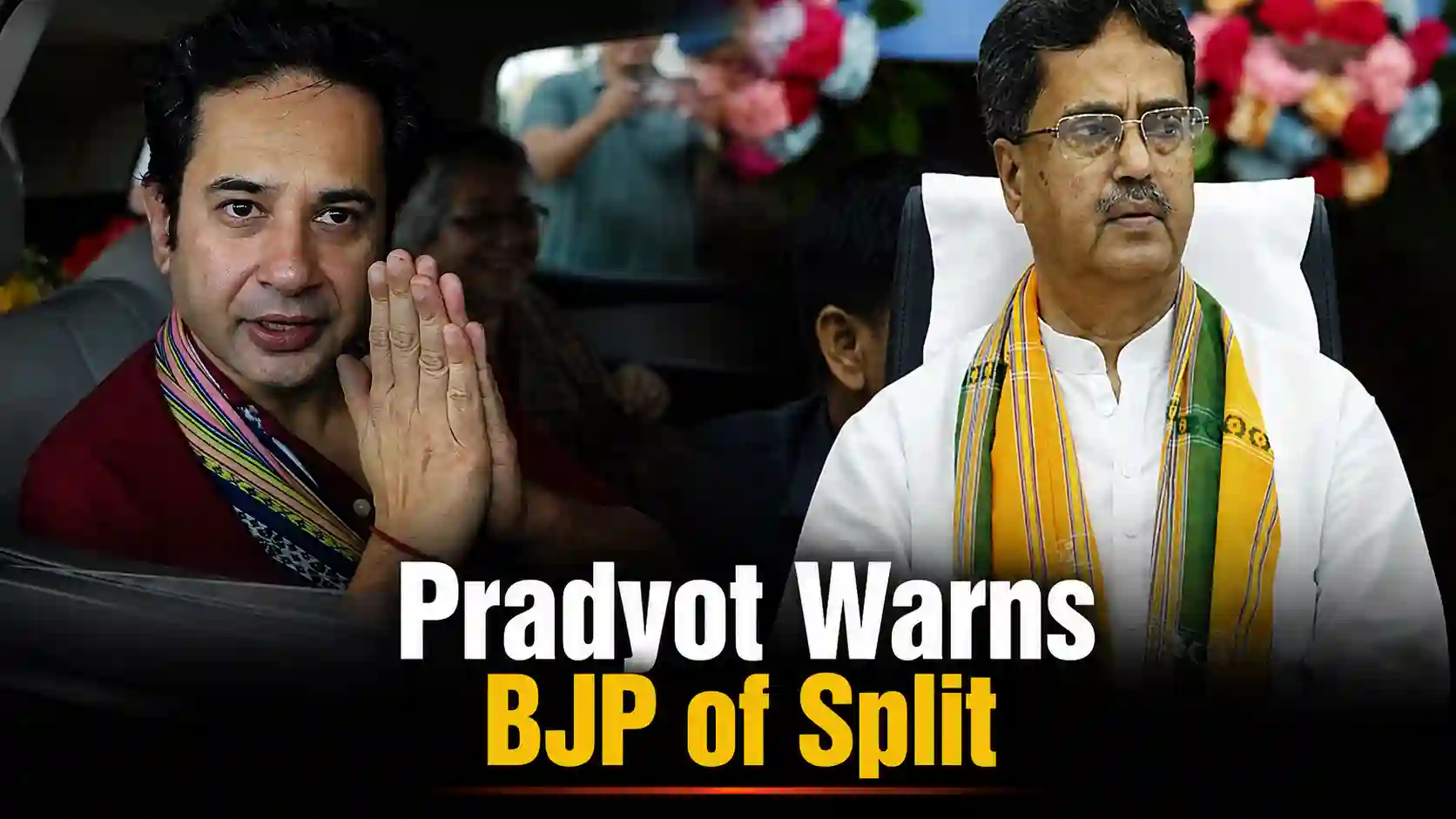
BJP TIPRA alliance talks have reportedly stalled in New Delhi after senior BJP leaders and TIPRA Motha supremo Pradyot Kishore Debbarma failed to reach an immediate agreement on an electoral alliance for the forthcoming tribal council polls. The discussions were held at a high political level as both sides considered their positions ahead of the elections. Moreover, the lack of an immediate breakthrough has created uncertainty around the alliance’s electoral plans. The development has also drawn attention to the political relationship between the BJP and TIPRA Motha, particularly as negotiations over seat arrangements, electoral strategy, and other concerns continue to remain important.
Manik Saha Defends Vande Mataram Amid Congress Row
Senior Leaders Hold High-Level Discussions
Senior BJP leadership and Pradyot Kishore Debbarma held discussions in New Delhi as efforts were made to explore a possible electoral understanding. The talks were considered significant because the forthcoming tribal council elections carry considerable political importance in Tripura.
Furthermore, the involvement of senior leaders indicated that the issue was being treated as an important political matter. However, the discussions did not immediately produce an agreement.
Consequently, both sides may require additional consultations before a final position is established. Further discussions could therefore be held as the election process moves closer.
Immediate Agreement Remains Elusive
BJP TIPRA alliance talks have remained inconclusive following the Delhi discussions. While negotiations were held, no immediate electoral arrangement was finalized between the two sides.
The lack of an agreement does not necessarily indicate that negotiations have ended. Instead, the development suggests that differences may still need to be addressed before a mutually acceptable arrangement can be reached.
Moreover, political alliances often require detailed discussions over electoral strategy and organizational interests. Therefore, additional negotiations could remain possible.
Tribal Council Polls Add Political Importance
The forthcoming tribal council polls have added significance to the negotiations. The elections are closely connected with political representation in areas where tribal interests remain central to local politics.
As a result, both parties are likely to carefully assess the electoral implications of any alliance. Seat-sharing, candidate selection, organizational strength, and local support could all influence the negotiations.
Furthermore, the final electoral arrangement could have an impact on the wider political competition in Tripura.
Pradyot Debbarma Maintains Key Role
Pradyot Kishore Debbarma remains a central figure in the discussions because of his leadership of TIPRA Motha and its political influence among tribal communities.
His participation in the Delhi talks indicates the importance attached to his position during alliance negotiations. Moreover, any agreement would likely require consideration of TIPRA Motha’s organizational and political priorities.
Consequently, Debbarma’s position could remain important as further discussions take place.
BJP Faces Strategic Alliance Decision
The BJP also faces a strategic decision regarding its approach to the tribal council elections. An alliance could potentially influence electoral calculations, while a separate contest could allow the party to pursue its own organizational strategy.
Therefore, the party’s leadership will need to evaluate the advantages and challenges associated with each option.
Moreover, local political conditions could influence the final decision. The strength of candidates, voter preferences, and existing organizational networks may all be considered.
Seat-Sharing Could Remain Major Issue
Seat-sharing is often one of the most difficult aspects of electoral alliance negotiations. Both parties may seek arrangements that protect their respective political interests.
Consequently, differences over constituencies could contribute to delays in reaching an agreement.
However, specific details of the negotiations have not been publicly established in the information provided. Therefore, assumptions about particular seat-sharing demands should be avoided until the parties announce their positions.
Organizational Interests Need Alignment
Beyond seat-sharing, organizational priorities could also influence the negotiations. Both parties have their own workers, local leadership structures, and political support bases.
Furthermore, an alliance would require coordination between these organizational networks during the campaign and election process.
Such coordination can take time to establish. Therefore, the absence of an immediate agreement may reflect the complexity of aligning multiple political and organizational interests.
Previous Political Cooperation Under Focus
The latest talks have also brought renewed attention to the broader political relationship between the BJP and TIPRA Motha.
Previous cooperation between the parties has created expectations regarding future electoral coordination. However, each election can generate new strategic considerations.
As a result, the forthcoming tribal council polls may require both sides to reassess their political calculations. The current discussions could therefore become an important stage in determining the next phase of their relationship.
Alliance Uncertainty Could Affect Campaign Plans
The lack of an immediate agreement could create uncertainty for campaign planning. Candidates and local party organizations may need clarity about whether they will contest independently or coordinate with an alliance partner.
Moreover, campaign strategies could remain flexible until the political arrangement becomes clearer.
Therefore, prolonged negotiations could increase pressure on both sides to establish a final position before formal election preparations intensify.
Tribal Politics Remains Central to Negotiations
Tribal political representation remains a major factor in the electoral calculations surrounding the council polls. Political parties are expected to focus closely on community concerns, local leadership, and regional issues.
Consequently, the proposed alliance is being viewed within a broader political context rather than simply as a seat-sharing arrangement.
Furthermore, voter sentiment among tribal communities could influence the strategic choices made by both parties.
Delhi Talks Could Lead to Further Negotiations
Although the Delhi discussions did not produce an immediate agreement, further talks could still take place. Political negotiations frequently continue after initial meetings when important differences remain unresolved.
Moreover, senior leaders may consult organizational teams and local representatives before making final decisions.
The coming period could therefore remain important for determining whether the two sides can reach common ground.
Upcoming Election Creates Time Pressure
The forthcoming tribal council polls are likely to increase pressure on both parties to settle their positions. Electoral preparations require candidates, campaign teams, and organizational units to receive sufficient time for planning.
Therefore, an extended delay could make campaign coordination more challenging.
At the same time, both parties may prefer to continue negotiations if they believe an alliance could provide electoral advantages.
Alliance Strategy Could Shape Political Contest
BJP TIPRA alliance talks could ultimately influence the structure of the tribal council election contest. A successful agreement could create coordinated electoral strategies, while a failure to reach a deal could result in separate campaigns.
Moreover, the decision could affect how voters view the competing political formations.
However, the final impact will depend on the eventual candidates, campaign narratives, voter preferences, and local political conditions.
Political Equation Enters Critical Phase
The Delhi talks have placed the BJP-TIPRA Motha relationship at an important stage. While negotiations have not immediately produced an agreement, the possibility of further discussions remains open.
Consequently, both sides may now focus on resolving outstanding concerns and assessing the political benefits of cooperation.
The final decision could have broader implications for Tripura’s tribal political landscape.
Conclusion
BJP TIPRA alliance talks have stalled in New Delhi after senior BJP leaders and Pradyot Kishore Debbarma failed to reach an immediate agreement on an electoral alliance for the forthcoming tribal council polls. The development has created uncertainty around the two parties’ electoral strategy.
Moreover, issues involving organizational coordination, electoral calculations, and potential seat arrangements could require further discussion. The absence of an immediate agreement does not necessarily mean that negotiations have ended.
As the tribal council elections approach, both sides are likely to reassess their options. Ultimately, the final alliance decision could significantly influence the political contest and the broader electoral equation in Tripura.
FAQs
1. Why did BJP TIPRA alliance talks attract attention?
The talks were significant because both parties were discussing a possible electoral alliance for the forthcoming tribal council polls.
2. Who participated in the Delhi discussions?
Senior BJP leadership and TIPRA Motha supremo Pradyot Kishore Debbarma participated in the high-level discussions.
3. Was an electoral alliance finalized?
No immediate agreement was reached during the discussions.
4. Could further talks take place?
Yes. The absence of an immediate agreement does not necessarily mean that negotiations have ended.
5. What issues could influence the alliance decision?
Electoral strategy, organizational coordination, constituency arrangements, candidate selection, and local political conditions could influence the decision.
6. Why are the tribal council polls important?
The polls are important because they will determine political representation in areas where tribal issues and local governance remain significant.