


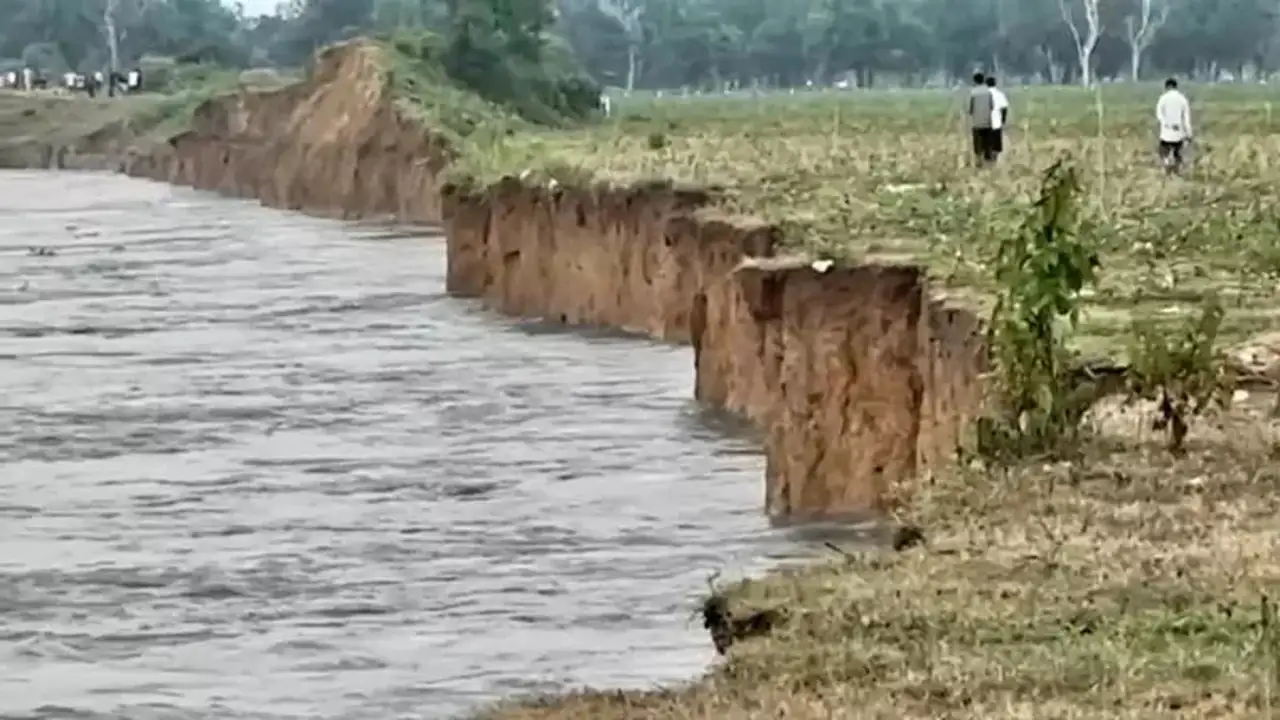
CHABUA, ASSAM, The Brahmaputra River’s aggressive erosion has claimed large sections of the historic Balijan Tea Estate in Dibrugarh district, causing widespread alarm among environmentalists and local residents. The tea estate, a key part of Assam’s tea heritage, has been losing vast stretches of fertile land as the river’s course continues to shift dangerously close to its plantations.
Local workers reported that parts of the estate have already been washed away over the past few months. The relentless current has eroded critical embankments, forcing residents in surrounding villages to move to safer areas. The crisis has escalated concerns over the long-term stability of tea cultivation in this region, which has been a cornerstone of Assam’s economy for over a century.
Growing Threat to Assam’s Tea Industry
Balijan Tea Estate, located in Chabua, is among the oldest tea estates in the state, making its decline particularly significant. Assam is globally known for its tea production, contributing over half of India’s total tea output. The river’s encroachment now threatens not only the livelihood of thousands of workers but also the cultural and economic identity tied to this region.
Local tea garden officials confirmed that erosion is eating away at plantation land at an alarming rate. The estate’s infrastructure, including workers’ quarters and roads, is under imminent threat. Environmental activists warn that this could have a domino effect on tea exports and the livelihood of small tea growers who depend on major estates for employment and resources.
Experts Warn of Climate and River Management Challenges
Environmental experts point to climate change and poor river management as the main drivers behind the Brahmaputra’s intensified erosion. Increased rainfall, melting Himalayan glaciers, and heavy silt deposits have altered the river’s course over the years, causing it to breach embankments and devastate riverine settlements.
“Erosion in Assam has become a humanitarian and ecological crisis,” said a researcher from Gauhati University. “The Brahmaputra is one of the most dynamic rivers in the world. Without long-term planning and scientific interventions, this destruction will only worsen.”
This incident highlights Assam’s broader struggle with recurring floods and erosion, which displace thousands of families annually. State authorities have been urged to invest in durable embankments, river dredging, and eco-sensitive flood management strategies.
Local Communities Struggle to Cope
Villagers living near the tea estate describe sleepless nights and constant fear of losing their homes. Many families have already relocated to temporary camps set up by local NGOs. Small tea growers and daily wage workers, who depend on the estate, have seen a sharp decline in income as land losses continue.
“Our families have been working here for generations,” said a worker at the estate. “If this land disappears, our future is uncertain.”
The Assam State Disaster Management Authority (ASDMA) has sent teams to survey the affected areas. However, residents say relief efforts remain insufficient, and long-term rehabilitation plans are still unclear.
Calls for Government Action and Sustainable Solutions
Experts and activists are now calling for immediate government intervention to safeguard not only Balijan Tea Estate but also other tea gardens across the state facing similar threats. The Tea Board of India has been urged to collaborate with scientists, engineers, and local communities to develop erosion control measures.
Stakeholders recommend adopting riverbank protection methods such as bioengineering, geotextile reinforcement, and reforestation along riverbanks. They also advocate for strengthening early warning systems to minimize damage during floods and erosion events.
Assam’s tea industry generates livelihoods for over one million people. The loss of prime agricultural land could have serious socio-economic consequences if not addressed promptly.
The Larger Environmental Picture
The Brahmaputra erosion crisis extends beyond economic concerns. Environmentalists highlight that erosion is destroying critical ecosystems, including wetlands and wildlife habitats along the river’s banks.
Dibrugarh and nearby districts host migratory birds and rare aquatic life, all of which are under threat from unchecked riverbank loss. The river’s instability is also altering agricultural patterns, making it difficult for farmers to maintain steady yields.
This latest incident at Balijan Tea Estate serves as a wake-up call for both policymakers and citizens. Experts stress that a coordinated effort combining science, community participation, and government support is essential to protect Assam’s heritage tea gardens and fragile ecosystems.
The Brahmaputra River’s erosion is no longer a localized issue but a full-scale environmental emergency. The devastation at Balijan Tea Estate reflects decades of neglect in river management. Assam’s future tea production, rural economy, and cultural legacy now depend on immediate, sustainable interventions.
For readers interested in Assam’s environmental challenges, explore the Assam State Disaster Management Authority website for updates. Learn more about Assam’s tea heritage on the Tea Board of India portal.