


A Celebration Rooted in History
On the outskirts of Agartala, Tripura’s capital, lies Mariamnagar, a village that transforms into a vibrant hub of faith and festivity every Christmas Eve. What makes this celebration unique is not just the twinkling lights or the midnight mass—it is the living legacy of Portuguese soldiers who settled here in the 16th century. Their descendants, now in their 18th generation, proudly carry surnames like D’Souza, D’Silva, Lagardo, Marcher, and D’Mello, keeping alive a European heritage that has blended seamlessly with Indian culture.
The Arrival of the Portuguese in Tripura
The story dates back to the mid‑1500s when the Manikya kings of Tripura enlisted Portuguese mercenaries as cannoniers and soldiers to defend their kingdom. These families settled in Mariamnagar, gradually shifting from military roles to farming, trading, and teaching. Over centuries, they became an integral part of Tripura’s social fabric, while retaining their Catholic faith and European surnames.
Today, Mariamnagar is often described as a “tiny Portugal in Tripura,” a living reminder of India’s layered colonial past.
The Portuguese Church: Heart of the Festivities
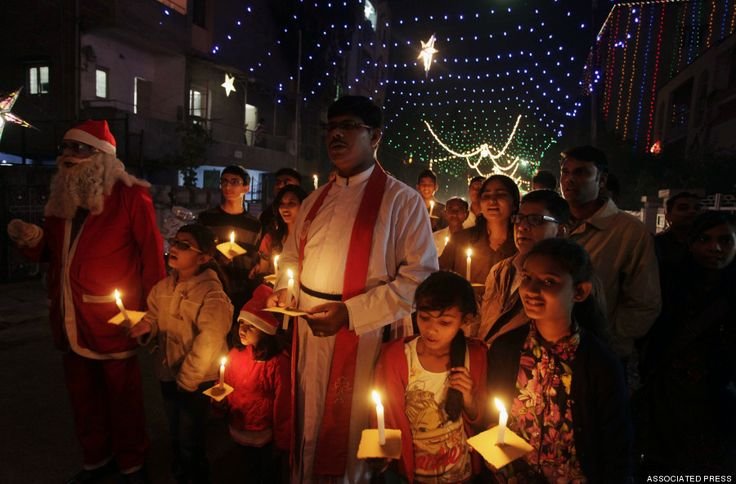
At the center of Mariamnagar’s Christmas Eve celebrations stands the Portuguese Church, Tripura’s first Catholic Mother Church. Built by early settlers, it remains the spiritual anchor for the community. On Christmas Eve, thousands gather here for midnight mass, carols, and candlelit prayers.
- The church is decorated with stars, cribs, and lights.
- Families prepare traditional feasts blending European recipes with local Tripuri flavors.
- Visitors from across Tripura and neighboring states join the celebrations, making Mariamnagar a seasonal pilgrimage site.
For many, attending Christmas Eve mass here is not just a religious ritual but a cultural journey into Tripura’s unique past.
Names That Tell a Story
Unlike most Indian villages, Mariamnagar’s residents proudly introduce themselves with surnames that echo Europe. Names like Lagardo or D’Souza are more than identifiers—they are symbols of resilience and heritage.
Generations have passed, yet these families have preserved their identity while embracing local customs. Younger descendants, such as Victor Sagar D’Souza, express interest in tracing ancestral links back to Portugal, highlighting a growing curiosity about their roots.
Christmas Eve Traditions in Mariamnagar
Christmas Eve here is marked by a blend of Portuguese customs and Indian traditions:
- Midnight Mass: The highlight of the evening, attended by thousands.
- Carol Singing: Youth groups go door to door, singing hymns in English, Bengali, and Kokborok.
- Community Feasts: Dishes like roast meat, plum cake, and rice delicacies are shared.
- Decorations: Homes and streets sparkle with lanterns, stars, and cribs.
This fusion of cultures makes Mariamnagar’s Christmas Eve distinct from mainstream Indian celebrations.
Cultural Significance Beyond Faith
Mariamnagar is more than a religious center—it is a heritage site. The community’s ability to preserve European surnames, traditions, and faith for nearly 500 years is a testament to cultural resilience.
- It showcases Tripura’s multicultural identity, where tribal, Bengali, and European influences coexist.
- It attracts heritage tourism, with visitors eager to experience this unique blend of East and West.
- It serves as a reminder of India’s global connections long before modern globalization.
READ MORE: Excavator Seized in Rani for Illegal Excavation
If you’re planning a trip to Northeast India, make sure Mariamnagar is on your itinerary. Witnessing Christmas Eve here is not just about festive lights—it’s about experiencing a living history that bridges continents and centuries.