


Former Tripura Principal Secretary of Law Datamohan Jamatia has said that rape cannot be treated as an offence that can be resolved merely by imposing a monetary penalty under customary law. His remarks come amid a legal debate over Section 143 of the Jamatia Customary Laws Act, 2017. The provision has come under scrutiny following a public interest litigation challenging its constitutional validity. The Supreme Court has sought responses from the Tripura government and the Tripura Tribal Areas Autonomous District Council (TTAADC).
Jamatia has also stressed that customary practices must respect fundamental rights and remain consistent with the Constitution. However, he argues that readers must interpret Section 143 alongside other provisions of the Act rather than examining it in isolation. His comments add a new dimension to the debate over customary justice, women’s rights and the legal authority of autonomous tribal councils.
West Tripura DM Sets November 30 Deadline for Pending Pre-Puja Ration Distribution
Datamohan Jamatia Explains Section 143 and Related Provisions
Datamohan Jamatia has emphasised that readers must interpret Section 143 alongside Sections 164 and 167 of the Jamatia Customary Laws Act, 2017. According to his explanation, these provisions clarify the limits of traditional authorities in dealing with criminal cases. He argues that Section 143 should not automatically be interpreted as authorising customary bodies to conduct rape trials or replace criminal proceedings.
Section 143 has attracted attention because its wording refers to punishment for the enticement and rape of a woman. Critics have questioned whether the provision could permit financial penalties in circumstances involving serious sexual offences. The constitutional challenge now before the Supreme Court seeks clarity on the provision’s legal effect.
However, Jamatia has offered a different interpretation of the legislation. He maintains that the references to Sections 164 and 167 matter when determining which authorities can hear particular cases. Therefore, he argues that readers should consider the Act as a whole rather than draw conclusions from a single section.
He has also referred to Section 154, which, according to his interpretation, limits the criminal cases that the Jamatia Hoda can try to offences that the law permits parties to compound. A compoundable offence is one that applicable law allows parties to settle through a legally recognised process.
Rape cannot be privately settled through a compromise between the accused and the victim under the applicable criminal law. Consequently, Jamatia argues that a financial penalty cannot replace the prescribed criminal justice process for rape.
Nevertheless, the Supreme Court must independently examine the statutory language and competing legal arguments. Jamatia’s interpretation is relevant to the debate, but it does not determine the final legal position. The Court has yet to rule on the constitutional validity and scope of the disputed provision.
Datamohan Jamatia Highlights Fundamental Rights and Article 13
Jamatia has also highlighted Article 13 of the Constitution, which addresses laws that conflict with fundamental rights. He argues that a customary practice cannot claim exemption from constitutional scrutiny simply because a community has followed it as a tradition.
Article 13 establishes an important constitutional safeguard against laws that violate fundamental rights. Its application depends on the relevant legal provisions and constitutional questions before the Court. In this case, the petitioner argues that Section 143 conflicts with constitutional protections and the criminal justice framework.
The dispute therefore involves more than the wording of a customary law. It raises questions about the limits of legislative authority, the protection of women and the legal treatment of serious criminal offences.
Moreover, the case highlights the distinction between preserving cultural practices and determining criminal liability. Customary institutions may play an important role in community affairs. However, their authority must operate within the limits established by the Constitution and applicable law.
Jamatia’s comments stress that the nature of an offence matters when determining whether a customary settlement can apply. A financial payment may address certain disputes where the law permits settlement. It cannot automatically replace investigation, prosecution or punishment for an offence that the law does not allow parties to compound.
At the same time, the legal debate should not be taken as a rejection of all Jamatia customs or traditional institutions. The immediate question concerns the interpretation and constitutional validity of particular provisions in the 2017 Act.
The Supreme Court will need to consider the petition, the respondents’ arguments and the relevant statutory provisions. Until it issues a ruling, the precise legal effect of Section 143 remains subject to judicial scrutiny.
Supreme Court PIL Brings Jamatia Customary Law Under Scrutiny
The Supreme Court’s involvement follows a public interest litigation filed by advocate Madhumita Bhattacharya. The petition challenges Section 143 of the Jamatia Customary Laws Act, 2017, and questions whether the provision complies with constitutional safeguards. Advocate Shoumendu Mukherji represented the petitioner.
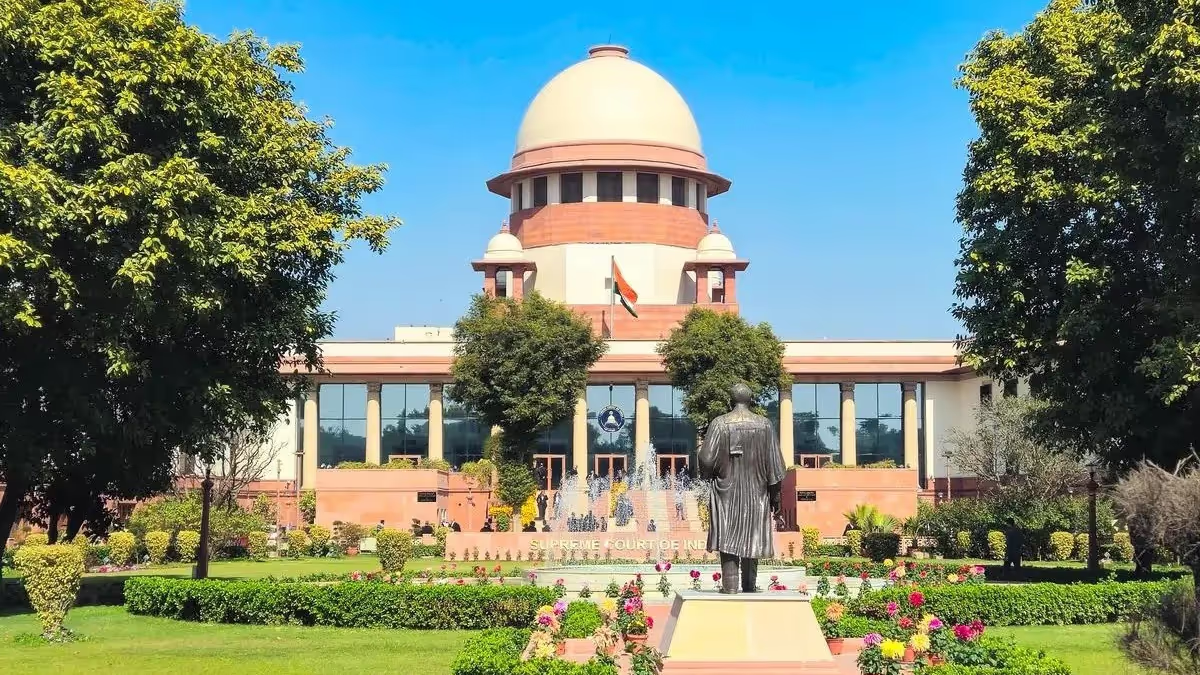
On October 26, 2026, a bench comprising Chief Justice of India Surya Kant and Justices Joymalya Bagchi and V. Mohana sought responses from the Tripura government and the TTAADC. The bench also linked the petition with a pending matter.
The petitioner seeks a declaration that Section 143 is unconstitutional. The plea also asks for records relating to the enactment of the 2017 legislation to be produced before the Court. These requests place the provision’s legal basis and interpretation at the centre of the proceedings.
The petition argues that the wording of Section 143, when read with provisions concerning penalties and fines, raises concerns about the treatment of rape-related cases. However, those claims remain arguments advanced by the petitioner. The Supreme Court has not yet accepted them as established findings.
Jamatia’s remarks add a further perspective by arguing that the disputed provision must be read alongside other sections of the Act. His interpretation suggests that the legislation does not necessarily give customary authorities the power to try rape cases or settle them through monetary payments.
The state government and the TTAADC now have an opportunity to explain their positions. Their responses may address the council’s legislative authority, the intended operation of the disputed sections and the relationship between customary procedures and criminal law.
The proceedings will help establish which legal questions require determination. Nevertheless, issuing notice does not mean the Court has struck down Section 143 or endorsed either side’s interpretation.
Sixth Schedule Powers and the Limits of Customary Justice
The Jamatia Customary Laws Act, 2017, was enacted within the framework of the Sixth Schedule to the Constitution. That framework provides for autonomous administration in specified tribal areas and grants district councils defined legislative and administrative powers. The Act codifies customs and dispute-resolution practices associated with the Jamatia community.
The TTAADC’s authority under this framework forms part of the present legal debate. The petition questions whether the council had the constitutional power to enact the disputed provision in its current form.
At the same time, the existence of autonomous institutions and customary laws does not resolve the question of how a particular provision should operate. The Court must consider the text of the legislation, the scope of the council’s powers and the requirements of the Constitution.
Jamatia’s comments underline this distinction. He argues that customary institutions can continue to perform their recognised functions without replacing the formal criminal justice process for serious offences. His interpretation seeks to distinguish the role of traditional adjudicators from the authority of courts dealing with criminal charges.
Furthermore, the case raises questions about women’s access to legal protection when customary procedures intersect with serious allegations. Any determination must consider the applicable law rather than assume that a financial penalty can substitute for criminal proceedings.
The dispute also illustrates why the interpretation of statutory provisions matters. A section referring to an offence does not, by itself, settle every question about jurisdiction, procedure or punishment. Those issues require examination of the complete legislative framework.
The Supreme Court’s eventual decision may clarify the legal boundaries relevant to this particular Act. Until then, both the constitutional challenge and Jamatia’s interpretation remain part of the public legal debate.
Conclusion
Datamohan Jamatia’s remarks have added an important legal perspective to the controversy surrounding Section 143 of the Jamatia Customary Laws Act, 2017. He maintains that rape cannot be settled merely through monetary penalties and that customary laws must respect fundamental rights. He also argues that courts and readers should interpret the disputed provision alongside the Act’s other relevant sections.
The Supreme Court’s proceedings will determine how the constitutional questions surrounding Section 143 should be addressed. The Tripura government and the TTAADC must respond to the challenge, while the Court will examine the relevant statutory provisions and arguments. Neither the petitioner’s allegations nor Jamatia’s interpretation constitutes a final judicial ruling.
The broader issue concerns the relationship between customary institutions, constitutional protections and criminal justice. Respect for community traditions must operate within the applicable legal framework, particularly when serious offences and women’s rights are involved. The Supreme Court’s eventual decision will clarify the legal position on the challenged provision.
FAQs
1. What did Datamohan Jamatia say about rape and monetary penalties?
He said rape cannot be resolved merely through financial penalties and stressed that customary laws must respect fundamental rights.
2. What is Section 143 of the Jamatia Customary Laws Act, 2017?
Section 143 addresses punishment for the enticement and rape of a woman. Its interpretation and constitutional validity face a legal challenge.
3. Why has the Supreme Court taken up the Jamatia customary law issue?
The Court has sought responses to a PIL challenging Section 143 on constitutional grounds and questioning its relationship with criminal law.
4. What role do Sections 164, 167 and 154 play in the debate?
Datamohan Jamatia refers to these provisions to support his interpretation of the limits on customary authorities and the types of cases they can hear.
5. Has the Supreme Court ruled on the constitutional validity of Section 143?
No. The Court has sought responses from the Tripura government and the TTAADC. The constitutional challenge remains pending.